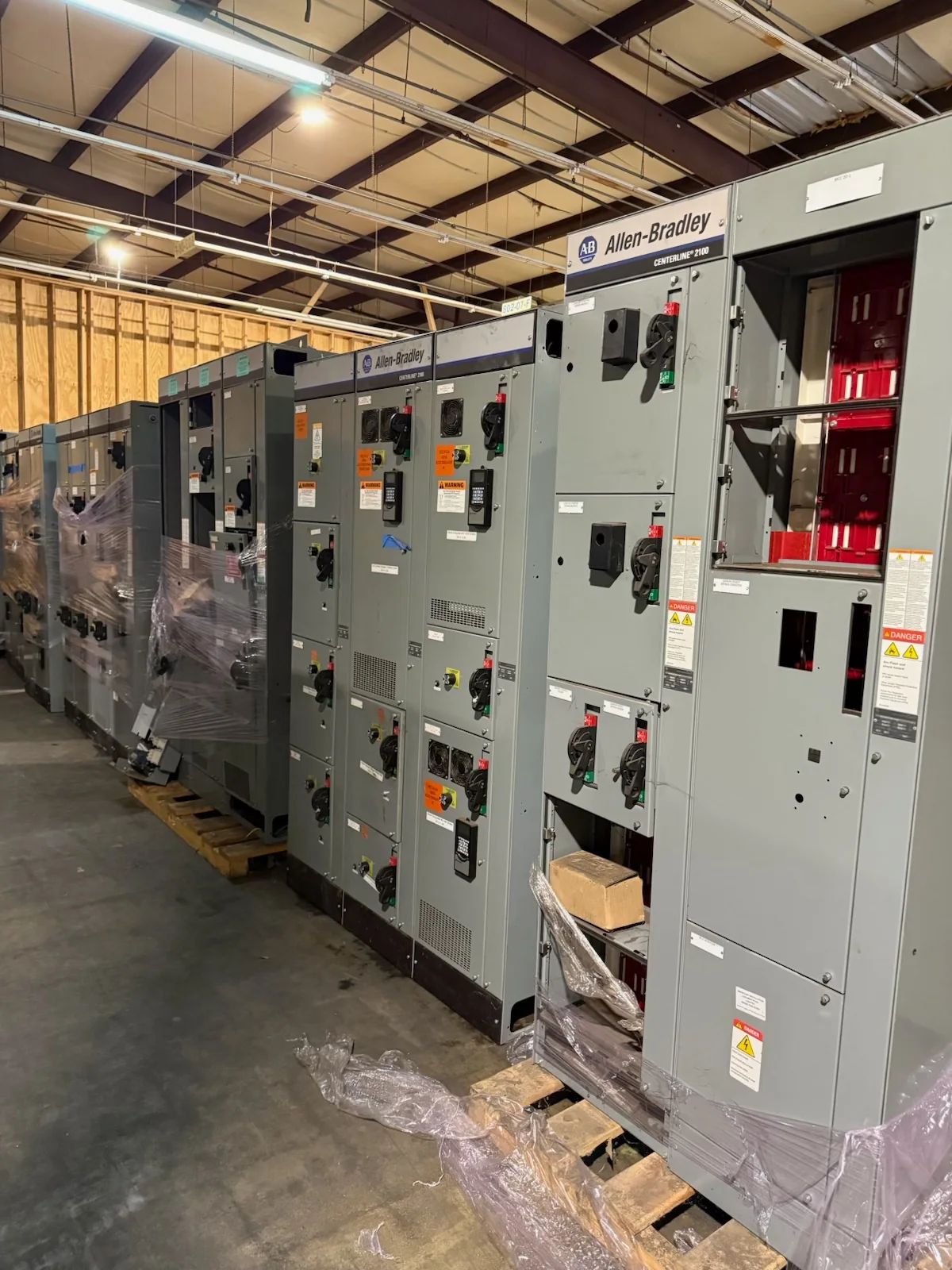
Sell Westinghouse Switchboard Sections and Feeders in Ohio
Westinghouse-marked switchboards can present a difficult inventory question: the visible brand marking may identify an older assembly, while individual feeder devices, covers, or replacement parts may have changed over time. An evaluation starts with what is actually present, not an assumption about age, compatibility, or condition. This buyer considers switchboards across voltage classes, including equipment whose class is not yet confirmed. The goal is to define the sale lot for an offer and safe release.
Identification and documentation problems
Begin with the lineup as an assembly. Record the wording visible on each main nameplate, section label, and feeder directory, along with any documented voltage, current, interrupting information, enclosure details, and section count. Do not treat a Westinghouse marking as proof of affiliation, authorization, a particular model, or a guaranteed fit for a separate breaker. A label on a later replacement device is evidence about that device only; it does not automatically revise the assembly nameplate.
Existing one-lines, panel schedules, purchase records, maintenance lists, and changeout documents can resolve gaps that a photograph cannot. Match drawing references to visible section labels without guessing when labels are absent. Safe exterior photos are helpful: capture nameplates, closed doors, section fronts, feeder labels, stored covers, and loose devices from a safe position. Do not open compartments, operate handles, touch equipment, or make measurements. Unknown information should remain marked unknown.
Completeness: what belongs with the lineup?
A lot is more than its overall width. Count the main section, each feeder section, installed devices, spare devices, front covers, barriers, trim, hardware containers, and separately stored documentation. Note whether a loose breaker or fuse has a documented association with a specific section. A feeder device may carry a different rating from the bus or assembly, so list those values separately when records provide them.
Missing covers, unidentified parts, altered compartments, and disconnected control wiring affect evaluation. A later replacement part may be useful, but its presence does not establish compatibility with every section. If a directory lists twelve feeders and only nine devices are visible, report the discrepancy. The buyer can consider an incomplete lot; accurate separation is more useful than an optimistic count.
Condition and offer factors
Condition review can use records and safe exterior observation. Describe dust, corrosion, water staining, impact damage, deformation, missing doors, damaged viewing windows, removed labels, storage exposure, and packaging condition without opening or testing anything. Mention whether equipment is installed, staged indoors, or stored elsewhere, and identify known contamination or environmental concerns through existing records. The seller does not need to test the switchboard.
An offer may reflect verified ratings, section relationships, lot completeness, documentation quality, visible condition, and handling complexity. It may also reflect whether the sale includes useful spares or only a partial feeder lineup. No price should be inferred from a brand marking alone. The evaluation depends on established facts and release conditions.
Worked inventory checklist
Hypothetical example
Hypothetical example: An Ohio facility reports a Westinghouse-marked lineup with one main section, four feeder sections, two loose devices, and a box of covers. That is a starting point, not a conclusion. The records could be organized as follows:
- Assembly: one Westinghouse-marked lineup; exact nameplate wording and documented voltage class to be confirmed.
- Sections: main section plus feeder sections labeled F1 through F4, with missing or unreadable labels noted.
- Devices: installed main and feeder devices listed individually, with markings recorded separately from assembly information.
- Loose items: two stored devices and covers, tied to a section only where records support the match; otherwise marked unknown.
- Condition: exterior observations, storage location, packaging, known damage, and records describing replacement work.
- Release: owner authorization, access window, route restrictions, and the contact who can coordinate site entry.
This format prevents a replacement feeder device from being mistaken for an original section component and makes omissions visible before valuation.
Access, release, and freight coordination
Installed switchboards require a controlled release. The seller authorizes access and coordinates applicable site rules, and the owner or other authorized party approves the boundary of equipment being released. The buyer arranges qualified, authorized personnel to establish safe conditions and handle agreed electrical isolation and disconnection, coordinated with site and utility approvals, requirements, and safety procedures, as applicable. The buyer also arranges removal, rigging, loading, freight, and hauling. The seller is not asked to perform electrical work, test or remove the equipment, or prepare energized equipment.
Access planning should cover doors, corridors, stairs, overhead clearance, loading hours, floor conditions, outdoor travel, and any crane or truck coordination known to the site. These details coordinate the work; they do not shift removal, crane, qualified disconnect, rigging, loading, freight, or hauling costs to the seller. If sections release in stages, list each section, approved date, and records defining the boundary. After reviewing the equipment and release details, the buyer may make a cash offer. If the offer is accepted and the parties agree on the equipment and release terms, payment is made upfront before the agreed pickup.
Questions to include with your records
- What exact Westinghouse marking appears on each section or stored device?
- Which voltage, current, and device information is documented, and which facts remain unknown?
- How many main and feeder sections, installed devices, spare devices, covers, and barriers are included?
- Were any parts replaced, moved, or stored separately, and is that history documented?
- Who owns the equipment and who can approve the release and site access?
- What access restrictions, release stages, and known site conditions should be coordinated?
Send existing records and safe exterior photos when available. Clear documentation lets the buyer evaluate Westinghouse-marked sections and feeders as a defined Ohio lot, without asking the seller to test, open, operate, dismantle, or touch the equipment.