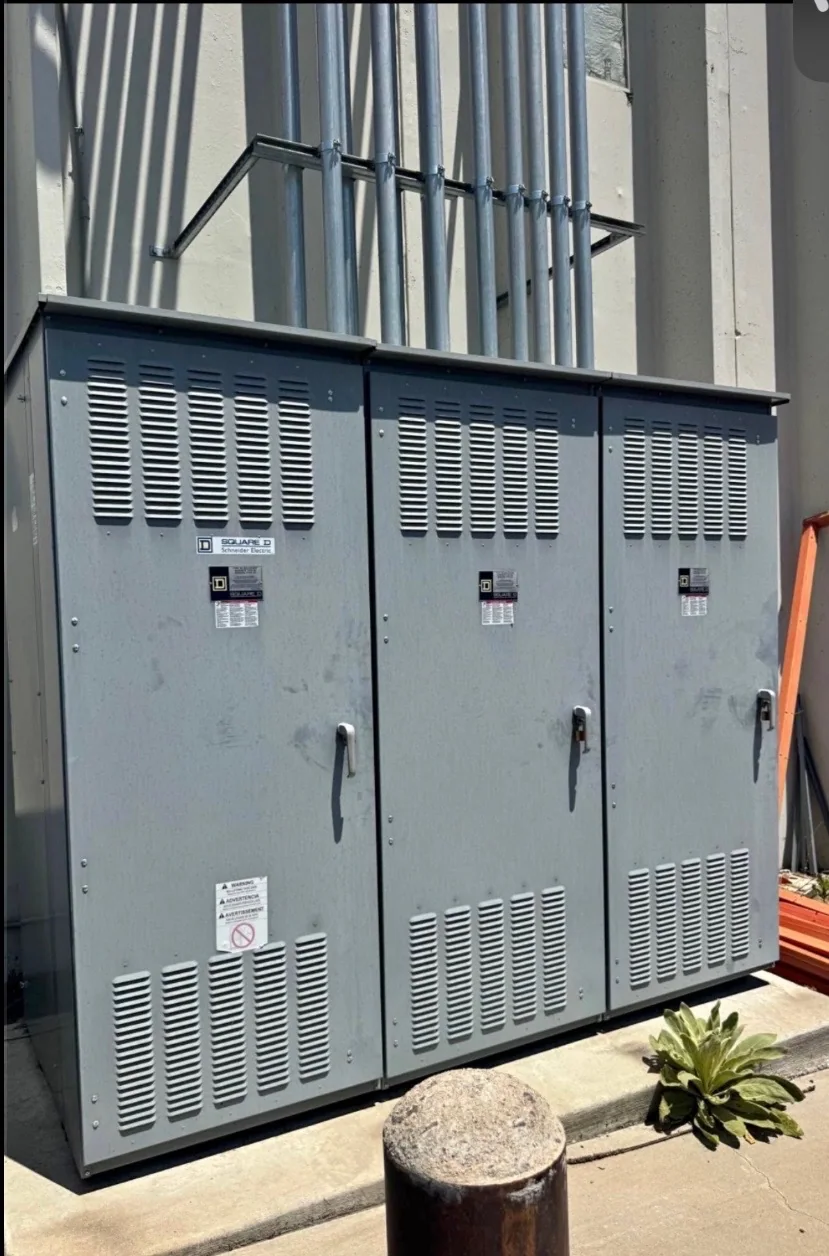
What belongs in a GE switchboard feeder-section lot?
The proposed lot should be defined by identifiable sections, not by a general statement that a switchboard is available. A service section may contain the incoming device and associated metering space, while feeder sections distribute power to downstream circuits. Record each section separately, including its position in the lineup, visible label, enclosure dimensions if known, and whether it is being released alone or with adjoining sections. A feeder section can have value even when a complete lineup is not available, but the boundary must be clear.
For this route, “GE” means a marking visible on the equipment or records that still needs item-by-item verification. It does not establish affiliation, authorization, condition, price, or compatibility. The buyer considers equipment across voltage classes, so use documented voltage and current wording from nameplates, drawings, schedules, or other existing records rather than appearance.
Which identification records answer the important questions?
What is the exact marking on each section? A clear exterior nameplate photo may show the manufacturer marking, assembly identification, voltage, bus or current information, and other fields without requiring anyone to open a compartment. Photograph labels from a safe position and transcribe what is legible; unknown fields should remain unknown. A lineup drawing, one-line diagram, equipment schedule, purchase record, or decommissioning inventory can help connect a section to its intended position, but it should not be treated as proof that every loose device is included.
Which records distinguish an assembly from a device? List the switchboard or section rating separately from its main or feeder device rating. Identify removable breakers, fuses, meters, relays, barriers, covers, and stored spares only when records or visible labels support that description. Do not invent a GE catalog number or infer a model match from appearance. Existing records and safe exterior photos support an initial review; the seller does not need to test the equipment.
How can a partial lineup be described honestly?
A partial release requires a precise boundary. Mark the service section, each feeder section, and any retained neighboring section on an available drawing or inventory sheet. State whether bus connections, end barriers, covers, supports, and transition pieces are included, excluded, or unknown. If a service section remains in operation while feeder sections are released, identify that retained boundary rather than presenting the lineup as complete.
Hypothetical example: an Ohio facility has one GE-marked service section, three labeled feeder sections, and two separately stored devices. The proposed lot might include feeder sections F1 and F2, while the service section, F3, and the loose devices remain outside the lot. That example does not establish compatibility or a saleable configuration; it shows why section-by-section ownership and inclusion notes matter.
What affects a potential offer?
Condition is more than a clean cabinet exterior. Note visible dents, corrosion, water staining, damaged paint, missing doors, incomplete barriers, cracked insulation, bent hardware, or storage exposure from safe exterior observation. Report whether labels are legible and whether covers and documented devices appear present. Do not open compartments, operate handles, touch conductors, or attempt a test. A qualified, authorized team must establish safe conditions and handle isolation and disconnection.
Valuation may also reflect documentation quality, section count, voltage and current information, feeder positions, included devices, lot completeness, storage environment, and the difficulty of separating a partial lineup without damaging retained equipment. Disclose a missing cover or uncertain bus connection. GE marking can support identification, but it is not an endorsement or proof of interchangeability. Equipment from a decommissioned data center or shut-down power plant may be considered when ownership and release authority are documented.
What should a practical inventory checklist contain?
- Section identifier, lineup position, visible GE marking, and every legible nameplate field.
- Documented voltage class, current information, service or feeder role, and separate device ratings.
- Included main or feeder devices, spare devices, meters, relays, covers, barriers, and loose accessories.
- Known missing parts, exterior damage, corrosion, contamination concerns, storage conditions, and unknowns.
- Drawing references, ownership confirmation, proposed lot boundary, retained sections, and release approval.
- Safe exterior photographs showing labels and overall condition without opening or manipulating equipment.
Ask: Which sections are actually owned by the seller? Is any equipment utility-owned, leased, or required to remain energized? Which feeder positions are included, and do the stored devices have documented associations? Are there access restrictions, permits, escorts, outage coordination requirements, or loading-hour rules? These questions clarify the transaction without asking the seller to perform electrical work.
How is access and release coordinated?
After agreement, the buyer coordinates the removal plan with the authorized site contact. The buyer handles crane service, qualified disconnects, rigging, loading, freight, and hauling; the seller is not asked to dismantle, test, or prepare energized equipment. Access approvals, security procedures, lift paths, dock rules, and retained-asset boundaries are coordinated with the site, not shifted into seller-funded removal work.
Share the release date or window only when authorized, and identify whether sections are indoors, stored, or still installed. A decommissioned data center and a shut-down power plant may have different access controls, floor loading limits, lifting constraints, and documentation practices; confirm those facts rather than assuming them. After reviewing the lot, the buyer can make a cash offer; once the seller accepts and the sale is agreed, payment is made upfront before the agreed pickup. The final evaluation depends on documented identity, ownership, condition, completeness, and a safe, authorized release plan.