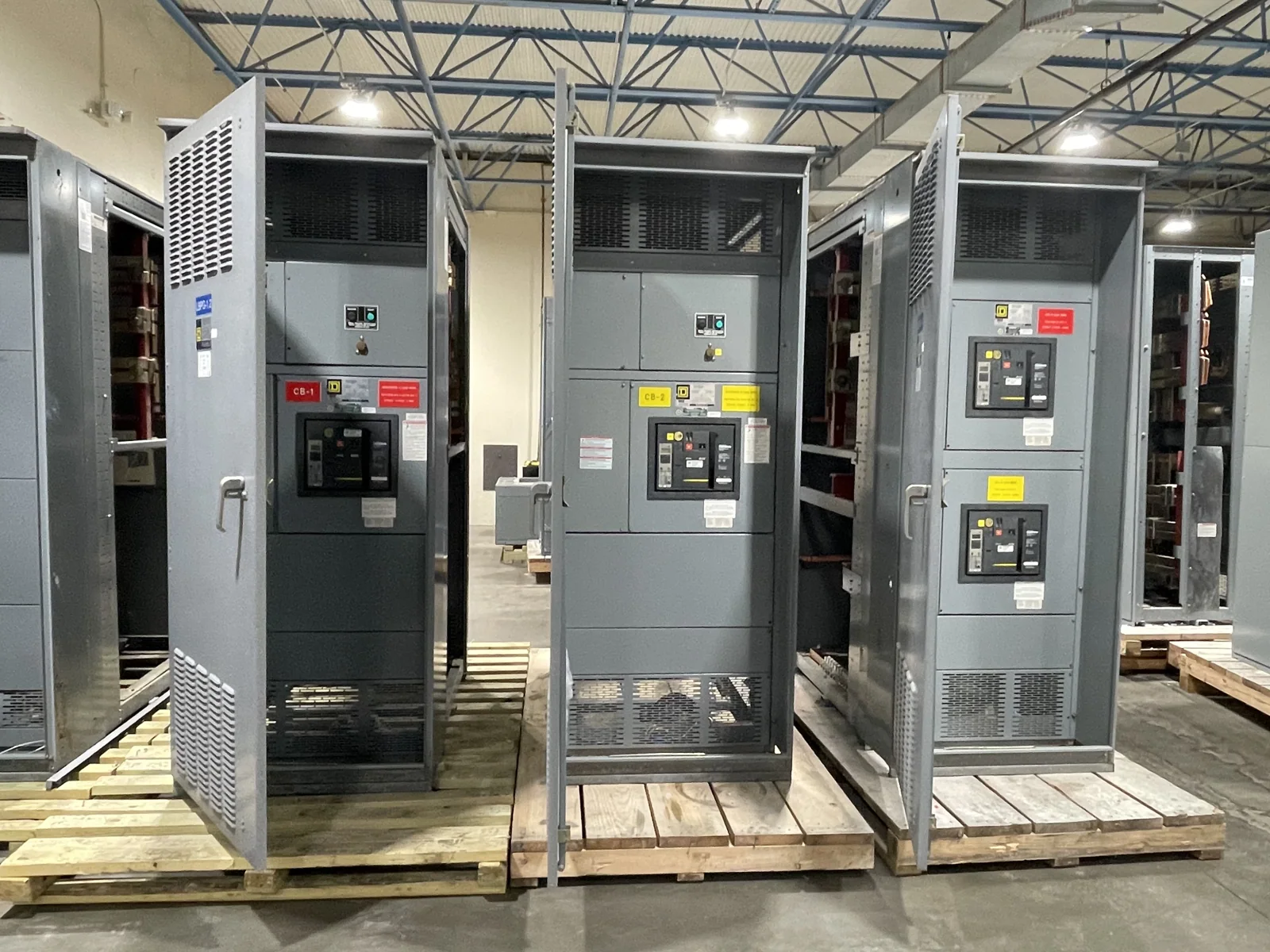
What does Square D-marked switchboard feeder inventory include?
A Square D marking can identify equipment worth reviewing, but it does not by itself establish a model, voltage class, condition, compatibility, authorization or value. Start with a physical inventory of the complete switchboard assembly, its main section, each feeder section and separately stored devices. A feeder device may be a breaker, switch or other protective component, depending on the records and visible labels. Count every labeled position rather than estimating from enclosure width.
This route is for sellers with surplus electrical equipment in Ohio, including material released by a decommissioned data center or a shut-down power plant. The buyer considers all voltage classes. The lot might be installed equipment, stored sections, loose feeder devices, or a mixture. State what is known and mark unknown facts as unknown; do not fill gaps with assumptions based on appearance.
How should the equipment be identified and documented?
Begin with existing one-line drawings, equipment schedules, purchase records, maintenance lists and removal documentation. These can establish the assembly identity and the boundary of the proposed sale without requiring anyone to operate equipment. Record the exact wording visible on each accessible nameplate or exterior label, including manufacturer marking, assembly designation, voltage, current, bus information, interrupting information and device markings when present. Use the full wording rather than shortening it to a familiar rating.
Keep assembly labels separate from individual device labels. A switchboard’s documented rating is not automatically the rating of every feeder device, and a device marking does not prove that it belongs in every section. Square D should be treated as a marking to verify on each item, not as evidence of an affiliation, endorsement or model fit. Safe exterior photos of labels, section fronts, stored devices and packaging can support review. No seller testing is required.
What makes a feeder inventory complete?
Completeness depends on the proposed lot boundary. Identify the main section, each feeder section, labeled feeder positions, removable devices, covers, barriers, hardware and separately stored spares. Note whether a device is visibly associated with a particular section or whether that relationship is unknown. List missing covers, empty positions, loose parts and records that refer to equipment no longer present. If a building keeps its service equipment or a portion of the lineup, clearly state what stays with the building and where the sale begins.
For a hypothetical example, a shutdown facility might have one Square D-marked lineup with a main section, four labeled feeder sections, two loose devices and a box of covers. That description is only an inventory example, not a claim about an Ohio installation. A strong submission would identify which feeder devices remain in their sections, which are stored separately, which covers are included and which associations cannot be verified.
How do condition and documentation affect a potential offer?
Evaluation can consider documented identity, voltage class, section count, device count, lot completeness, storage conditions and the clarity of ownership and release authority. Visible exterior damage, corrosion, water exposure, contamination, bent doors, missing barriers or incomplete labeling should be disclosed plainly. Packaging and indoor storage may help explain condition, but they do not prove internal condition. Do not open compartments, touch energized equipment, dismantle anything or test devices for the review.
A coherent lot with traceable section and device relationships is easier to evaluate than a mixed pile of unidentified parts. Conversely, a partial inventory may still be worth reviewing when the seller distinguishes confirmed items from unknown items. The potential offer also depends on access, handling complexity, freight requirements and whether the equipment can be released without disrupting retained service. After reviewing the lot, the buyer can make a cash offer; once the seller accepts and the sale is agreed, payment is made upfront before the agreed pickup, and the seller is not asked to fund removal work.
What should a worked inventory checklist contain?
- Assembly: visible Square D marking, documented designation, voltage and current wording, main section count and available drawings.
- Feeder sections: section label, feeder position label, device type, individual markings and whether the device is installed or stored.
- Included components: covers, barriers, hardware, spare devices, cartons and any item whose association is documented.
- Condition: exterior observations, storage environment, known impact, moisture, corrosion, contamination or missing parts.
- Boundary: equipment included, equipment retained by the building, ownership confirmation and the authorized release contact.
Helpful seller questions include: Which sections are actually available? Which feeder devices are included by label or record? Are the loose devices tied to this assembly, or is that unknown? What documentation describes the lot? Has the equipment been exposed to water, process residue or outdoor conditions? What access approvals and release date must be coordinated?
How are access, release and removal coordinated?
After the lot and ownership are understood, coordinate the authorized release window, site rules, escort needs, loading hours, lift access, door dimensions, floor restrictions and any requirements for a decommissioned data center or shut-down power plant. These are coordination details, not a request for the seller to remove equipment. Qualified, authorized personnel establish safe conditions and handle isolation or disconnection. The buyer handles qualified disconnects, crane needs, rigging, loading, freight and hauling.
Share the site contact, access approvals and known travel path when available, while identifying unverified dimensions as unknown. The seller should provide records and safe exterior views only. Once the inventory, release boundary and logistics are agreed, the buyer can arrange the work and make the agreed upfront payment without asking the seller to operate or test the switchboard.