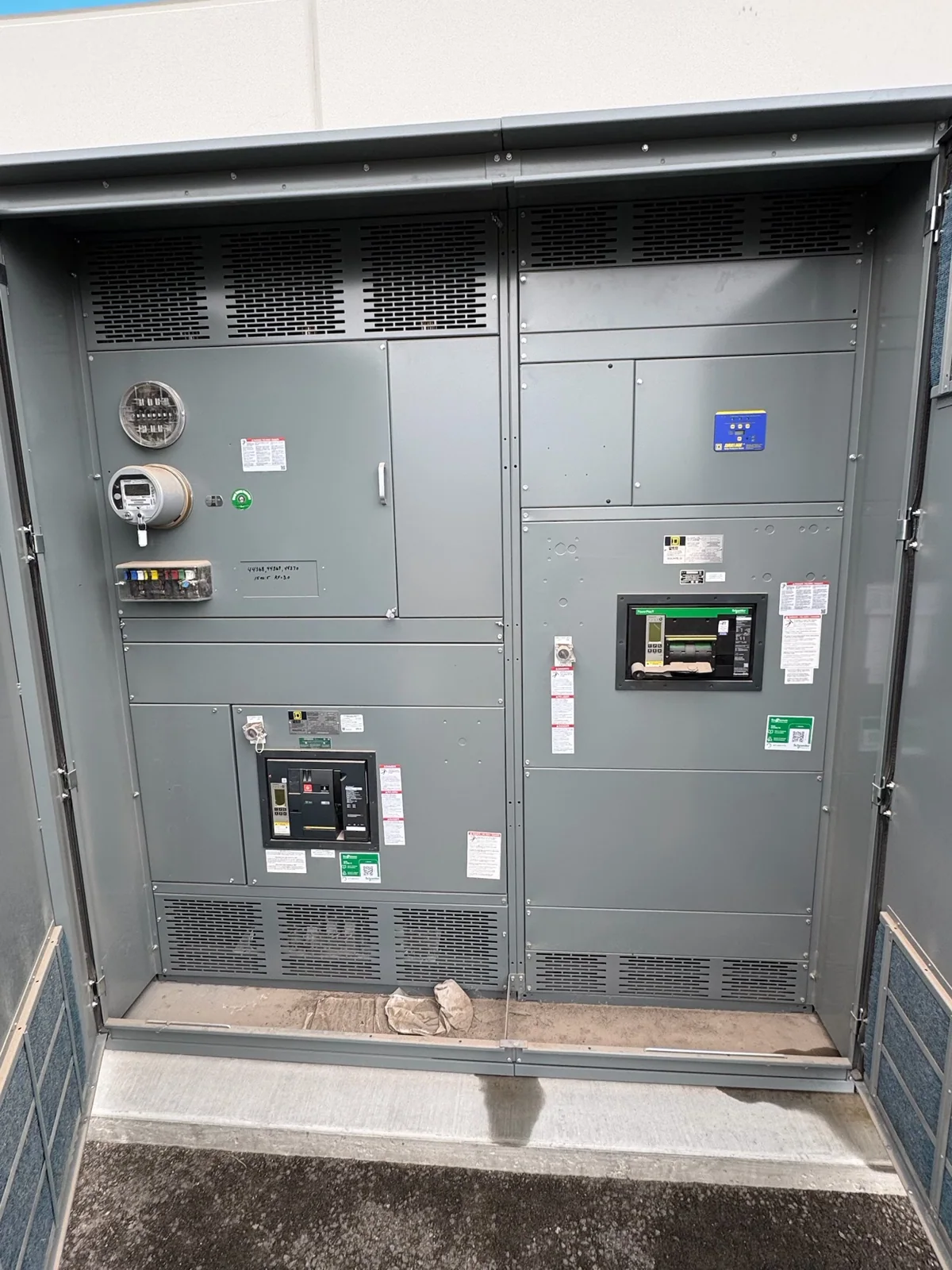
Start with the shelf, not an assumption
A hypothetical Ohio plant shutdown leaves a cabinet of loose circuit breakers beside several labeled storage boxes. One box says “spares,” another contains trip components, and a third has paperwork from an earlier electrical change. The owner knows the equipment is no longer needed, but cannot tell whether every loose device belongs to the same lineup. That is a useful starting point for an evaluation: treat each item as identifiable inventory, not as a guaranteed matched system.
This buyer reviews Square D-marked breakers, trip units, and related spares across voltage classes. The marking is something to verify on each item; it is not proof of affiliation, authorization, present condition, or compatibility. A seller need not test or touch energized equipment. Existing records and safe exterior photographs are enough to begin a review.
Identification and documentation
For every breaker, capture the visible manufacturer marking, frame or catalog information, rated current, voltage wording, interrupting rating, poles, and any clearly legible serial or identification number. Do not substitute a familiar-looking designation for missing text. A breaker’s rated current describes one electrical characteristic; its interrupting rating describes its capability under a specified fault condition. Neither should be inferred from enclosure size, handle appearance, or a neighboring device.
List an included trip unit separately from the breaker body. Record its visible label, adjustable or fixed markings if documented, and whether it is installed, boxed, or loose. Drawings, purchase records, equipment schedules, and prior removal lists can help establish provenance, but an old document should be marked as historical if the present inventory differs. Photos should show labels and exterior condition without requiring anyone to remove covers or enter a restricted area.
Completeness is a line-by-line question
Build the lot around counted pieces: breaker bodies, trip units, auxiliary components, mounting hardware, drawout elements, escutcheons, terminal accessories, and storage cases. State whether each accessory is included, separately stored, visibly missing, or unknown. A loose trip unit may be valuable as a spare while still lacking enough information to associate it with a particular breaker. Similarly, a breaker that appears similar to an installed device should not be presented as interchangeable without documented support.
Keep installed equipment separate from shelf stock and from items reserved for another building or future maintenance. A practical inventory row might read: “one Square D-marked breaker; frame information visible; rated current documented; interrupting rating visible or unknown; trip unit installed or loose; accessories present, missing, or unknown; storage location recorded.” That discipline prevents a count of boxes from being mistaken for a count of complete assemblies.
Condition and factors affecting a potential offer
Describe observable condition without overstating it. Note clean, dusty, weather-exposed, dented, corroded, tagged, packaged, or previously installed status when visible from a safe position. Identify broken handles, damaged labels, missing covers, moisture evidence, contamination concerns, and packaging that no longer protects the item. Do not call equipment “tested,” “working,” or “ready for service” unless records support that statement; seller testing is not required for this evaluation.
A potential offer can reflect verified identification, documented ratings, quantity, completeness, condition, storage protection, and the usefulness of a coherent lot. It can also reflect uncertainty: illegible labels, mixed accessory bins, unknown ownership, missing records, or an unconfirmed relationship between a breaker and trip unit. Voltage class does not automatically determine value, and brand marking alone does not establish fit. The buyer can make a cash offer after reviewing the lot and transaction details; once the seller accepts and the sale is agreed, payment is made upfront before the agreed pickup, and the seller is not asked to promise a performance result.
Worked inventory checklist
- Count each breaker body and assign a simple inventory number without altering the equipment.
- Transcribe visible Square D marking, frame or catalog information, voltage, rated current, and interrupting rating; write “unknown” where unreadable.
- List each trip unit as installed, boxed, loose, missing, or unknown, and record its own visible identification.
- Separate included accessories from unrelated parts, then note damaged packaging, corrosion, contamination, or exterior damage.
- Match records to physical labels cautiously; mark a proposed association as unconfirmed when documentation does not establish it.
- Record ownership authority, release date, storage area, access restrictions, and the person authorized to coordinate the handoff.
Access, safe release, and logistics
Before any pickup discussion, confirm that the seller has authority to release the equipment and identify any owner, landlord, utility, plant, or site approvals that apply. Access approvals are a coordination matter, not a request for the seller to absorb removal costs. Qualified, authorized personnel must establish safe conditions and perform any required isolation or disconnect work. No seller should open compartments, operate devices, dismantle equipment, or approach energized parts to improve an inventory.
After agreement, the buyer handles the crane or other lifting plan, qualified disconnects, rigging, loading, freight, and hauling. The seller can help coordinate gate procedures, escorts, loading hours, badges, and a safe meeting point, while leaving the physical removal to the qualified team. Share exterior photos of the storage location, doorway, dock, aisle, and visible labels only when safe and permitted. Exact dimensions, weights, release timing, and access conditions remain unknown until confirmed from records or coordinated on site.
For an Ohio inventory of Square D-marked breakers and spares, clear records are more useful than confident guesses. A careful count, honest unknowns, and an authorized release plan give the buyer enough context to evaluate the lot fairly without asking the seller to test or handle electrical equipment.