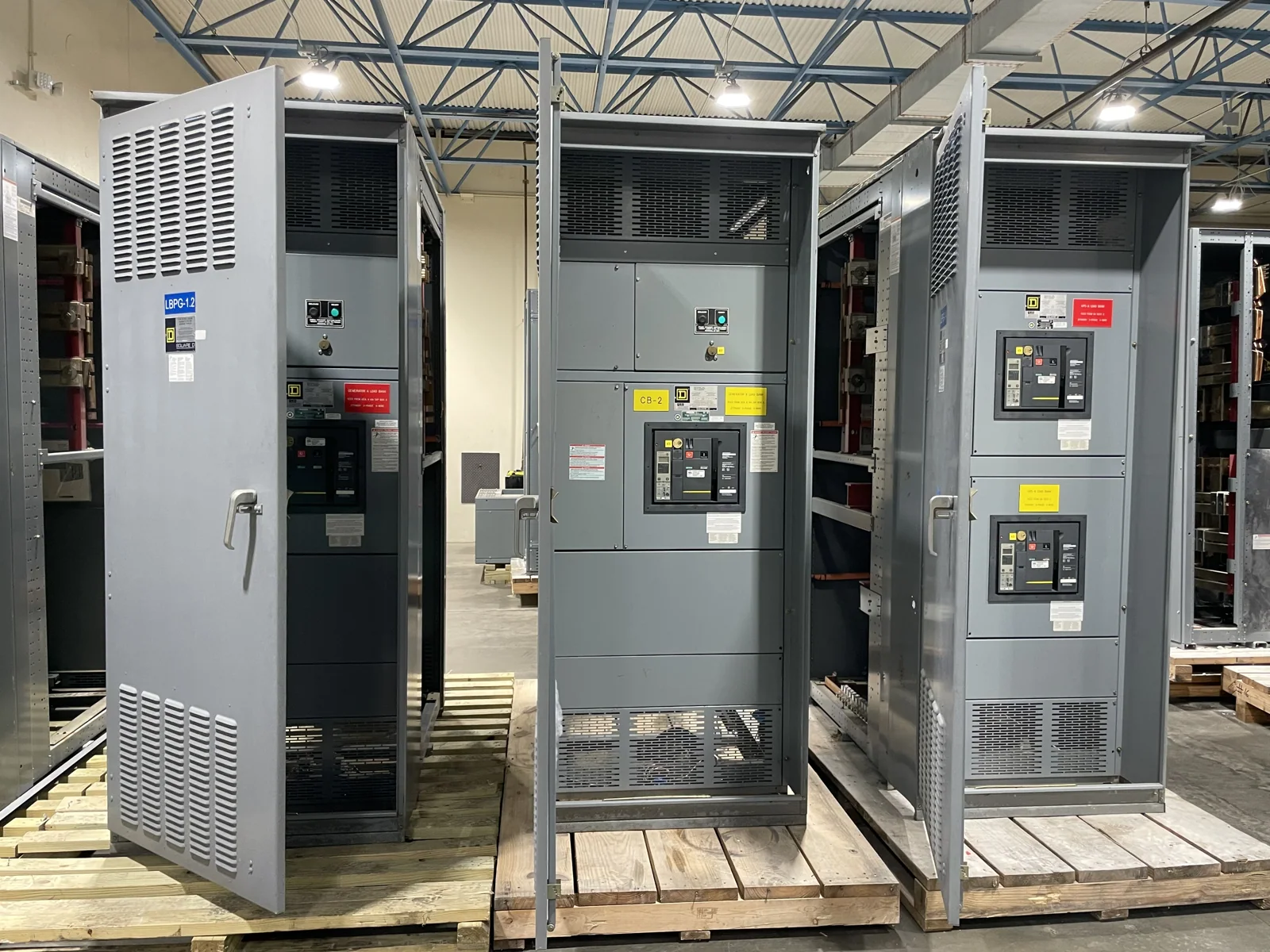
Sell Square D Busway Fittings and Tap Boxes in Ohio
Surplus busway accessories can look straightforward until a buyer has to reconcile every joint, elbow and tap box with the busway it is supposed to serve. A Square D marking is useful identification, but it is not proof of affiliation, authorization, compatibility, condition or value. Start with an itemized description of what is available, where it is located and what records accompany it. We buy Square D-marked fittings and tap boxes from industrial facilities, decommissioned data centers and shut-down power plants, considering all voltage classes.
Identify each part without guessing the match
Record straight busway lengths separately from elbows, offsets, end pieces, joints and tap boxes. For each item, transcribe manufacturer or series wording, voltage and current information, phase or wire information if shown, and other legible nameplate data. Do not create a catalog number from appearance, or assume two items fit merely because both carry a Square D mark. A tap box may have a rating and construction that matter independently from the connected run.
Photograph the exterior and labels only when doing so can be done safely. Useful images show the full part, both ends, connection geometry, packaging labels and visible damage. Existing bills of material, line diagrams, purchase records, storage lists and prior installation documents can help, but unknown information should remain marked unknown rather than inferred. If a mark is partly obscured, report what can be read.
Build a complete, traceable inventory
Mixed lots are common after a replacement project or facility shutdown. Keep each visible series and rating grouping distinct. Count loose fittings by type and tap boxes by their own markings, rather than pooling everything as “busway.” Note whether joints, covers, hardware, hangers, reducers, end closures or tap-box accessories are present, absent or unverified. Record cartons, wrapped parts and loose pieces separately.
Worked hypothetical inventory: a hypothetical Ohio storage lot contains twelve labeled straight sections, two elbows, eight joint kits and three tap boxes. The straight sections appear to carry one series marking, while one tap box has a different visible series and two joint kits have no readable label. The useful report would list those groups independently, identify the two unverified kits, describe packaging, and avoid claiming that all components connect. That level of separation lets a potential offer reflect both usable continuity and matching risk.
Condition affects the potential offer
Describe storage and condition without opening, operating or dismantling anything. Note dents, bent flanges, corrosion, moisture exposure, torn wrapping, missing covers, crushed cartons, paint loss, contamination concerns and prior handling. A clean packaged part is not automatically compatible, while an unpackaged item is not automatically unusable. Complete joint hardware, legible identification and evidence that items belong to one documented system can materially affect valuation.
Ownership and release authority matter as much as appearance. Confirm that the seller can release the equipment and identify any landlord, utility, lender, contractor or owner approval that still applies. If a facility is still operating, distinguish surplus stored parts from accessories reserved for an energized or future system. No seller testing is required; qualified, authorized personnel establish safe conditions and handle isolation and removal.
What helps a buyer evaluate the lot
- Manufacturer and series wording visible on each fitting group and tap box group.
- Documented voltage, current and configuration information, without assumptions based on size.
- Counts of lengths, elbows, joints, tap boxes and loose accessories.
- Photos of safe exterior surfaces, labels, packaging and known damage.
- Drawings, schedules, inventory sheets or purchase records that explain intended association.
- Ownership confirmation, release authority and the date or window when access can be coordinated.
The business buys rather than sells; the evaluation concerns the available lot and its release conditions, not a replacement recommendation. After reviewing the equipment, the buyer can make a cash offer; once the seller accepts and the transaction terms are agreed, payment is made upfront before the agreed pickup. Price, timing and compatibility remain unconfirmed until records and lot boundaries are reviewed.
Plan access, release and freight around the real site
Describe where the items are stored: a secured electrical room, pallet rack, outdoor container, mezzanine or another area. Include door widths, stairs, elevators, dock availability, floor restrictions, loading hours and access approvals when known. These are coordination inputs, not a request for the seller to remove equipment or absorb removal costs. The buyer handles crane needs, qualified disconnects, rigging, loading, freight and hauling.
For installed busway accessories, the seller should not open equipment, touch energized components, dismantle connections or attempt testing. A qualified authorized team determines safe conditions and completes any required isolation and removal. The seller can help by identifying the equipment boundary, confirming who can grant access and preserving records until release. For stored parts, keep packaging and labels with their matching groups and do not rearrange an uncertain lot simply to make it look complete.
Questions to include with a submission
Where is each group located, and are the fittings installed or stored? Which items share a documented series or run, and which matches are unknown? Are tap boxes included with their covers and hardware? What damage, moisture exposure or missing pieces are known? Who owns the material, who can authorize release, and what access approvals are required? What voltage and current wording is visible? Answers supported by records and safe exterior photos make the evaluation more reliable while keeping site work with qualified personnel. Clearly labeled unknowns are preferable to a confident but unsafe compatibility claim.