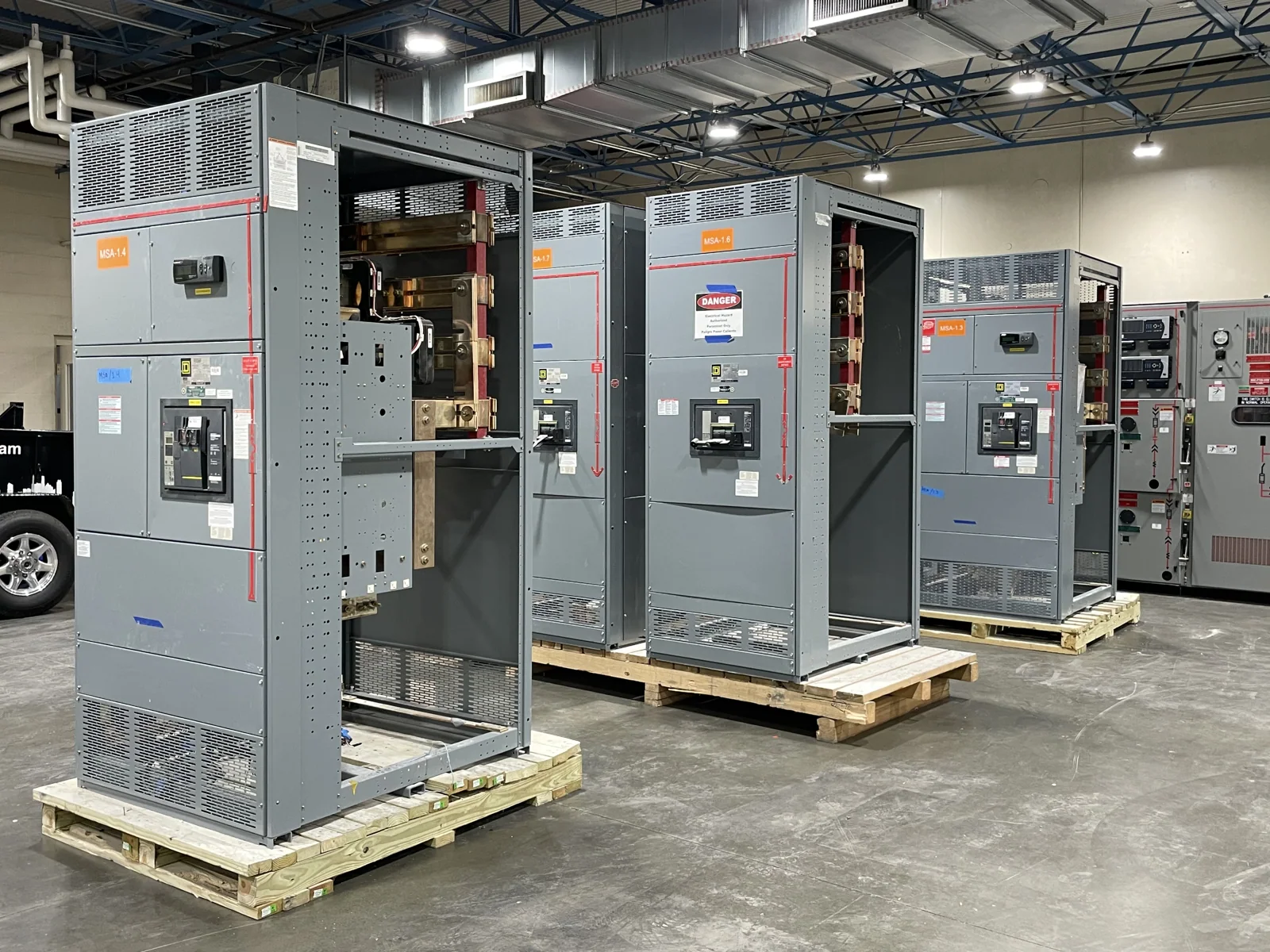
Verify the marking before describing the lot
For an Ohio surplus lot described as Eaton busway tap-off units, begin with what can be documented on each item. A visible Eaton marking is evidence to record, not proof of affiliation, authorization, current condition, model compatibility, or value. Treat every component as an individual record rather than labeling a mixed pile Eaton equipment.
Share existing schedules, asset lists, removal drawings, purchase records, and safe exterior photos of readable nameplates when available. Record the exact voltage, current, series wording, phase information, enclosure information, and model or catalog identifier shown. A label that is absent or illegible should be marked unknown, not completed by guesswork. Exterior photos should show the label, enclosure, connection end, and obvious damage without opening anything.
List the component types separately
- Each tap-off unit, with visible Eaton marking, series wording, voltage and current information, device type if documented, and quantity.
- Every straight busway run, with documented length, bus or conductor rating, enclosure condition, and whether a marking is present.
- Joints, joint covers, end pieces, elbows, reducers, flanges, hangers, and other fittings as individual lines.
- Loose labels, hardware, shutters, covers, or mounting pieces, with their known or uncertain association.
Make completeness understandable
A count of “ten tap boxes” is less useful than ten entries showing label text, rating, condition, location, and whether each unit remains associated with a run. Six straight sections do not describe a complete busway path if joints, elbows, end fittings, or mounting parts are missing. Compare written records with visible labels without forcing a match.
If a schedule names an Eaton series but loose fittings have no Eaton marking, list those fittings as unmarked and their relationship as unknown. Do not attribute them to Eaton because they were stored nearby. Do not assume similar housings, colors, or voltage wording mean parts fit together. Series markings, interfaces, ratings, and documented association must remain separate questions.
Hypothetical worked inventory
Hypothetical example: a shutdown facility reports four Eaton-marked tap-off units, six straight runs, two elbows, six joints, and a carton of loose covers. A useful checklist gives each tap-off its label and rating; lists each run by documented length; identifies each elbow and joint; and describes the carton as loose covers with unknown association unless records connect it to particular sections. It also says which items are installed, stored together, or unmarked. This is a format example, not a claim about an Ohio installation.
Describe condition without testing
Report observable condition without operating, opening, dismantling, energizing, or testing anything. Note dents, bent flanges, corrosion, water staining, cracked covers, missing fasteners, damaged labels, cut or altered ends, contamination, and packaging quality. For tap-off units, describe the enclosure, cover, handle, visible mechanism, and documented accessories only as externally observed. For runs and fittings, note end protection, joint hardware, supports, and packaging.
A complete-looking unit can still have an unknown internal condition, so distinguish what was seen from what was not verified. Describe stored equipment as dry, covered, palletized, mixed, exposed, or unknown when appropriate. Honest exclusions and clear photos make the evaluation more reliable.
Factors behind a potential offer
A potential offer may reflect documented ratings, consistent series identification, quantity, lot completeness, physical condition, packaging, and the work needed to reconcile uncertain pieces. Identified tap-off units with matching, documented runs may be easier to evaluate than a larger mixed lot. Joints and fittings can matter because straight lengths alone do not define a usable path. Mismatched series, unmarked parts, damaged interfaces, missing covers, or unclear ownership can reduce confidence.
Submit the actual documented voltage for each item; all voltage classes may be considered. Do not combine a tap-off rating with a busway-section rating or infer either from dimensions or color. A final value depends on the records, lot boundary, condition, and release requirements; no price is implied before review.
Coordinate safe release and freight
Identify where each group is located, whether installed or stored, the expected release window, and who can approve access. If a busway path serves an operating area, identify the retained boundary from owner records. Access approvals are coordination: provide authorized contacts, site rules, escort needs, loading restrictions, and available hours while the buyer coordinates the removal plan.
The seller does not need to test, open, or dismantle the equipment. Qualified, authorized personnel establish safe conditions and handle isolation and disconnection. After agreement, the buyer handles qualified disconnects, crane or lifting arrangements, rigging, loading, freight, and hauling. Never ask the seller to touch energized equipment or shift removal costs to the seller.
Questions to send with the inventory
- Which items have Eaton markings, and what exact wording is visible on each label?
- What are the documented voltage, current, series, lengths, and quantities for tap-off units, runs, joints, and fittings?
- Which pieces are installed or stored, and what records establish ownership and the sale boundary?
- Are labels unreadable, fittings unmarked, covers missing, or associations uncertain?
- What exterior damage, water exposure, contamination, packaging, and access constraints are known?
- Who can authorize release, coordinate qualified isolation, and approve removal and freight access?
A precise inventory presents Eaton-marked busway responsibly: documented where possible, limited where unknown, and ready for a safe, coordinated evaluation.