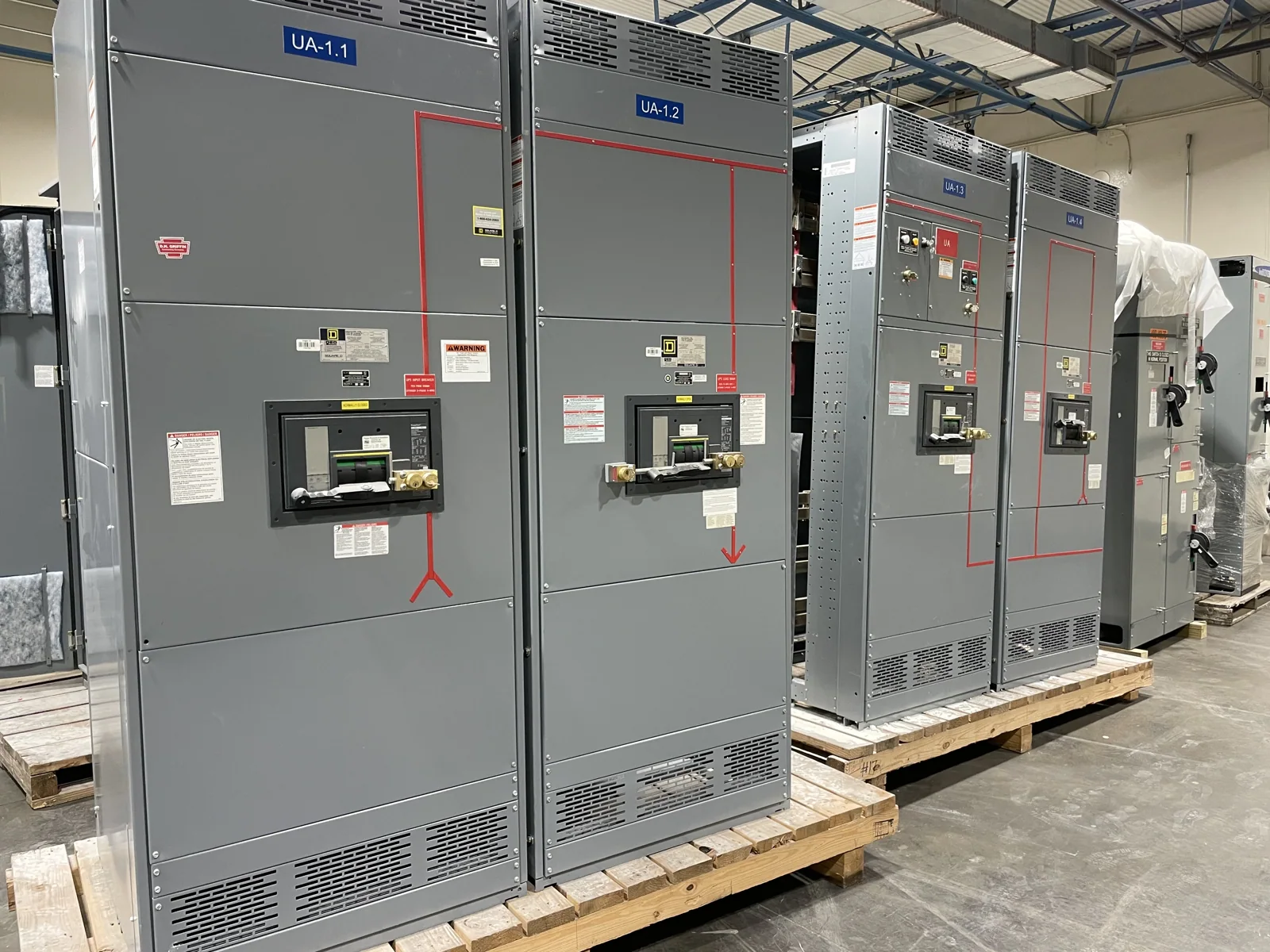
Start with the Eaton markings and actual records
Eaton-marked switchgear with spare breakers can be a useful Ohio surplus lot, but a brand name alone does not identify what is available. Evaluate the physical lineup, each removable device, and the records connecting them. Treat Eaton as a marking to verify on every item, not as proof of affiliation, authorization, condition, price, or compatibility with another Eaton-marked assembly.
Begin with the lineup count. Record how many sections are present, how each is labeled, and whether its function is main, feeder, tie, metering, or another documented role. For each visible nameplate, transcribe manufacturer marking, model or catalog wording if shown, voltage, continuous current, interrupting or withstand information, phase details, and serial or identification number. Do not estimate from enclosure size or appearance; if a rating is not visible or documented, call it unknown.
Count every spare breaker separately. Give each loose device its own inventory line with actual markings, frame or device description if stated, rating information, accessories, and storage location. A breaker found near a lineup is not automatically a spare for it. Drawings, schedules, purchase records, photographs, and maintenance documents may establish association; unsupported assumptions cannot.
Completeness means matching devices to the release boundary
List lineup sections, installed breakers, loose spare breakers, shutters or barriers, covers, hardware, control components, and documents separately. Note missing devices and components instead of treating an empty compartment as complete. Identify adjacent equipment that is excluded, retained by the owner, or subject to another party’s approval.
Known compatibility must come from records or matching markings. A spare breaker may have a different rating, accessory package, connection arrangement, or intended position. Classify it as a documented match, a possible match requiring confirmation, or an unknown relationship. Do not assume interchangeability because cases look similar or share a brand marking.
A hypothetical inventory checklist
Hypothetical example: a proposed lot contains three Eaton-marked lineup sections and five separately stored breakers. Record each section’s visible label and ratings; identify the installed device in each position; give every loose breaker its own marking and storage note; and flag two breakers whose intended positions are unknown. State whether barriers, covers, drawings, and shipping supports are present.
- Lineup: section count, labels, main and feeder designations, and retained boundary.
- Devices: installed and loose quantities, markings, ratings, accessories, and documented association.
- Condition: enclosure, doors, viewing windows, visible insulators, corrosion, impact, water exposure, contamination, and missing parts.
- Records: nameplate photos, one-line diagrams, schedules, ownership confirmation, and known release approvals.
Condition and documentation shape the evaluation
Existing nameplate images and safe exterior photos reduce uncertainty. Include wide views showing lineup context and close views of readable labels, without opening compartments or touching equipment. The seller does not need to test, operate, open, dismantle, or troubleshoot anything for an evaluation.
Describe condition factually: visible rust, bent panels, missing covers, damaged paint, dust, moisture evidence, cracked viewing material, or unknown storage history. Protected storage differs from weather exposure, but neither proves internal operating condition. Do not call equipment tested, refurbished, serviceable, or ready for reuse unless authoritative records establish that fact. Keep unknown condition labeled unknown.
Potential offer factors include complete sections, documented ratings, identifiable spare breakers, demonstrated or unresolved compatibility, missing components, physical condition, ownership clarity, and the practicality of releasing the lot. Voltage class is not limited by the route title; equipment in any voltage class can be considered subject to actual markings and records. More pieces do not automatically mean a stronger evaluation if identities or the release boundary are unclear.
Plan a safe release and practical access
Release planning should identify ownership, removal authority, sections that must remain in service, and the authorized release window. Access approvals are a coordination item: share the site contact, entry rules, escort requirements, loading restrictions, and security or outage constraints. Do not treat a proposed date as confirmed until authorized parties agree.
Qualified, authorized personnel must establish safe conditions, perform required disconnecting and isolation, and determine how removal can occur. The seller should not open, operate, dismantle, touch energized equipment, or test it. After agreement, the buyer handles the crane, qualified disconnects, rigging, loading, freight, and hauling. The seller is not asked to absorb those removal tasks or costs, although information about doors, clearances, floors, docks, overhead obstructions, and approved arrival windows helps coordinate the work.
For a large lineup, describe the route to the loading point without promising a particular method. Note stairs, narrow openings, elevators, outdoor transitions, or restricted truck access when known. Record spare-breaker storage and packaging separately. Unknown dimensions, weights, lifting points, or access restrictions should be labeled for confirmation rather than invented.
Questions to send with an Ohio buyer inquiry
- What Eaton markings and ratings are visible on every lineup section and spare breaker?
- How many sections are included, and which main, feeder, tie, or metering positions are in the lot?
- Which spare breakers have documented associations, and which matches remain unknown?
- What components are missing, retained, damaged, moisture-exposed, or stored separately?
- Who owns the equipment and can approve release, site access, isolation, and loading coordination?
- What records and safe exterior photos are available, and what site restrictions could affect removal?
Send the documented inventory, visible markings, condition notes, and release information together. That gives a buyer a reliable basis to review the lot and make a potential cash offer without asking the seller to test equipment or make unsupported compatibility claims. Once the seller accepts and the sale is agreed, payment is made upfront before the agreed pickup.