Define the Siemens-marked lot before counting it
A usable inventory begins with the physical boundary of the proposed sale. A Siemens name or label is a marking to verify on each item; it is not proof of affiliation, authorization, model compatibility, price, or condition. Describe every installed lineup section separately from every breaker already removed and from every loose spare. If the lot comes from a decommissioned data center or a shut-down power plant, identify the room, lineup, section position, and storage area without assuming that nearby equipment is included.
Consider all voltage classes, but do not infer a class from enclosure size, paint, or a familiar-looking front. Record the full wording visible on assembly and device nameplates, including voltage, current, frequency where shown, interrupting information where shown, and manufacturer markings. The assembly rating belongs to the lineup or section; a removable breaker has its own ratings and identification. Those values can differ, and an undocumented match should remain unknown rather than being presented as compatible.
Identification and documentation that clarify ownership
Existing one-line diagrams, equipment schedules, photographs from prior records, purchase documents, and decommissioning lists can establish what was installed and what was stored. Send the pages that identify the lineup, section numbers, breaker designations, and ownership boundary. A Siemens-marked breaker sitting beside a different manufacturer’s section should be listed as a separate item unless records establish its association. Do not create a catalog number from an incomplete label.
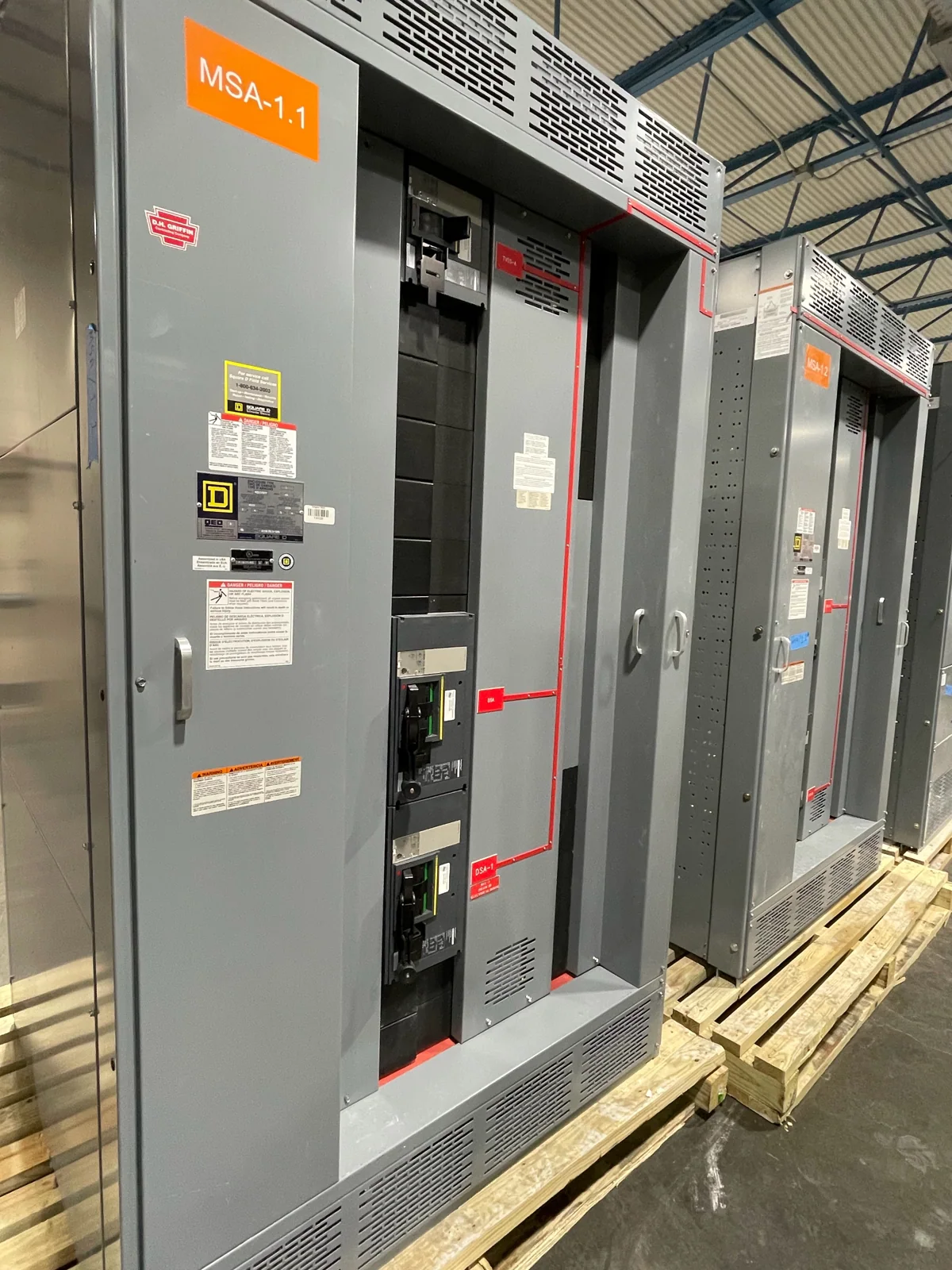
Safe exterior photos are useful: capture closed doors, visible nameplates, section labels, breaker faces that are already accessible, and pallets or cabinets as stored. A seller should not open compartments, operate handles, rack out a breaker, touch equipment, or test anything for photographs. The buyer does not require seller testing. Qualified, authorized personnel must establish safe conditions and handle isolation and disconnection.
Completeness: installed sections, removed breakers, and spares
Completeness is more than a section count. For each installed section, list the lineup identifier, position, visible device label, doors and covers present, and any documented accessory or control component. For each breaker already removed, list its own visible marking, stored quantity, packaging, and the section or position it is believed to serve. Use “association unknown” when the record does not support a match. Separately list spare breakers, trip units, shutters, lifting devices, hardware, relays, and manuals; do not quietly merge them into the installed lineup.
Hypothetical inventory example: a proposed lot could contain two Siemens-marked lineup sections in an electrical room, three breakers already on labeled pallets, one loose breaker with an unreadable portion of its marking, and two spare components in a maintenance cabinet. The correct description would preserve those locations and uncertainties. It would not claim that all six devices fit either section, or that the loose item is a spare for the lineup.
Condition details that affect a potential offer
Report observable condition without opening or manipulating equipment. Note whether cabinets are indoors or outdoors, dry or exposed to moisture, intact or dented, and protected from dust, corrosion, impact, or contamination. For removed breakers, describe pallet stability, packaging, visible cracks, missing covers, bent hardware, and whether identification remains legible. For installed sections, state what is visible from the exterior and identify missing doors, barriers, labels, or accessories if documented.
Condition is not a substitute for verification. Unknown storage history, incomplete records, mixed lots, environmental concerns, and uncertain breaker-to-section associations can reduce confidence in valuation. Conversely, a coherent schedule, traceable labels, complete exterior enclosures, and orderly protected storage may make the lot easier to evaluate. None of these observations should be described as a warranty of operation or compatibility.
What shapes valuation and the release plan
A potential offer can reflect the quantity, documented voltage and current information, Siemens markings verified item by item, section dimensions, included devices, completeness, condition, ownership clarity, and the cost of separating known assets from unknown ones. Freight practicality also matters: section dimensions, approximate weights if existing records provide them, pallet condition, doors, stairs, dock access, and the path to a truck can change the handling plan. No price or timeline should be assumed before the lot is reviewed.
After reviewing the lot, the buyer can provide a cash offer; once the seller accepts and the sale is agreed, payment is made upfront before the agreed pickup under the agreed terms. The seller does not need to test the equipment or perform removal. The buyer handles qualified disconnects, crane needs, rigging, loading, freight, and hauling. Site access approvals, escort rules, outage coordination, induction requirements, and pickup hours should be coordinated with the owner or facility contact; coordination does not shift removal costs to the seller.
Practical seller checklist
- State whether each item is an installed lineup section, an already-removed breaker, or a separately stored spare.
- Transcribe visible Siemens markings and ratings exactly, preserving unreadable portions as unknown.
- Provide existing drawings, schedules, ownership records, and any prior inventory rather than creating unverified matches.
- List section positions, breaker quantities, storage locations, included covers or accessories, and known missing components.
- Share safe exterior photos only; do not open, operate, rack out, dismantle, touch, or test equipment.
- Identify the authorized contact for release, access approvals, isolation coordination, loading access, and retained equipment boundaries.
The strongest submission is a transparent lot map, not an inflated count. Separating what is documented from what is merely nearby lets a buyer evaluate Siemens-marked switchgear and drawout breaker lots responsibly across Ohio, whether the source is a data center retirement, a power-plant shutdown, or another surplus release.