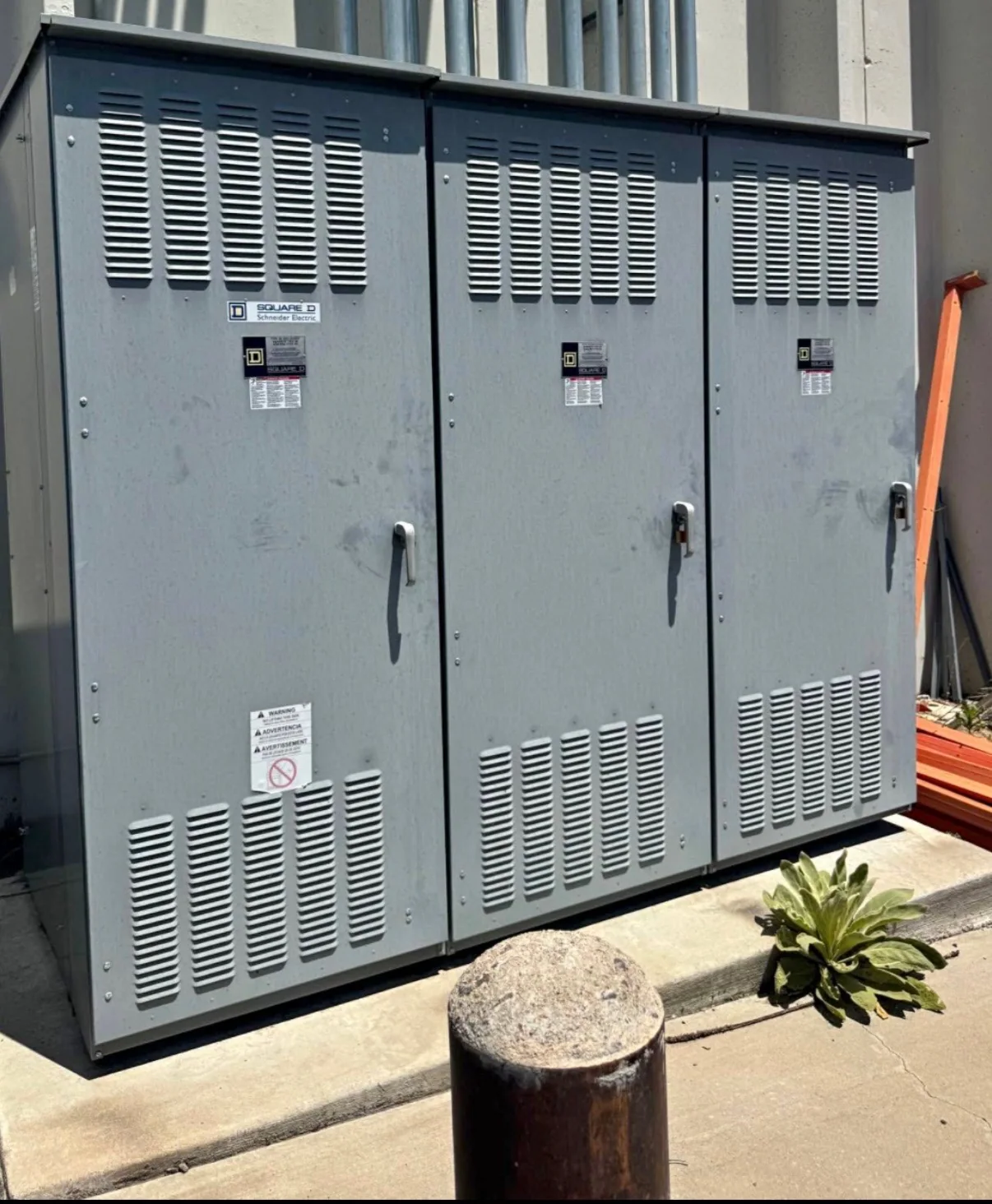
What exactly is included in a Schneider-marked busway lot?
If you are evaluating surplus electrical equipment in Ohio, the first question is not simply how many tap boxes are on a pallet. It is which items can be documented as one identifiable busway system, and which are only nearby parts. A Schneider marking should be treated as a marking to verify on each item, not proof of affiliation, authorization, age, condition, or compatibility. Record the wording visible on the busway housing, tap box, label plate, or packaging rather than replacing it with an assumed product name.
Separate straight lengths from elbows, tees, end closures, joints, hangers, covers, and tap boxes. Note whether each tap box is associated with a run or stored separately. Similar appearance does not establish matching dimensions, connection details, conductor arrangement, rating, or compatibility.
Which identification records help a buyer evaluate it?
Start with purchase documents, electrical schedules, removal lists, layout drawings, prior inventory sheets, and readable nameplates. For every tap box, capture the visible manufacturer marking, model or catalog wording, voltage and current information exactly as shown, phase or system notation if documented, and any serial or identification number. Do not turn a partial or obscured marking into a catalog number; record it as unknown.
For busway, record each straight section's marked length, system marking, rating information, and identification code when visible. Describe fitting type and visible orientation. A rack, room, or crate number can prevent a loose tap box from being attributed to an installed run. Safe exterior photographs are useful. The seller does not need to open, operate, dismantle, touch energized equipment, or test anything.
How should completeness and condition be described?
Completeness is more than a count of housings. List whether each tap box has its cover, visible operating parts, fasteners, mounting hardware, and separately stored accessories. Mark missing, loose, unverified, or unidentified components. If a run was removed in sections, relate section numbers to stored joints or end pieces, keeping confirmed items separate from possible matches.
Condition notes should stay factual and non-invasive. Mention dents, corrosion, paint loss, water staining, visible cracked insulation, damaged labels, bent connection features, crushed packaging, or long outdoor storage. State whether equipment is installed, palletized, crated, or mixed. Unknown internal condition remains unknown; no seller testing is required. A clean exterior does not establish electrical performance.
What affects a potential offer?
Potential valuation depends on evidence and lot usefulness, not merely apparent metal weight. Helpful factors include documented Schneider markings, legible ratings, consistent sections and fittings, identifiable tap-box quantities, intact covers, and organized storage. A traceable set may be easier to evaluate than mixed parts.
Certainty declines with missing labels, unknown ownership, mixed manufacturers, unverified compatibility, undocumented alterations, exposure, damaged connection ends, incomplete covers, or an unknown intended run. Consider voltage only from documented markings, never size or color. Reconciliation, access coordination, irregular packaging, freight planning, ownership, and release authority also affect review; no price should be assumed beforehand.
Worked inventory checklist for a hypothetical lot
Hypothetical example: an Ohio facility reports Schneider-marked busway and several tap boxes after a shutdown. The following is a documentation format, not a claim about any actual site or equipment.
- Busway: 12 straight sections, with each visible length and marking recorded separately; two sections have unreadable labels marked unknown.
- Fittings: three elbows, four joints, two end closures, and a quantity of hangers, counted apart from straight sections.
- Tap boxes: five units with visible Schneider markings, two units with partial or absent markings, and each unit photographed externally with its storage location.
- Records: one removal list and one drawing, with no assumption that every drawing symbol remains in the stored lot.
- Condition: one crate has water staining and one housing has a dent; internal condition and electrical performance are not represented as verified.
- Lot boundary: ownership, included accessories, and the identity of any adjacent retained equipment remain to be confirmed.
How are access, release, and removal coordinated?
Before evaluation or pickup, identify the owner or authorized release contact, equipment that must remain, access approvals, loading restrictions, available hours, and building or security coordination. Equipment from a decommissioned data center or shut-down power plant still requires confirmation of ownership, condition, and release date.
The buyer coordinates qualified disconnects, isolation, crane or other lifting needs, rigging, loading, freight, and hauling. The seller is not expected to perform testing or removal. Access approvals are a coordination matter: provide the contact and known constraints so the work can be planned safely, without shifting the removal work or related handling responsibilities to the seller. Payment is upfront after agreement, subject to the agreed equipment and release terms. Share records and safe exterior photos, identify unknowns plainly, and let qualified authorized personnel establish safe conditions before any handling occurs.
Questions to answer before requesting an evaluation
- Which items visibly carry a Schneider marking, and what exact wording is readable on each one?
- How many straight lengths, tap boxes, joints, elbows, closures, hangers, and loose accessories are present?
- Which components are installed, crated, palletized, or stored separately?
- Are voltage, current, length, model, or serial details documented, and which fields are unknown?
- Are any manufacturers mixed in the lot, or is that fact not yet established?
- Who owns the equipment, who can authorize release, and what equipment must remain?
- What access approvals, loading constraints, and release window should be coordinated?