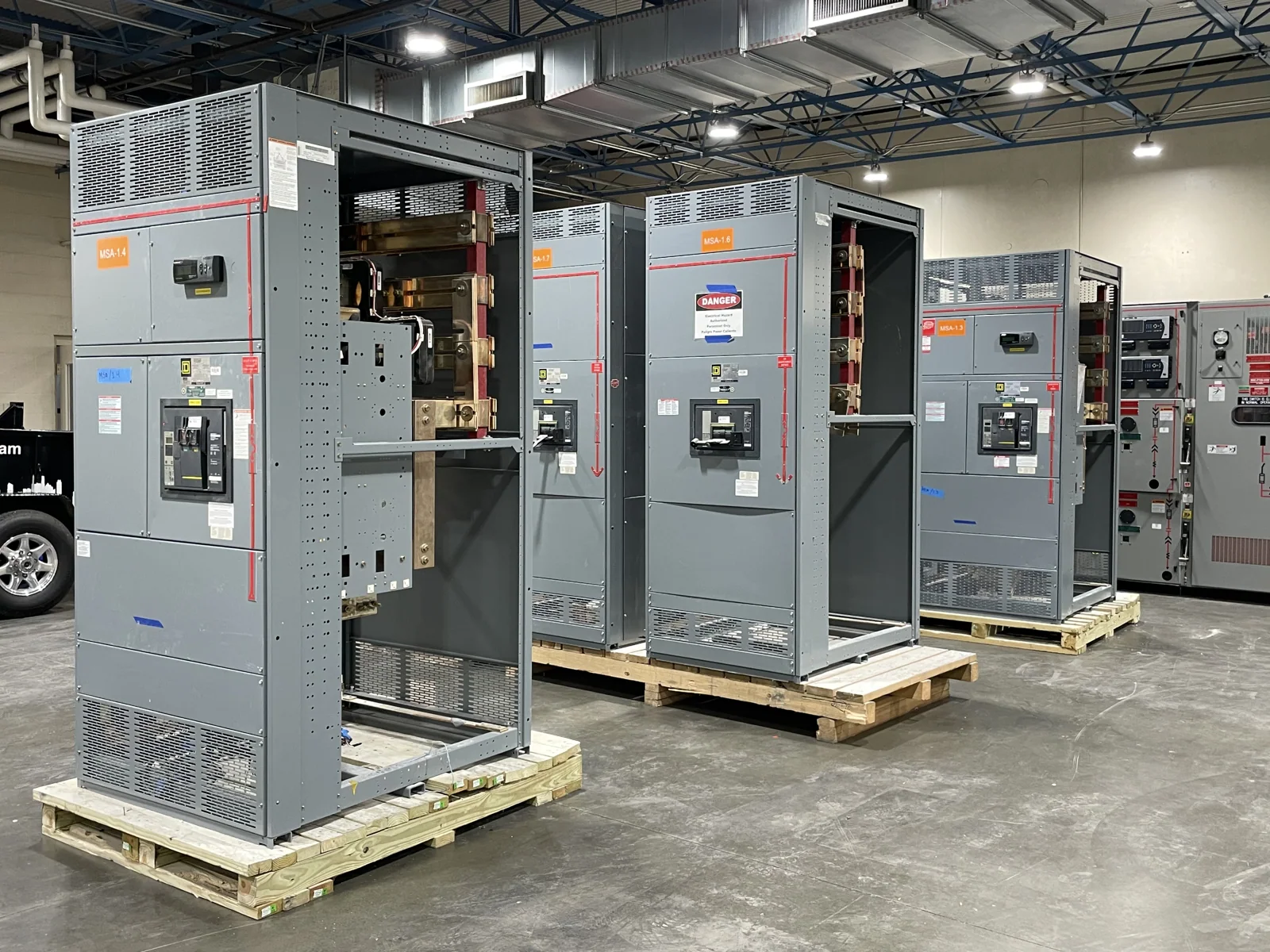
Schneider-marked motor control center equipment can be valuable as a complete lineup, matched sections, or separately stored starter buckets. In Ohio, a useful evaluation begins with what is documented and released, not with the brand marking alone. The buyer considers MCC equipment across voltage classes and does not require the seller to test, operate, open, or dismantle anything. Existing records and safe exterior photos are enough to begin describing the lot.
Identify the assembly and each removable item
Start with the assembly nameplate on the vertical lineup or section, if safely visible from the exterior. Record the manufacturer marking, lineup or section designation, stated voltage, bus or current information, enclosure details, and any model or series wording shown on the record or nameplate. Do not infer a rating from cabinet size, paint, age, or a familiar-looking door. A lineup nameplate describes the assembly; it does not automatically establish the rating, function, or interchangeability of every bucket inside it.
Then inventory labels on individual buckets, starters, drives, soft starters, overload units, or control modules without opening compartments. A bucket may carry its own voltage, horsepower, current, control-voltage, or identification information. Keep those facts separate from the assembly rating. Schneider is a marking to verify on each item, not proof of affiliation, authorization, model compatibility, price, or condition. Unknown wording should remain unknown rather than being completed by assumption.
Documentation that makes the lot understandable
Useful records can include the MCC schedule, one-line drawings, bucket schedules, maintenance lists, purchase records, decommissioning notes, and photographs already held by the owner. A schedule may show positions that are empty, reserved, bypassed, or assigned to controls no longer present. Compare records with the visible section count, but do not ask anyone to remove covers or investigate energized equipment. If records conflict, preserve both versions and identify the conflict.
Also identify ownership. Controls, communications hardware, spare buckets, and loose drives may be retained even when an enclosure is available. State whether the sale boundary includes a full section, a bucket at a named position, loose spares, or only documented exterior components. If another party owns the building, process controls, or adjacent electrical equipment, authority to release each item must be confirmed before an offer is finalized.
Completeness and condition: describe, do not guess
Completeness is more than counting doors. Note the number of vertical sections, position labels, installed buckets, empty spaces, spare buckets, feeder or main sections, and separately stored controls. Record known missing doors, handles, trim, mounting hardware, wireway covers, plugs, nameplates, or documentation. A bucket that is present but not associated with a section should remain a separate line item until its match is documented.
Condition notes should stay observational: indoor or outdoor storage, dust, moisture exposure, corrosion, impact, damaged paint, missing hardware, packaging, and legible labels. Do not claim that a device operates, meets a standard, or fits another section merely because it looks similar. There is no seller testing requirement. Qualified, authorized personnel establish safe conditions and handle isolation and removal; the seller should provide records and safe exterior views only.
What can affect a potential offer
Potential value may reflect documented voltage and current information, complete sections, identified removable buckets, included drives or controls, and agreement between records and physical inventory. Missing parts, uncertain ownership, corrosion, water exposure, damaged enclosures, undocumented modifications, and unknown bucket associations can reduce confidence.
Release boundaries and timing also matter. Equipment still needed for production, building power, or controls should be excluded until an authorized release date is established. After reviewing the equipment and boundary, the buyer can make a cash offer; once the seller accepts and the sale is agreed, payment is made upfront before the agreed pickup, with the amount depending on the documented lot and review. The buyer handles qualified disconnects, crane needs, rigging, loading, freight, and hauling. Access approvals are coordinated with the seller and site contacts, not shifted into seller-funded removal.
Worked inventory checklist
Hypothetical example: an owner has Schneider-marked MCC material from a retired process area, but available records are incomplete. This is an organization method, not a claim about any Ohio installation:
- Assembly: one lineup nameplate, voltage and current wording copied exactly, section count, and unknown fields.
- Sections: identifiers, main or feeder function if documented, visible position labels, exterior condition, and whether each is included or retained.
- Buckets: each visible label, position association, stated voltage or control details, starter or drive description, and whether it is installed, loose, spare, or unknown.
- Controls: drives, overloads, control transformers, communication modules, and owner-retained components listed separately.
- Records: schedule or drawing filename, date if known, conflicts against the visible inventory, and safe exterior photos tied to section identifiers.
Access, release, and questions for the buyer
Before pickup planning, provide the authorized contact, ownership confirmation, release boundary, expected window, access rules, loading restrictions, and escort or approval process. Share doorway, aisle, dock, elevator, floor, and overhead-clearance information only when known from site records or the responsible contact; do not dismantle anything to obtain measurements.
Helpful questions include: Which sections and buckets are included? Which controls remain? Do records identify every removable bucket? Are items stored elsewhere? Is any equipment still connected or needed? Are there known moisture, contamination, impact, or environmental concerns? Who can authorize release and coordinate access? Clear answers, including “unknown,” let the buyer evaluate Schneider-marked MCC sections and buckets without unsafe seller activity or unsupported compatibility claims.