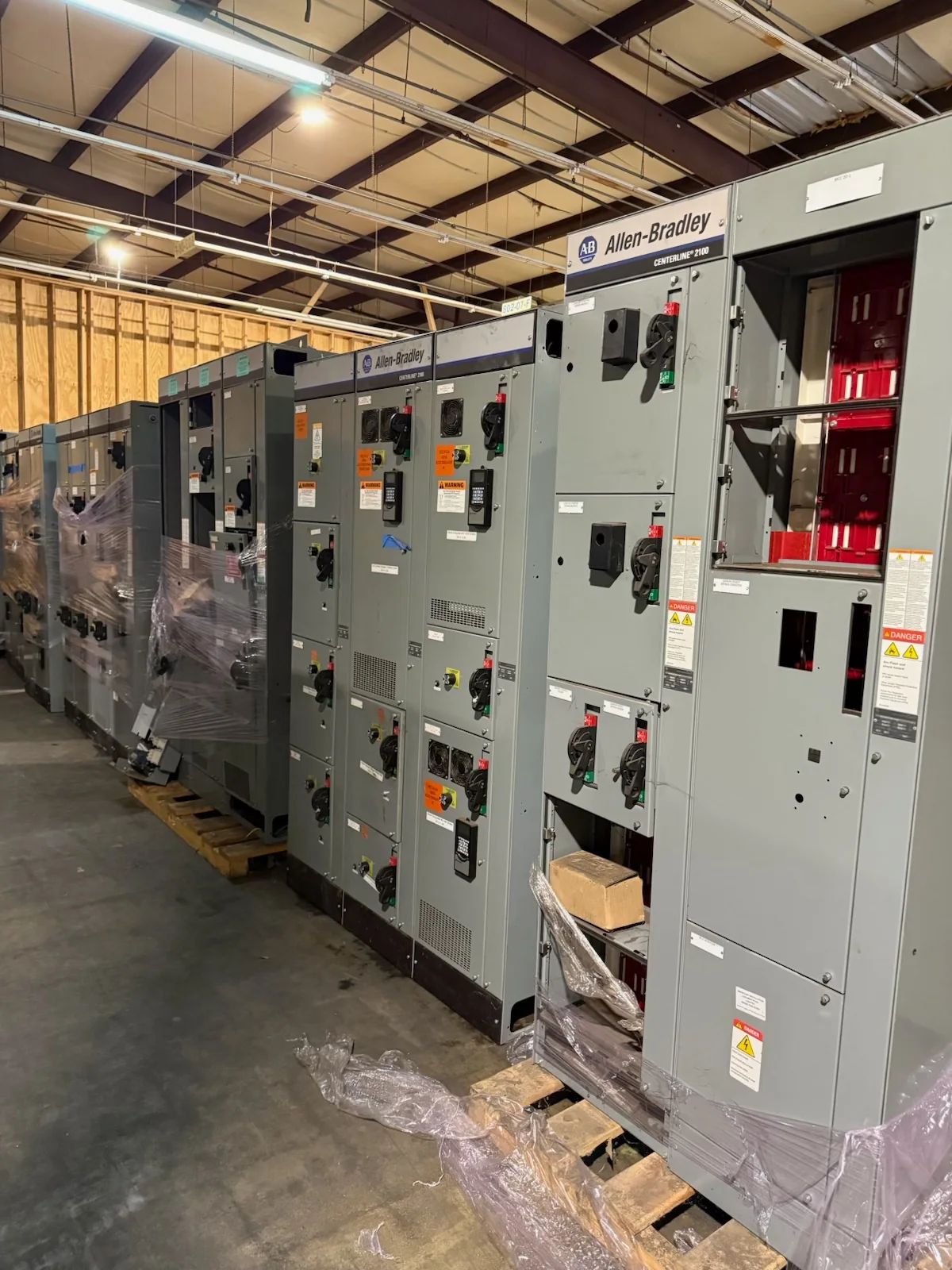
1. Identify what is actually available
Selling an ABB-marked MCC bucket inventory in Ohio starts with defining the lot, not guessing a model or assigning value from an enclosure photo. An MCC lineup may contain vertical sections, starter buckets, feeder units, variable-frequency-drive compartments, spare positions, and controls that are not part of the removable bucket itself. Treat ABB as a marking to verify on each item. It does not prove affiliation, authorization, compatibility, condition, or model identity.
Begin with the existing lineup drawing, bucket schedule, purchase record, maintenance list, or decommissioning inventory if one exists. Record the number of sections and the position of each removable unit. Capture visible exterior nameplate wording, catalog or identification text, voltage, current, horsepower or other ratings only when documented on the item. Do not infer a voltage class from appearance. This buyer considers equipment across voltage classes, while the correct classification still depends on records and visible markings. Keep the MCC assembly label separate from labels on individual buckets, drives, starters, overloads, or control components.
2. Reconcile the schedule with the physical lot
A schedule is a useful map, but it is not proof that every listed bucket remains present. Compare each scheduled position with the removable unit that is visibly there. Mark a position as present, empty, reserved, unknown, or not included. Separately count loose buckets, spare starters, doors, trim, control transformers, drives, plug-in units, and hardware. A bucket stored on a pallet should not be silently assigned to an energized lineup position merely because the labels appear similar.
Hypothetical inventory checklist: an MCC assembly with four documented vertical sections; eight installed removable buckets; two loose buckets tagged as spares; one separately stored drive; a bucket schedule identifying motor loads; and three positions shown on paper but not located during the count. For this example, the offer review would distinguish the eight installed units from the two loose units, identify the drive as a separate component, and flag the three unmatched positions as unknown. It would not assume that any spare fits a position without supporting documentation.
- List the section or position reference for every included bucket.
- Copy visible manufacturer, series, identification, voltage, current, and control markings without completing missing text by guesswork.
- Note whether doors, handles, plug-in connections, fuses, starters, overloads, drives, and control parts are present or absent.
- Mark shared control wiring, reserved positions, and components retained by the owner rather than pooling them into the sale.
3. Document completeness and condition safely
Use existing records and safe exterior photos to make the inventory legible. Useful images show the closed bucket face, exterior label, lineup section label, stored packaging, and any visible impact, corrosion, water staining, contamination, or missing cover. A clear photo of a label is more helpful than a broad room image. Do not open compartments, operate handles, remove covers, touch conductors, or test equipment. No testing is required from the seller. A qualified, authorized team must establish safe conditions and handle isolation and removal.
Condition is more than whether a bucket looks clean. Note indoor or outdoor storage, original packaging, evidence of moisture, bent sheet metal, damaged doors, missing hardware, altered wiring, and whether identification remains readable. State what is unknown. If a bucket schedule lists controls that cannot be found, preserve that uncertainty instead of describing the unit as complete. If an assembly and a loose bucket carry different labels, report both and leave compatibility for evaluation.
4. Understand what can affect a potential offer
Potential valuation reflects the quality of the identified lot as well as the equipment. Factors can include the number of positively identified buckets, documented ratings, recognizable section relationships, included drives or starters, matching doors and hardware, packaging, visible condition, and the cost and complexity of handling. A complete, traceable group may be easier to evaluate than a larger pile of unidentified units. Missing positions, mixed or unreadable markings, corrosion, contamination, and uncertain ownership can reduce confidence or require clarification.
Ownership and release authority matter before any commercial agreement. Confirm whether the buckets belong to the facility, a tenant, an equipment owner, or another party. If records refer to a plant shutdown or a data-center decommissioning, provide the authorized contact and the boundary of the equipment being released; do not assume adjacent controls or retained sections are included. A buyer can review all voltage classes, but documented facts still govern the evaluation rather than a hoped-for application.
5. Plan access, release, and payment
After the lot is identified, share the expected release date, site rules, loading hours, contact for access approval, floor or room restrictions, and any known route limitations. Describe where the buckets are stored and whether they remain in an MCC lineup or are already loose. Access approvals are a coordination item: the owner or authorized site contact grants entry, while the buyer handles qualified disconnects, crane needs when applicable, rigging, loading, freight, and hauling. The seller should not dismantle or prepare energized equipment for removal.
Before release, provide the agreed equipment list, ownership confirmation, and any known exclusions in writing. After reviewing the inventory, the buyer can provide a cash offer; once the seller accepts and the sale is agreed, payment is made upfront before the agreed pickup. A seller does not need to test the buckets. The safest decision sequence is therefore straightforward: identify every ABB marking, reconcile the schedule, document what is present and unknown, confirm authority and access, then release the defined lot under coordinated site conditions.