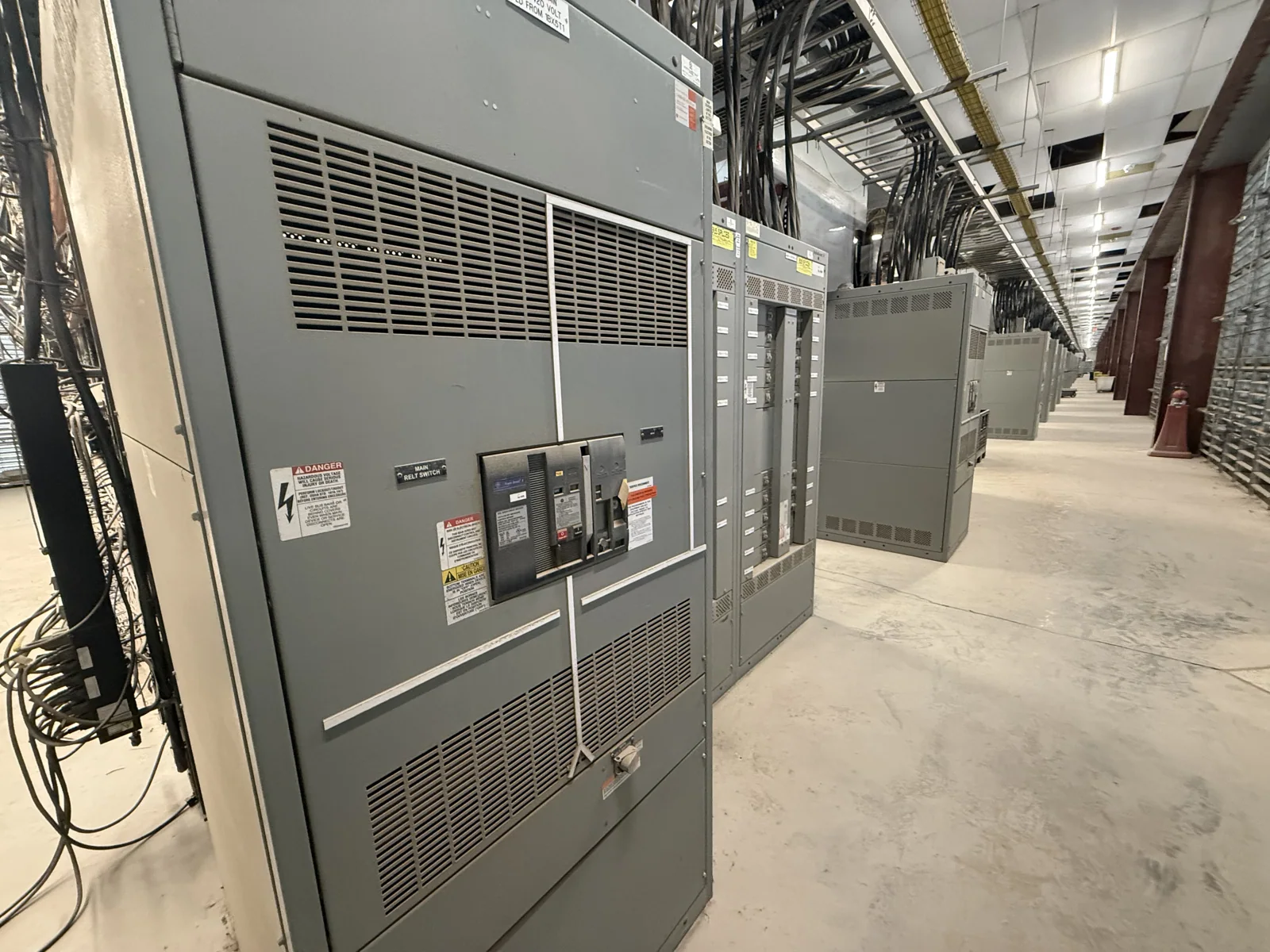
A hypothetical Ohio shutdown leaves a maintenance room with three vertical motor control center sections, a handwritten bucket schedule, and a pallet of loose starter buckets labeled by room. The owner knows the equipment is marked Cutler-Hammer, but does not know whether every loose unit belongs to the lineup, whether any section is complete, or which components must remain. That is a useful starting point for evaluation: inventory what is available, separate facts from assumptions, and define the release boundary before removal planning.
Start with the lineup and its paper trail
For Cutler-Hammer-marked MCCs and buckets in Ohio, begin with the visible identity of each vertical section. Record the section label, lineup position, nameplate wording, documented voltage and current information, and available assembly or control drawings. Do not treat the Cutler-Hammer marking as proof of affiliation, authorization, model compatibility, price, or condition. It is an identification clue to verify on each item.
List starter buckets installed in each section separately from buckets stored on shelves, in crates, or on pallets. Existing schedules, maintenance records, purchase documents, and photographs can help associate a stored unit with a section, but an apparent match is not confirmed. Mark an item as known match, possible match, or unidentified. If a record is absent, say so rather than inventing a catalog number or assuming similar-looking buckets interchange.
Make completeness visible
A useful lot description tells a buyer what is present and what is not. Count vertical sections, then note each bucket position, bucket label, starter or controller marking, visible hardware, doors, covers, and documented control components. Include spare buckets as their own line items. A loose bucket may be valuable, but its evaluation differs from one tied to a complete section and schedule.
Flag shared control circuits, reserved spaces, missing doors, absent hardware, removed devices, and sections that are not included. If a bucket schedule lists ten starters but only seven are visible, preserve that discrepancy in the inventory. Do not represent an enclosure count as a complete MCC lot. Likewise, do not combine equipment from different rooms merely because the labels appear similar. The intended sale boundary may be one lineup, selected buckets, or a larger shutdown inventory; that boundary should be written down.
Condition information without seller testing
Condition can be documented without asking the seller to open, operate, dismantle, touch, or test equipment. Safe exterior photographs may show nameplates, section fronts, bucket labels, packaging, corrosion, impact marks, water staining, missing covers, or long-term exposure. Existing maintenance notes can identify a known failed component, an incomplete bucket, or a section removed from service, but unknown internal condition should remain unknown.
No seller testing is required for an evaluation. A qualified, authorized team must establish safe conditions and handle isolation or disconnection. Sellers should not remove covers or try to prove operation. Describe whether equipment is installed, disconnected, or stored only when that status is documented by an authorized source. For stored buckets, note whether they are protected, stacked, crated, or exposed, and whether labels remain legible.
What can affect a potential offer
A potential offer may reflect verified identity, documented voltage class, section count, bucket quantity, completeness, condition, and how confidently units can be matched to their lineup. Clear records reduce uncertainty. A complete schedule paired with labeled sections is different from a mixed pallet of unidentified buckets. Visible damage, missing doors, corrosion, contamination, incomplete control wiring, or uncertain ownership can affect evaluation as well.
Lot structure matters. A buyer may evaluate a coherent lineup and associated spares differently from scattered units with no documented relationship. Release date, operating restrictions, loading space, building access, and coordination needs also shape planning. These are evaluation factors, not promises of price, acceptance, or compatibility. The final decision depends on the equipment and documented sale authority.
Worked inventory checklist
For a hypothetical three-section lot, a practical checklist could read:
- Section A: exterior Cutler-Hammer marking photographed; assembly records available; six installed bucket positions listed; two positions documented as reserved; condition of interior components unknown.
- Section B: section label visible; four installed starter buckets identified by local labels; one door reported missing; the applicable schedule is available but the relationship between two control units is not confirmed.
- Section C: stored rather than energized, according to an existing shutdown record; three bucket bodies on a pallet; two labels readable and one unit unidentified; no claim made about interchangeability.
- Separate spares: five loose buckets counted individually, with each visible marking, storage location, packaging status, and known or unknown association recorded.
That checklist distinguishes the lineup from loose inventory and makes gaps easy to discuss.
Coordinate access and safe release
Before removal, provide the authorized site contact, ownership or release documentation, access approvals, operating restrictions, loading hours, door and travel-path information, and known crane or rigging constraints. Access approvals are coordination, not a request for the seller to absorb removal costs. The buyer handles crane coordination, qualified disconnects, rigging, loading, freight, and hauling. The seller does not need to dismantle or prepare energized equipment.
Payment is made upfront after agreement, with the exact arrangement tied to the agreed lot and release conditions. Share existing records and safe exterior photos for an initial review, identify unknown facts honestly, and let qualified authorized personnel establish safe conditions. A precise inventory is the most useful way to present Cutler-Hammer-marked MCC sections, starter buckets, and separate Ohio surplus lots for consideration.