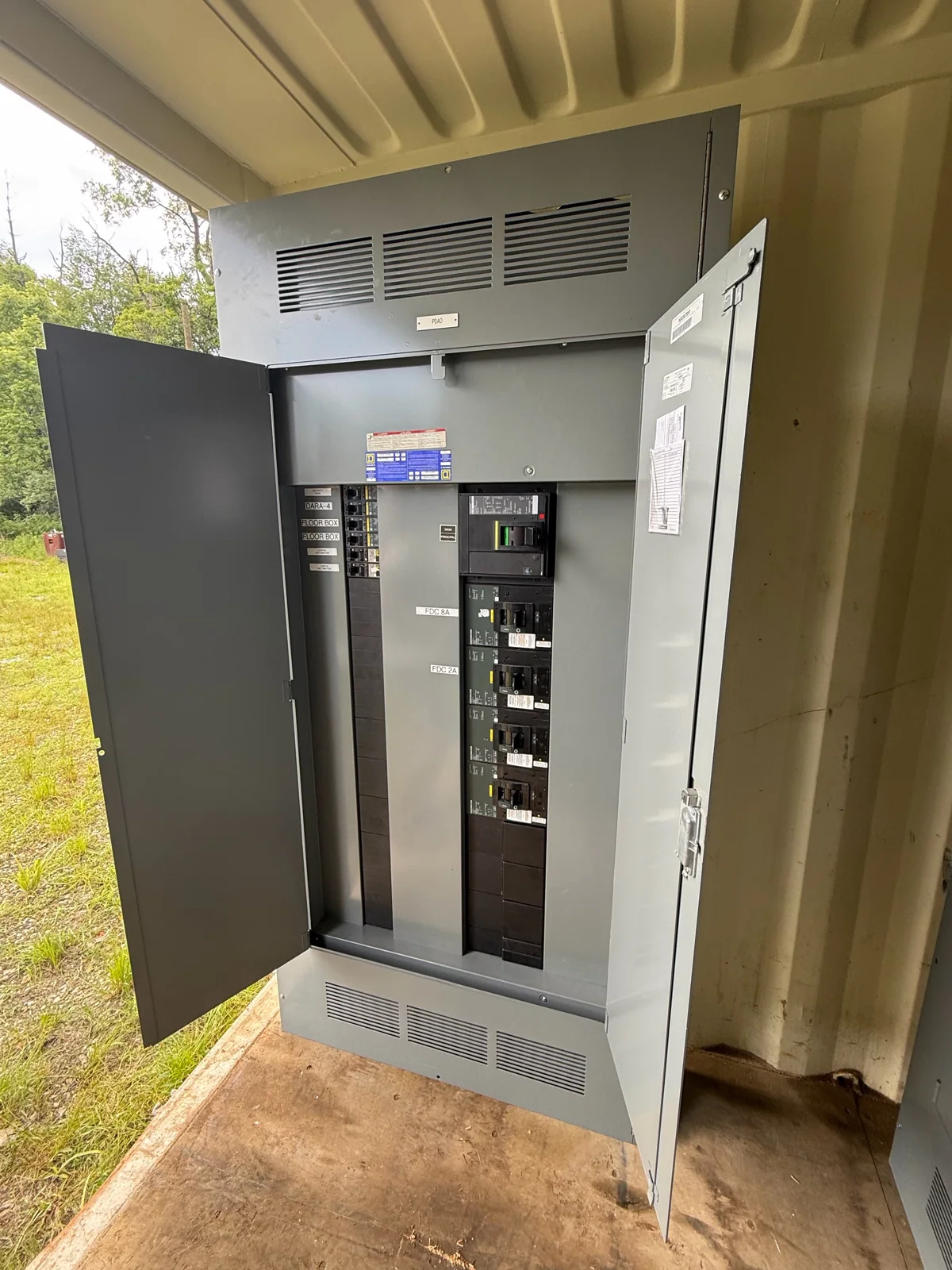
Why GE-marked section inventory needs a careful count
GE-marked switchgear can be valuable surplus, but a visible GE name is only a marking to verify on each item. It is not proof of affiliation, authorization, model compatibility, price, or condition. A buyer evaluating GE switchgear section inventory in Ohio needs to know what is actually being offered: complete sections, incoming devices, outgoing devices, loose breakers, and spare parts. The name on a lineup may identify the complete assembly, while a replacement breaker, relay, meter, or control component may carry a different manufacturer marking. Those facts should be recorded rather than smoothed over.
The same principle applies across voltage classes. Use documented voltage, current, interrupting, bus, and device ratings exactly as shown on records or safely visible labels. Never infer a rating from cabinet size or appearance.
Two hypothetical sale situations, compared
Hypothetical situation one: a documented complete lineup
Imagine a facility replacing a GE-marked lineup while retaining drawings, an equipment schedule, and section labels. The lot contains three connected sections, an identified incoming device, outgoing devices, and two separately stored breakers associated in the records. This is a stronger starting point because counts and positions can be compared without operating anything. The seller should identify retained equipment and the sale boundary. A complete-looking enclosure is not automatically a complete electrical assembly.
Hypothetical situation two: mixed sections and loose inventory
Contrast that with a shutdown where one GE marking appears on two sections, another section has a replacement component with a different brand marking, and loose breakers sit on pallets without confirmed positions. The lot may merit evaluation, but uncertainty affects completeness and valuation. List each loose device as “association unknown” unless a schedule, label, or other record connects it to a section. These situations should not be valued as equivalent merely because both include GE-marked cabinets.
Identification and documentation to assemble
Start an inventory sheet for every section and separately stored device. Transcribe visible manufacturer markings, nameplate wording, section designation, serial information if safely visible, voltage and current language, and function such as incoming, feeder, tie, or auxiliary. Record whether each marking belongs to the assembly, breaker, relay, meter, or another component. One-lines, lineup drawings, schedules, purchase records, and maintenance records can establish relationships, but unknown information should remain unknown.
- Count each complete section individually and note its documented role.
- List incoming and outgoing devices by visible label, position, and stated rating.
- List spare breakers separately, including storage location and any documented section association.
- Identify replaced, mixed-brand, missing, or unreadable components without guessing a model or fit.
- Provide safe exterior photos of labels, fronts, sides, stored items, and visible damage only.
Photographs and records support evaluation; they do not establish compatibility. The seller does not need to test equipment.
Completeness and condition affect a potential offer
A potential offer can reflect whether the listed sections, doors, covers, barriers, devices, control wiring, and documented accessories are present. Missing shutters, hardware, trim, nameplates, or protective devices may matter even when the main enclosure looks sound. A breaker stored beside a lineup is not automatically included, and an installed device is not automatically transferable. Note corrosion, water exposure, impact, bent doors, damaged insulators visible from outside, contamination, cut conductors, or incomplete packaging. Do not open compartments or disturb equipment to improve the description.
Condition is only one factor. The documented ratings, section count, recognizable identity, lot completeness, storage environment, removal complexity, loading constraints, and clarity of ownership can all influence a potential cash offer. The buyer considers all voltage classes and can evaluate equipment from decommissioned data centers and shut-down power plants. Payment is made upfront after agreement; no seller testing is required.
Worked inventory checklist for a GE-marked lot
A useful submission might read like this: “Section A, GE marking visible on exterior, incoming position, documented voltage and current copied from record, condition notes pending safe exterior review.” Follow with “Section B, GE-marked assembly, three outgoing positions shown on drawing, one position appears empty from the exterior.” Then add “Loose breaker 1, marking visible, stored in labeled crate, association to Section B documented,” and “Loose breaker 2, marking visible, association unknown.” If a relay or meter carries a different brand, list that component under the section instead of relabeling the entire assembly. This format lets a reviewer see what is present, what is documented, and what remains unresolved.
Access, release, and removal planning
Before any site visit or pickup, confirm ownership, the authorized release contact, the lot boundary, the expected release window, and approvals for entering the Ohio facility. Access approvals are coordinated with the seller; they do not shift removal costs to the seller. Mention doors, elevators, floor-level changes, overhead obstructions, dock rules, restricted hours, and whether a crane or special rigging plan may be needed. The buyer handles crane work, qualified disconnects, rigging, loading, freight, and hauling. A seller should not open, operate, dismantle, touch energized equipment, or test it. Qualified, authorized personnel establish safe conditions and handle isolation and removal.
For an evaluation, send the section-by-section inventory, available records, safe exterior photos, known ownership restrictions, and access contact. Keep retained or active equipment clearly outside the proposed lot. With those boundaries documented, a GE marking becomes useful evidence rather than an unsupported assumption, and both hypothetical sale situations can be assessed on the facts actually available.