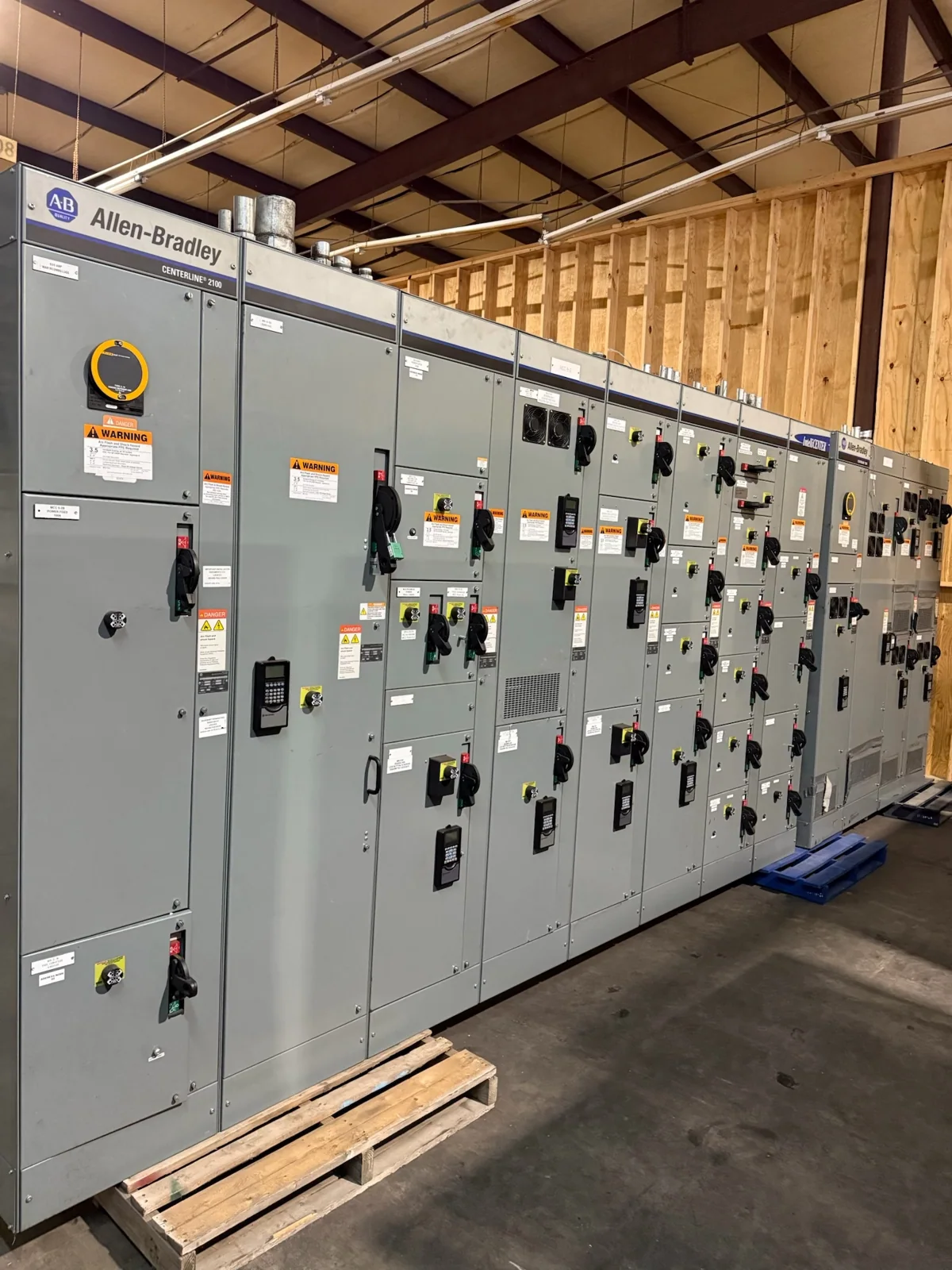
Define the Westinghouse-marked lot before discussing value
A useful buyer review begins with a physical lot that can be described item by item. “Westinghouse” should be treated as a marking to verify on each breaker, not as proof of affiliation, authorization, compatibility, age, or condition. Separate installed breakers, loose spares, drawout elements, stored parts, and accessory boxes. The lot might come from a decommissioned data center, a shut-down power plant, an industrial electrical room, or another facility; the source is useful context, but it does not establish performance.
Count distinct breakers rather than estimating from a room, lineup, or pallet. Note whether each item is a complete device, a breaker body without its mechanism, or a loose component whose association is unknown. All voltage classes may be considered, so do not discard higher- or lower-voltage items because they look different from the rest of the inventory. The physical boundary should say which pieces are included and which remain with the owner.
Identification and documentation that can be checked
For every distinct breaker, record the exact legible catalog, type, serial, frame, voltage, continuous-current, interrupting, and control information shown on the nameplate or other existing record. Preserve punctuation and suffixes rather than “correcting” an unfamiliar number. Photograph the exterior nameplate, front, sides, terminals, labels, shutters, racking features, and accessory markings without opening, operating, or touching the equipment. Safe exterior photos and records are enough for an initial evaluation.
Include one line per item in a schedule. Useful supporting material can include original equipment lists, one-line drawings, purchase records, maintenance logs, storage notes, and removal documentation. These records should be labeled as documented history, not proof that a device still performs. If a label is obscured, missing, or unreadable, write unknown instead of inferring the answer from a neighboring breaker. A Westinghouse mark on one item does not establish that another unmarked accessory belongs with it.
Completeness, accessories, and condition
Accessories can determine whether a lot is a coherent inventory. Count and describe trip units, auxiliary contacts, motor operators, undervoltage or shunt-release components, mounting hardware, racking handles, shutters, interlocks, plugs, terminal covers, wiring harnesses, and manuals only when they are visibly present or documented. Do not assume a part fits because its shape is similar. Keep loose accessories in separately counted groups and identify their documented or unknown association.
Describe condition without claiming age or performance. Record clean, dusty, corroded, dented, painted, water-exposed, heat-affected, incomplete, or packaged as visibly applicable; also note broken covers, missing labels, damaged terminals, and storage damage. A clean exterior is not a test result. Seller testing is not required. Do not energize, operate, dismantle, open compartments, or handle potentially energized equipment to improve the description. A qualified, authorized team establishes safe conditions and handles isolation and removal.
What can affect a potential offer
Potential value reflects more than a brand name. The review may weigh verified catalog and rating data, the number of complete breakers, distinct voltage classes, documented accessory groups, traceable history, visible condition, and whether the lot boundary is clear. A matched set with legible records can be easier to evaluate than a larger mixed pile, while unknown associations, missing mechanisms, corrosion, contamination, and damaged terminals can reduce confidence. These are evaluation factors, not a promised price or compatibility conclusion.
Hypothetical example: a shutdown plant record may list six Westinghouse-marked breakers, but the physical lot may contain four complete devices, one breaker body with an unknown trip unit, and a box of mixed auxiliary parts. The schedule should present those as separate categories rather than calling all six complete. A hypothetical data-center release may include installed breakers and a shelf of spares; list each location and each spare independently, and identify whether any record actually links a spare to a position.
Worked inventory checklist
- Item identifier and exact visible Westinghouse marking.
- Catalog, type, serial, frame, voltage, current, interrupting, and control data, with unknown fields left unknown.
- Installed, loose, stored, or removed status and the physical room, rack, pallet, or cabinet location.
- Complete breaker, incomplete breaker, accessory, or unrelated piece classification.
- Included trip, auxiliary, operating, racking, terminal, and documentation components.
- Visible exterior condition, packaging, contamination concerns, missing labels, and damage.
- Ownership, authorized release contact, release date, and items specifically excluded from the lot.
Attach the source of each statement where practical: nameplate, drawing, inventory sheet, or exterior observation. This makes disagreements visible without turning an assumption into a specification.
Access, release, and payment coordination
Before any pickup, confirm ownership, the authorized decision-maker, the safe release date, site rules, escort or access approvals, outage coordination, loading-area limits, and any documentation required by the facility. Access approvals are coordination details; they do not shift removal costs to the seller. The buyer handles qualified disconnects, crane needs, rigging, loading, freight, and hauling. The seller does not need to test the breakers or prepare them for removal.
After reviewing the lot and release conditions, the buyer can provide a cash offer; once the seller accepts and the sale is agreed, payment is made upfront before the agreed pickup. Timing, access, and release still depend on the authorized site plan and safe conditions. Do not move, open, dismantle, or operate equipment to meet a schedule. Share the inventory, existing records, safe exterior photographs, known exclusions, and the person authorized to release the material; leave electrical work and physical removal to qualified personnel.