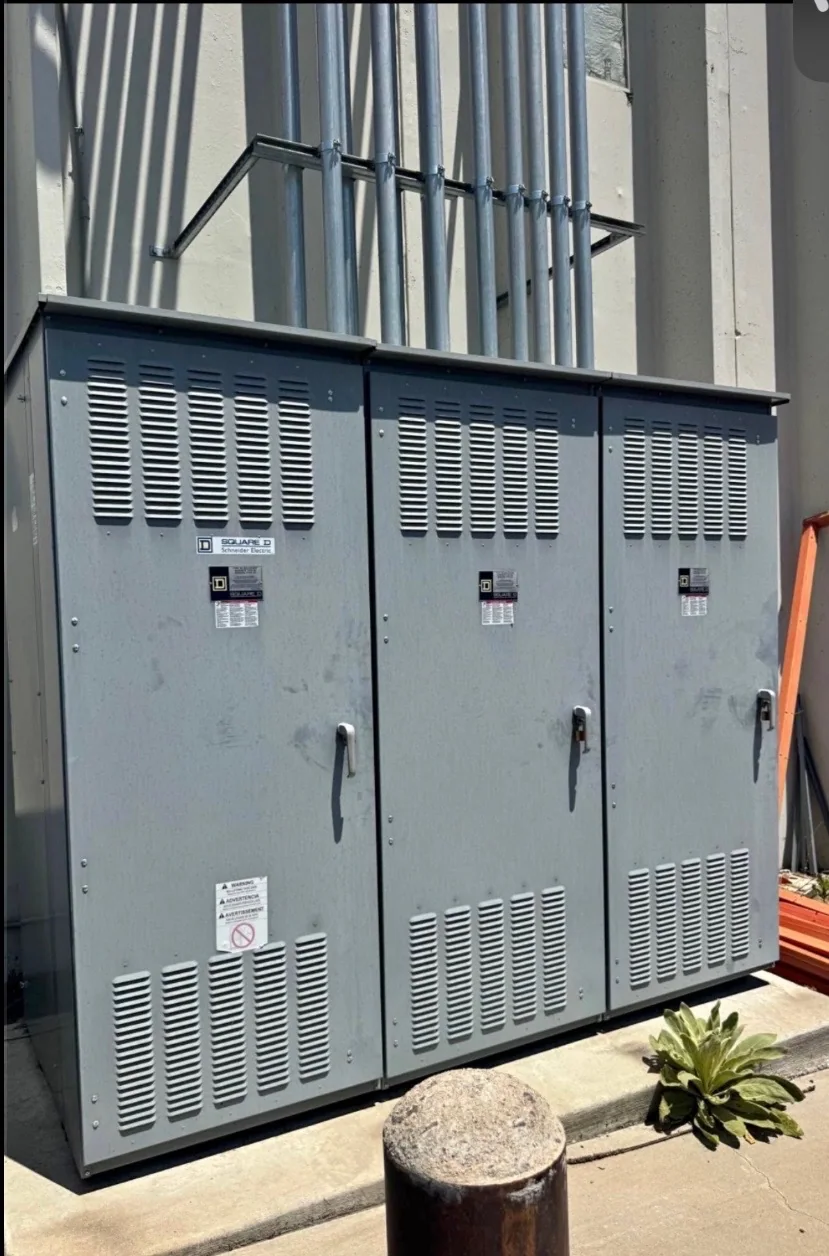
Define the lot before discussing value
If you have surplus switchgear in Medina County, begin by defining exactly what is available. Existing records identify Medina as the seat of the county, but that does not establish the equipment’s pickup location; the actual site may be elsewhere in the county. A useful inventory names each lineup, section, stored device and accessory separately. It also identifies the owner and the person authorized to release the equipment. That boundary matters when a stored lineup sits near equipment that must remain in service.
The buyer considers equipment across voltage classes. Do not estimate a class from enclosure size or appearance. Use the wording visible on assembly and device nameplates, drawings, schedules or prior purchase records. A lineup rating describes the assembly, while an individual breaker or switch can have its own voltage, continuous-current and interrupting ratings. Those ratings are related but not interchangeable. If a marking is unreadable or a record is missing, label it unknown rather than filling the gap with an assumption.
Identify main sections, feeders and loose devices
Separate the main section from feeder sections when you can do so from labels or documentation. Record section identifiers, bus information, visible device labels and the quantity of compartments without opening anything. Note whether removable breakers are installed in their documented positions or stored nearby. A breaker on a pallet may belong to this lineup, another lineup, or an unrelated project; physical proximity is not proof of association.
For a hypothetical stored lineup, the inventory could say: “Lineup A, four marked sections, one main device and three feeder positions; two removable breakers in labeled crates, association to Feeder 2 documented; one loose breaker with no matching record, status unknown.” That description is more useful than “one switchgear cabinet and several breakers.” Include separately stored shutters, covers, hardware cartons, control components and manuals only when their presence is known. Do not represent an empty space as a complete section.
Describe packaging and condition without disturbing equipment
Packaging can affect both completeness and handling. Record whether sections are on skids, wrapped, banded, boxed or exposed, and whether crates have identification that matches the lineup. Mention water marks, torn wrap, bent panels, corrosion, impact damage, missing doors or damaged pallets when visible from a safe exterior view. If equipment is indoors, note the storage environment only as observed: for example, clean and dry, dusty, or exposed to roof work. Do not open compartments, operate mechanisms, remove covers or test anything.
A photograph set should stay limited to safe exterior views: overall lineup or crate images, nameplates that are already visible, labels, packaging and obvious damage. Existing drawings, bills of material, maintenance records and breaker schedules can help establish what is included. The seller does not need to test the equipment. A qualified, authorized team must establish safe conditions and handle any required disconnection; never open, operate, dismantle or touch energized equipment.
What can influence an offer
Evaluation may consider documented voltage and current information, manufacturer and series, section count, device identity, completeness, storage history and visible condition. A coherent lineup with matching, traceable spare breakers is different from an assortment of unverified devices. The distinction between an assembly rating and an individual device rating can affect how the lot is understood, so provide both when records show both. Known damage, missing components, contamination concerns and uncertain ownership should be disclosed early rather than discovered during release planning.
There is no need to invent a price, compatibility claim or resale application. The buyer can review records and photos, then discuss a cash offer based on the defined lot and agreed release terms. Payment is made upfront after agreement. If a device’s identity, ownership or relationship to the lineup cannot be established, preserve that uncertainty in the inventory and let it remain an evaluation question.
Coordinate access and safe release
Share the site contact, ownership approval, building rules, loading hours, escort requirements, parking or gate restrictions and any scheduled outage or release window. These details coordinate access; they do not transfer removal work to the seller. The buyer handles crane arrangements, qualified disconnects, rigging, loading, freight and hauling. The seller’s role is to identify the authorized release boundary and provide access approvals or facility coordination.
For a stored lot, also report aisle width, door dimensions, floor or yard conditions, overhead obstructions and whether packaging can remain intact during movement, but do not measure in a way that requires approaching energized gear. Unknown access conditions can be marked for confirmation. A qualified team will establish safe conditions before handling.
Questions to include with a Medina County inquiry
- Where is the actual pickup site, and who owns each lineup, stored breaker and accessory?
- What are the visible manufacturer, series, voltage, current and device markings, and which values come from records?
- How many main and feeder sections are present, and which positions or components are missing?
- Are loose breakers packaged with matching labels, and is their association documented or unknown?
- What packaging, visible damage, storage exposure and access restrictions should be planned for?
- Which approvals, escorts and release dates must be coordinated before the lot can leave?
Clear answers let the buyer evaluate the actual physical lot rather than a guessed package. The best submission distinguishes installed equipment from stored equipment, documented facts from observations, and confirmed components from loose items whose identity remains unknown.