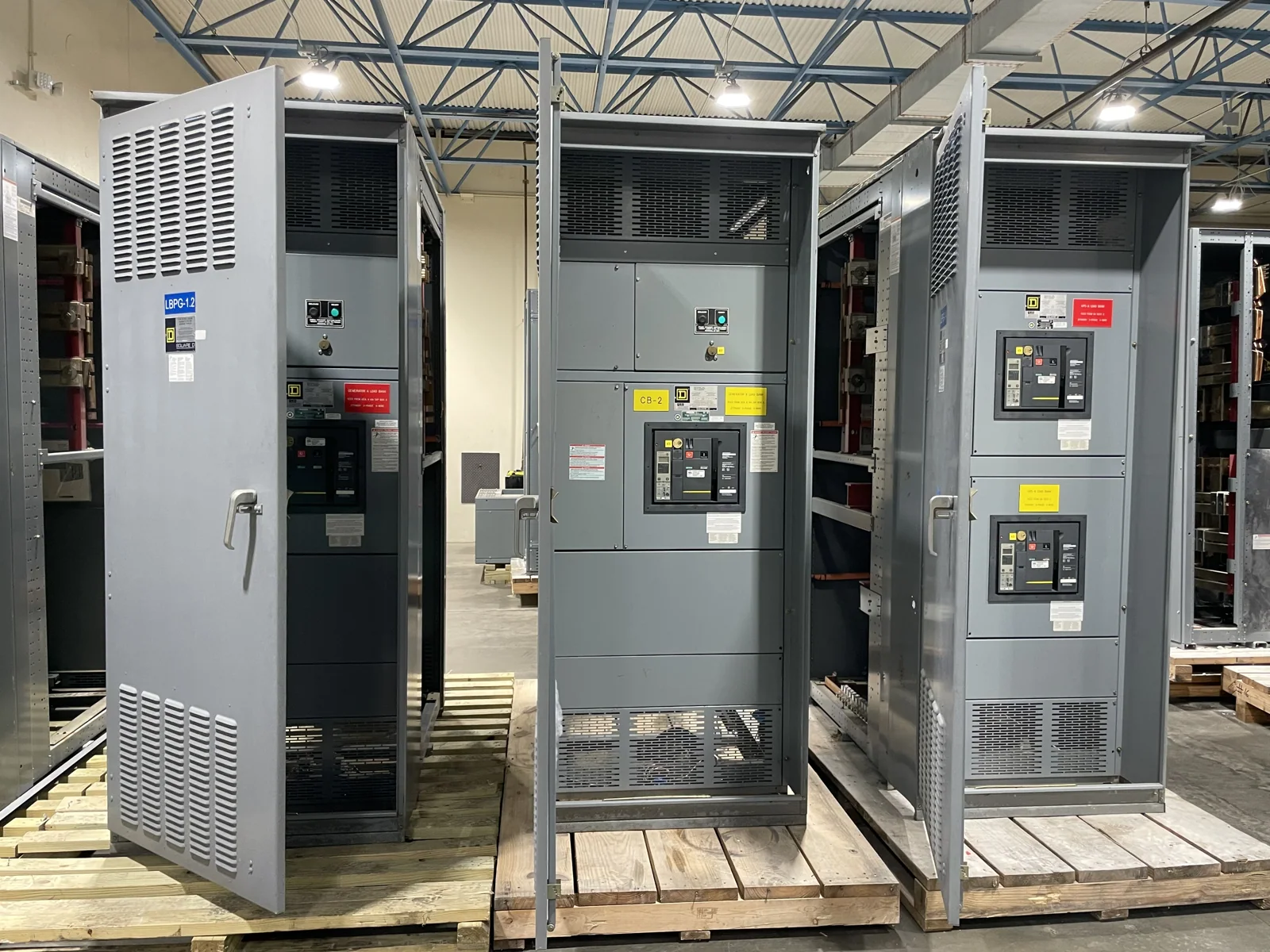
Sell Low-Voltage Switchgear in Franklin County, Ohio
Surplus low-voltage switchgear can be valuable when its identity, ratings, ownership and release boundary are recorded clearly. Franklin County records identify Columbus as the county seat, but that does not establish the location of any particular equipment. The actual pickup site may be elsewhere in the county. An evaluation begins with documented assembly and device information, not an assumption based on cabinet size or a familiar brand.
We buy electrical equipment, including low-voltage assemblies and equipment across other voltage classes. Once the equipment, ownership and release conditions are clear, the buyer can review the lot and make a cash offer; once the seller accepts and the sale is agreed, payment is made upfront before the agreed pickup. The seller does not need to test the gear. A qualified, authorized team establishes safe conditions and handles disconnection; do not open, operate, dismantle or touch energized equipment.
Record the assembly and device ratings
Start with existing one-line diagrams, schedules, nameplate transcriptions and inventory records. For the lineup, record the full voltage wording, continuous current, short-circuit or withstand information, manufacturer and identification details exactly as documented. A photograph of an exterior nameplate or label can support the record if it can be taken safely from outside the equipment.
Keep three categories separate. The main-bus rating describes the assembly’s documented bus capacity; it is not automatically every device’s rating. A breaker rating identifies a particular breaker’s marked values. The interrupting rating addresses that device’s documented ability to interrupt fault current under specified conditions. None should be inferred from enclosure dimensions, handle position, color, age or a partial label. If a value is unreadable or absent, mark it unknown.
Define a multi-room consolidation lot
Hypothetical example: an owner consolidates surplus gear from three electrical rooms during a building change. Room A may contain the main section and two feeder sections, Room B a similar-looking feeder lineup, and Room C loose breakers or stored controls. List those rooms separately. For each, identify the lineup or section count, documented assembly rating, device labels, included covers and known spares. Similar appearance does not prove that sections belong together.
Describe each room’s access restrictions independently. Note whether entry requires an escort, advance approval, a freight-elevator reservation, narrow-corridor review or coordination with an occupied area. Identify what remains in service and which exact sections are authorized for release. If a drawing shows a retained main or feeder, exclude it unless the authorized owner confirms otherwise. The sale boundary should be explicit for every room.
Check completeness and condition from safe records
A complete inventory distinguishes installed sections from separately stored removable breakers. List breaker positions, catalog or type markings when visible, quantities, shutters, barriers, doors, covers, keys, bus transitions and documented control accessories. Note missing buckets, removed devices, loose hardware and any spare whose association with a section is uncertain. Do not call a spare compatible merely because its faceplate resembles an installed unit.
Provide existing maintenance notes, storage records and safe exterior photos. Describe dented doors, corrosion, water staining, damaged paint, missing barriers, torn packaging or poor storage without attempting an internal inspection. Unknown internal condition should remain unknown. The buyer does not require the seller to energize, test or prove operation; a qualified team can establish safe conditions and handling boundaries.
What can affect an offer
Valuation may reflect documented voltage and current, interrupting information, manufacturer identity, section count, completeness, traceability and the relationship between breakers and original positions. A coherent lineup with readable records may be easier to evaluate than a larger mixed collection. Separate room inventories help avoid paying for equipment that is retained, inaccessible or not owned by the seller.
Condition, contamination disclosures, storage environment, packaging, missing components and uncertainty also matter. So do section dimensions if already recorded, approximate weights from existing documents, travel path, loading constraints and the authorized release date. These facts support an offer without requiring a seller to dismantle or handle equipment.
Coordinate safe release, loading and freight
After agreement, identify access approvals and outage coordination with the owner, facility representative and qualified electrical personnel. The buyer handles qualified disconnects, crane needs, rigging, loading, freight and hauling. The seller identifies ownership, authorizes release and coordinates access information; physical removal costs and handling are not shifted to the seller.
For multiple rooms, preserve each room’s section and spare identity through loading. Confirm available doors, docks, elevators and escorts, recognizing that the pickup address and restrictions are unknown until the owner provides them. A county reference does not necessarily mean one facility or one shipment.
Example inventory and seller questions
- Room A: one documented main section, three feeder sections, assembly voltage and current wording, and the retained boundary.
- Room B: two feeder sections, visible device labels, missing-cover notes and separate access approval requirements.
- Room C: four stored breakers, one control-component carton and a note that breaker-to-section association is unknown.
Useful questions include: Who owns each room’s equipment? Which sections are authorized for release, and on what date? Which voltage, current and interrupting values are documented? Are stored breakers assigned to positions? What records, exterior photos and storage notes exist? Are there escort, dock, elevator or outage requirements? If answers are not known, say so. Complete, candid records let the buyer evaluate the lot, make an offer and arrange safe removal without asking the seller to operate or test the switchgear.