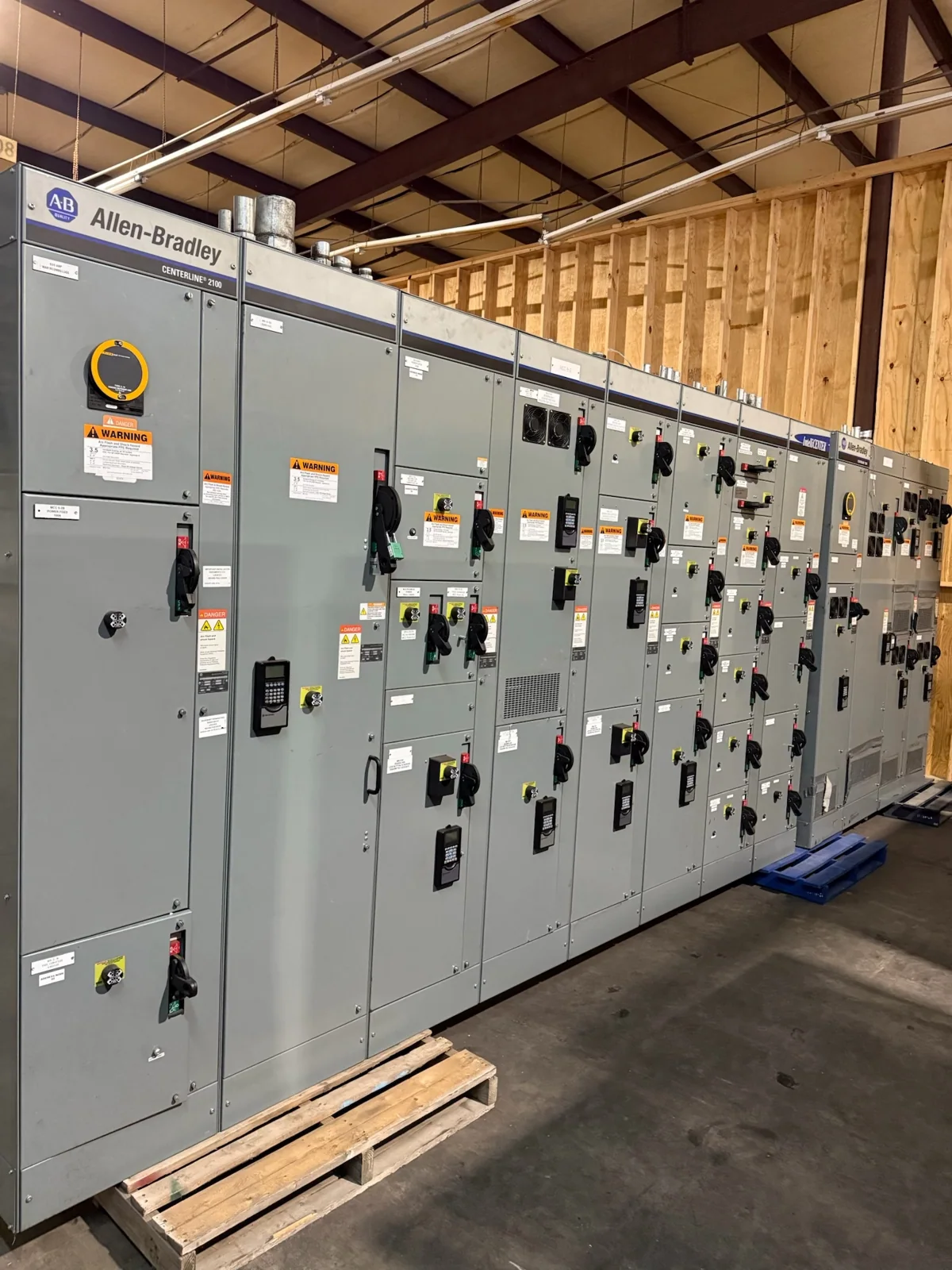
What a Columbus low-voltage switchgear lot should show
If you are releasing surplus low-voltage switchgear in Columbus, Ohio, begin with records that identify the assembly. Existing location records place Columbus in Franklin, Delaware and Fairfield counties. A useful evaluation can start with the lineup drawing, equipment schedule, purchase record and clear photographs of closed, de-energized exteriors. Please do not open compartments, operate devices, remove covers or test anything. A qualified, authorized team must establish safe conditions and handle disconnection.
Capture the full voltage and current wording printed on the assembly label and on each visible device label. A main-bus rating describes the lineup, while a breaker rating describes that device; an interrupting rating is a separate value. None should be inferred from enclosure size, a familiar manufacturer name, or a photograph. Record the manufacturer and any series or identification text exactly as shown, including uncertainty. The business considers all voltage classes, so documentation should describe what is present rather than forcing an assumed classification.
Separate the lineup from what remains in service
For a building that is still operating, map the sale boundary before counting value. Identify the main section, feeder sections, metering or control compartments where documented, and any equipment that remains connected or reserved for future use. Note section numbers and visible breaker positions. A loose breaker in a cabinet, a separately stored spare, and an installed feeder device are not interchangeable inventory categories. List each one and its documented association, if known.
Hypothetical situation one: phased replacement in an operating building
In this hypothetical example, an operating Columbus building replaces a low-voltage lineup in phases. The proposed lot could include one retired main section, three feeder sections and two separately stored breakers, while another feeder section remains in service until a later phase. The seller should identify that retained section as excluded, give each available section its label or drawing reference, and state which release dates are approved. A schedule that says “five sections” without distinguishing the retained equipment leaves the lot boundary uncertain. Unknowns should remain marked unknown rather than being filled in from appearance.
Completeness and condition affect the offer
Completeness is more than a section count. Explain whether the lineup includes main and feeder breakers, shutters, barriers, doors, trim, hardware, neutral or ground components, control power items and shipping splits, but do not remove anything to check. Include separately stored breakers, racking accessories or manuals only when their connection to the lot is documented. If a bucket, cover or device is missing, say so. A partial lineup can still merit review, but its value is assessed differently from a coherent assembly with matching records.
Describe visible exterior condition without disturbing the equipment. Useful observations include dents, corrosion, water staining, soot, impact damage, missing doors, damaged nameplates and whether sections were kept indoors or exposed. For an industrial site, data center, manufacturing building or shut-down power plant, note the known storage environment and any handling history. Do not claim that equipment is operational, compatible with a new system, or suitable for reinstallation. No seller testing is required; a review can proceed from records and safe exterior photos.
How valuation and payment are considered
The offer reflects documented specifications, completeness, condition, ownership, release certainty and the practical cost of moving the lot. A matching main and feeder group with readable labels and drawings is easier to evaluate than mixed sections with uncertain identity. Brand can matter when it is documented, as can the exact voltage, ampere wording, breaker frame information and interrupting rating, but an apparent brand or rating is not a promise of fit. After reviewing the lot, the buyer can provide a cash offer; once the seller accepts and the sale is agreed, payment is made upfront before the agreed pickup. The buyer does not require the seller to test the equipment.
Hypothetical situation two: decommissioned data center inventory
In this hypothetical example, a decommissioned data center releases two low-voltage lineups, a pallet of labeled spare breakers and several control components. One lineup is complete on paper; the other has feeder devices whose ownership is unclear. The useful inventory separates each lineup, lists every section and identifies the spares by their visible labels without declaring compatibility. A drawing revision, asset register, ownership approval and safe exterior photographs help distinguish a saleable lot from items retained for another tenant. If records conflict, the conflict is part of the evaluation, not a reason to guess.
Access, release and freight planning
Share the site contact, approved release window, loading restrictions, floor or doorway constraints, elevator limits if applicable, and any escort, badge or insurance requirements. Access approvals are coordinated with the authorized owner and facility team; they are not a request for the seller to perform removal. The buyer handles qualified disconnects, crane coordination, rigging, loading, freight and hauling. The seller should identify the available travel path and staging area from existing knowledge, but should not dismantle, move or touch energized equipment.
Before an evaluation, useful seller questions include: Who owns the lineup and stored devices? Which sections remain in service? What voltage and current text is documented? Which drawings are current? Are the breakers installed, stored separately, or missing? Are there known water, fire, contamination or impact concerns? What release approval is needed, and when can coordinated access occur? Answers can be specific or unknown. That honest boundary lets the buyer assess the Columbus lot without inventing a project history, compatibility claim or removal obligation for the seller.