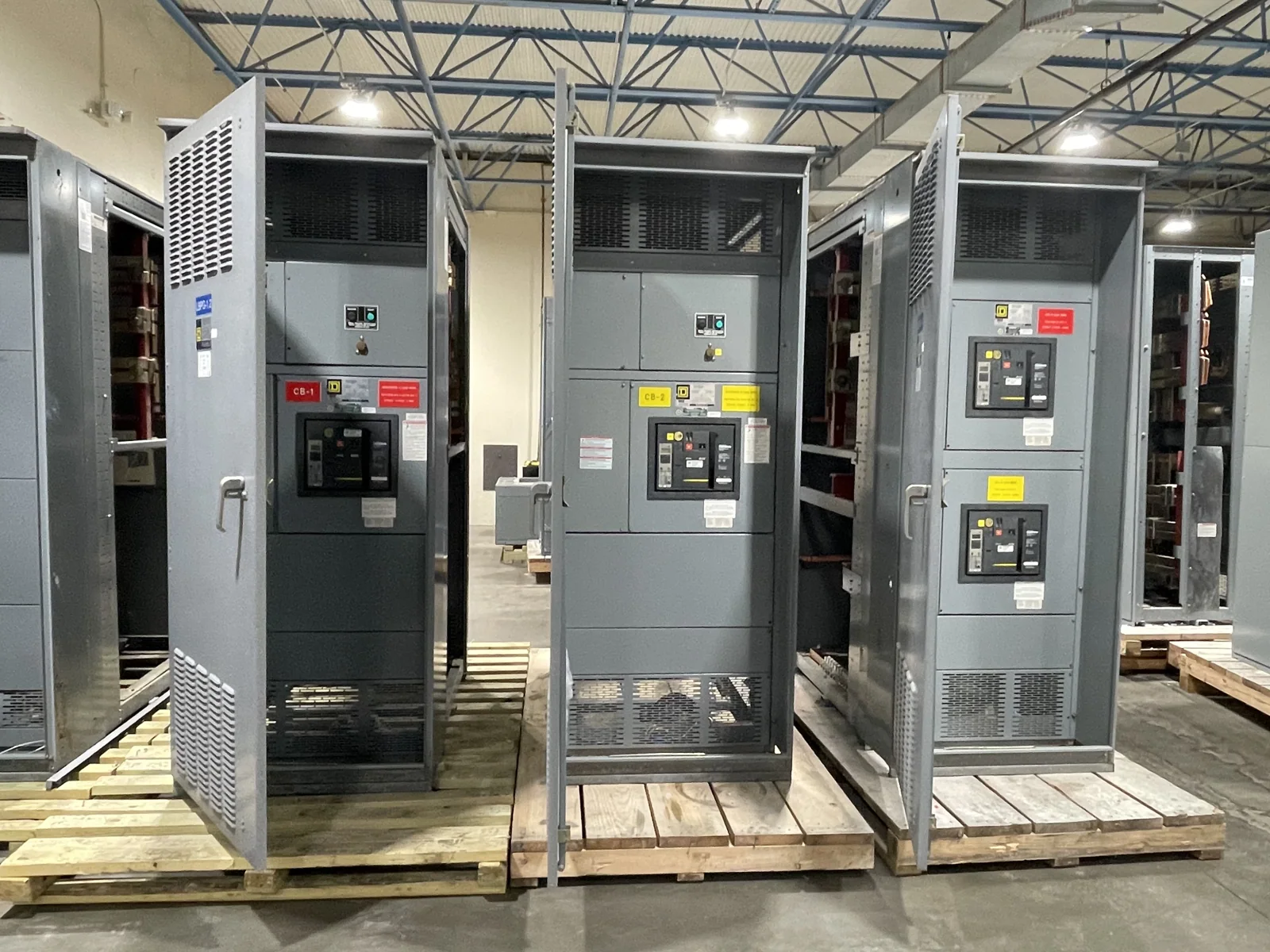
Define the pad-mounted switchgear lot before discussing value
A pad-mounted switchgear lot is more than an outdoor steel enclosure. For an evaluation in Columbus, Ohio, describe the complete physical boundary: the enclosure, internal switches or other devices identified in existing records, included accessories, and separately stored components. The pickup site may be in Franklin, Delaware or Fairfield County, but the county label does not define what belongs in the sale.
Begin with what can be read safely from the exterior or from records already on hand. Share the manufacturer name, equipment identification, documented voltage class, current rating, number of ways or sections, visible device labels and approximate dimensions if known. Do not infer a rating from cabinet size, paint, age or a familiar brand name. A manufacturer mark is useful, but it does not establish that every switch, fuse or accessory inside has the same rating.
Separate ownership from physical proximity
An enclosure beside a service transformer, utility easement or property line may not be owned by the same party as the building. Confirm whether the equipment is customer-owned, utility-owned, leased, or subject to another documented restriction. If an outdoor unit is close to an active service, identify which assets remain in operation and which exact enclosure is proposed for release. Unknown ownership should remain identified as unknown until the authorized owner or site representative confirms it.
Build an inventory that can be reconciled
Useful records can include a one-line diagram, equipment schedule, prior installation information, decommissioning notes and safe exterior photographs. Match the record to visible identification rather than pooling similar-looking cabinets. Note enclosures, documented sections, removable or stored devices, nameplate wording, and covers, handles or compartments known to be absent. List a spare switch or fuse set separately, stating whether its association with this enclosure is documented or uncertain.
Hypothetical example: A redevelopment may leave one three-section outdoor enclosure, two separately stored switch units and a box of labeled accessories. The proposed lot should say whether the stored units are documented parts of that lineup, whether the accessories are included, and whether a nearby transformer, concrete pad or cable is excluded. That example is not a claim about a Columbus project; it shows why a count of “one switchgear unit” can be too vague for valuation.
Describe condition without opening or testing anything
Exterior observations are enough to begin: corrosion, impact marks, missing doors or hardware, damaged paint, standing water evidence, bent louvers, stained surfaces, vegetation around the base, and the apparent condition of labels. Disclose known contamination, oil or other fluid issues, fire or flood exposure, and any environmental documentation. Do not open the enclosure, operate a mechanism, remove a cover, touch conductors, or test the equipment. A qualified, authorized team must establish safe conditions and handle disconnection; the seller does not need to perform testing.
What can affect an offer
Evaluation considers more than a voltage number. Documented voltage and current ratings, device count, manufacturer information, completeness, age, corrosion, moisture history, contamination, and the likelihood that records correspond to the physical equipment all matter. So do release certainty, ownership, the number of locations, and whether a unit is intact or already partly dismantled. A well-labeled lot with known exclusions can be easier to value than a larger lot with uncertain boundaries.
Condition should be reported honestly rather than improved through cleaning or repair. A missing nameplate, unreadable label, unknown fluid history or unverified device association may reduce certainty, but it is useful information. The buyer considers all voltage classes; do not reject a lot because it is not a presumed standard class, and do not promise compatibility with a future application. Valuation remains subject to the available facts and agreed sale scope.
Plan access and safe release as coordination
Outdoor placement does not automatically mean easy removal. Identify the gate or access approval process, escort requirements, delivery restrictions, overhead obstructions, ground conditions, security rules and the authorized contact who can confirm the release date. If the equipment sits near energized service, state the required outage or isolation coordination without asking the seller to perform it. Access approvals are a coordination matter, not a reason to shift removal work to the seller.
After agreement, the buyer handles the crane, qualified disconnects, rigging, loading, freight and hauling. The seller should not dismantle, move, disconnect or prepare energized equipment. Share safe exterior photos, existing documents and practical access information only. Dimensions, approximate weight from records, clearance limitations and the route from the enclosure to the loading point help the buyer plan equipment and freight, while the authorized field team determines the safe method.
Questions that make the lot usable
- Who owns the enclosure and each associated device, and who can authorize release?
- What voltage, current, manufacturer, identification and section or way information is documented?
- Which components are included, which nearby assets remain, and are any parts stored separately?
- Are corrosion, impact, flooding, contamination, fluid leakage or missing hardware known?
- What records and safe exterior photos are available without opening or operating the equipment?
- When is the authorized release date, and what access approvals or site rules must be coordinated?
Clear answers let the buyer define the physical lot, arrange a safe release and make a more informed cash offer. Once the scope and terms are agreed, payment is made upfront, with no seller testing required.