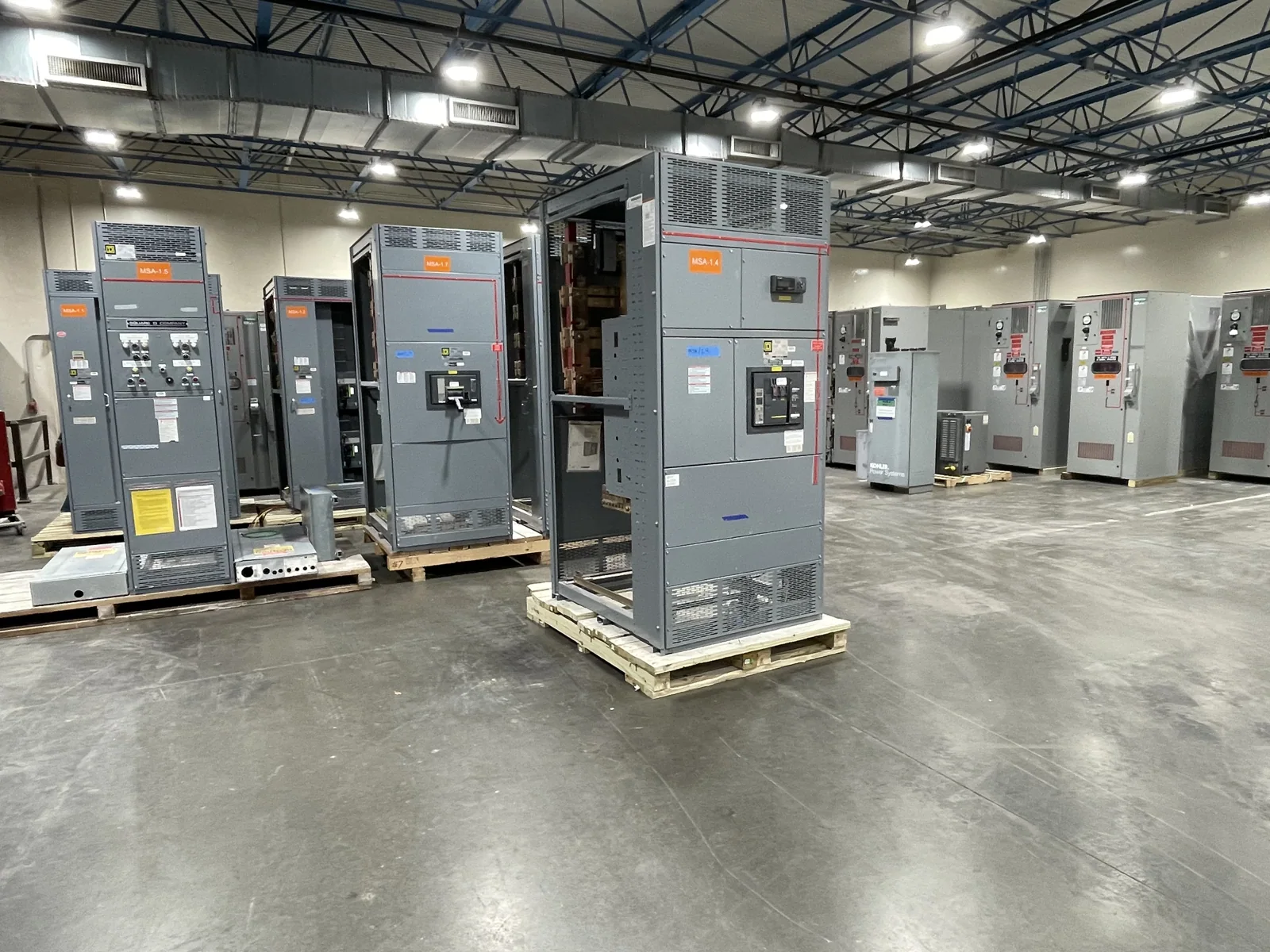
What helps define a metal-clad switchgear lot in Columbus
Owners in Columbus may have surplus equipment from an operating-building upgrade, a decommissioned data center, or a shut-down power plant. The useful starting point is not the apparent size of the lineup. It is a documented description of what is owned and available for release. We buy metal-clad switchgear and consider equipment across voltage classes, but a visual resemblance is not enough to establish construction, voltage, or breaker interchangeability.
Existing one-line drawings, section schedules, purchase records, and nameplate photographs can verify the metal-clad designation more reliably than an enclosure photograph alone. Please share the manufacturer name exactly as shown, assembly voltage and current wording, section identifiers, protective-device information, and serial or project references. If a brand is unknown, leave it unknown. For a breaker that appears to match another position, record its label and documented association, not an assumed fit.
Record every section and removable device
A complete inventory separates the lineup from its loose or removable components. Count each shipping or lineup section, then note the main, feeder, tie, metering, relay, or other documented function where records support that description. Record breaker positions and quantities separately. A stored breaker, carriage, drawout element, relay, control component, or set of shutters may add value when its identity and relationship to a section are established; it should not be pooled with the installed count simply because it is nearby.
For a hypothetical Columbus room upgrade, the seller might have a documented six-section assembly, four removable breakers installed in identified positions, and two stored breakers tagged for positions included in the sale. A third loose breaker with no readable tag would be listed as association unknown. If the upgrade is phased, identify the first release, sections remaining in service, and later release boundary. Drawings can define that boundary without opening compartments or operating devices.
Condition and documentation affect the evaluation
Describe condition from records and safe exterior observation. Useful notes include indoor or outdoor storage, enclosure corrosion, dents, missing covers, damaged nameplates, signs of moisture, packaging, and whether parts are secured or loose. Mention known contamination or environmental concerns honestly. Do not clean, dismantle, energize, open, or test the equipment for an evaluation. Safe exterior photos of labels, fronts, sides, stored parts, and packaging are sufficient for an initial review; a qualified, authorized team must establish safe conditions and handle disconnection.
Documentation also clarifies exclusions. Mark adjacent live gear, utility-owned or rented equipment, building service sections, and retained controls outside the proposed lot. A redacted drawing is useful if it shows section boundaries and device references. Unknown outage dates, ownership approvals, missing drawings, and unverified ratings should remain explicit unknowns.
How completeness and release boundaries influence value
Valuation reflects more than the number of cabinets. A coherent, documented assembly with matching sections, identified removable devices, intact exterior components, and useful records is easier to evaluate than a mixed collection of similar parts. Manufacturer, voltage class, current, interrupting or withstand information, section count, device configuration, age, storage history, and condition matter when documented. A partial lot may still be considered, but missing devices, uncertain matches, damage, and unclear ownership can reduce confidence.
Release timing matters as well. If a data-center decommission or power-plant shutdown produces equipment in stages, provide a separate list and authorized release date for each stage. A hypothetical first release could contain four identified sections while two sections remain needed for temporary service; that is a coordination issue, not permission to remove anything early. After reviewing the lot, the buyer can make a cash offer; once the seller accepts and the sale is agreed, payment is made upfront before the agreed pickup according to the agreed terms. The seller does not need to test the equipment.
Access, removal, and freight planning
Tell us the actual pickup location, building or room designation, access restrictions, floor or dock conditions, overhead clearance, doors, stairs, elevators, loading hours, and whether security or owner approvals are required. These details help coordinate a safe Columbus release without treating a county or city label as a confirmed site address. Include dimensions and weights only when supported by records; do not move equipment to obtain measurements.
Our coordinated removal plan covers qualified disconnects, crane or other lifting, rigging, loading, freight, and hauling. The seller is not expected to dismantle, disconnect, load, or pay for those removal activities. Identify access approvals, escorts, outage coordination, and release paperwork early so authorized parties can align the work around active equipment and documented boundaries.
Example inventory and questions to send
Hypothetical inventory: one documented metal-clad lineup; six labeled sections; assembly voltage and current copied from the nameplate; four installed removable breakers with position references; two tagged spare breakers; one relay cabinet listed separately; exterior photos showing a dented side panel; and one missing cover noted as unknown in extent. The example is not a claim about a Columbus installation or a particular manufacturer.
- Who owns the lineup, breakers, relays, and stored spares, and who can authorize release?
- Which sections and devices are included, retained, or scheduled for a later phase?
- What do the drawings and nameplates state for manufacturer, voltage, current, and protective devices?
- Are any components damaged, contaminated, exposed to moisture, missing, or of unknown association?
- What access approvals, room restrictions, release documents, and safe work contacts apply?
Send the available records, an itemized count, release boundaries, and safe exterior photos for review. Clear documentation lets the buyer evaluate the actual Columbus-area lot while qualified personnel manage removal and transportation.