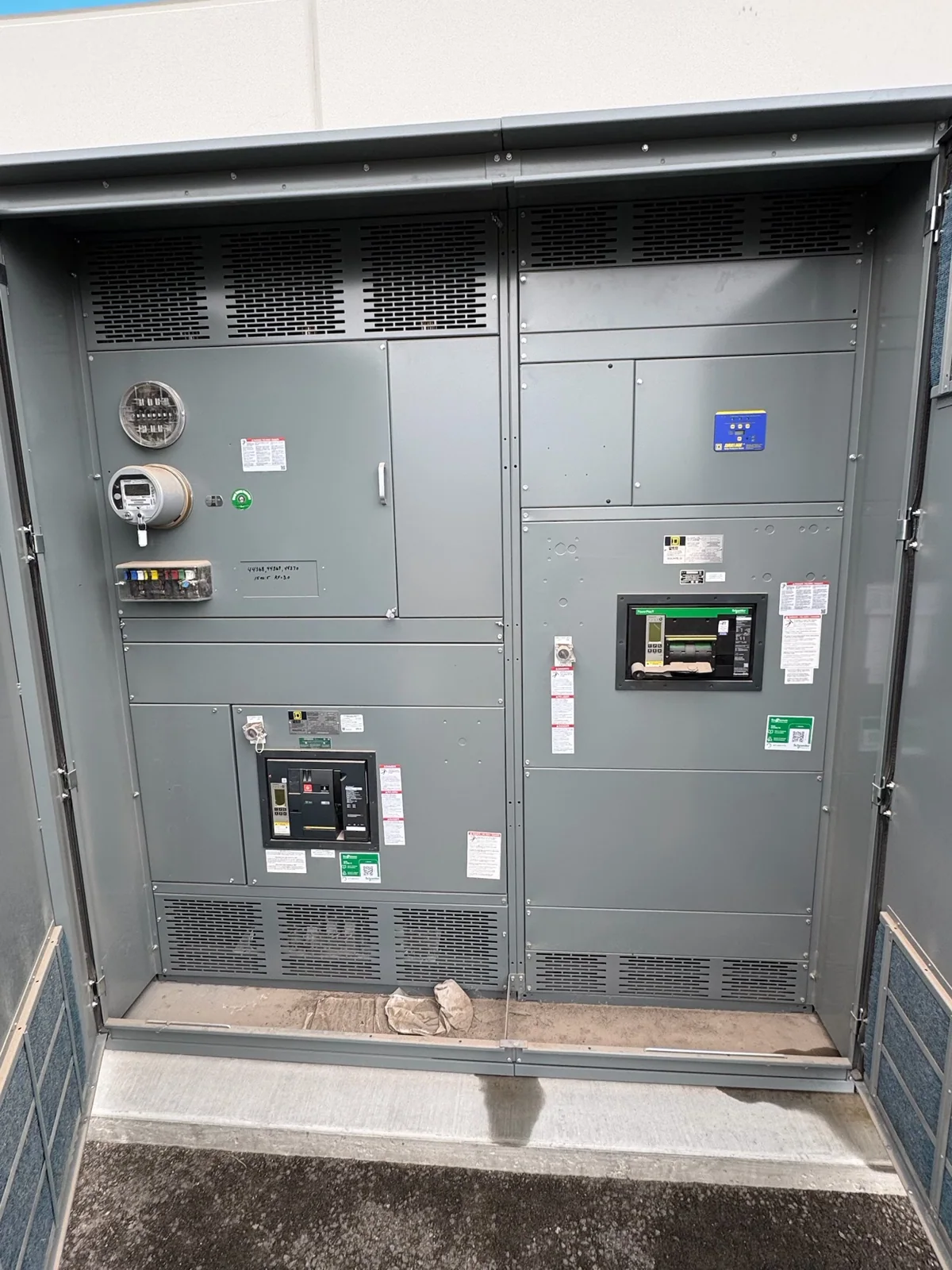
What should a Hamilton County low-voltage switchgear seller identify first?
A useful evaluation begins with the equipment’s records, not a guess based on cabinet size or a familiar brand name. Share the manufacturer, lineup designation, section count, nameplate wording, drawings, schedules and ownership information when available. Use the full voltage and current language shown on assembly and device labels. A main-bus rating describes the assembly’s bus; a breaker rating describes one device; an interrupting rating describes fault-interruption capability. They are different facts and must not be inferred from appearance.
Describe the lineup by function. Mark the main section, feeder sections, tie or auxiliary sections if documented, and removable breakers stored outside the lineup. A palletized breaker may belong to this assembly, another lineup or an unknown source. Its label is useful, but association should remain unknown until a schedule, drawing, tag or other record supports it. Records identify Cincinnati as Hamilton County’s seat, but the pickup site may be elsewhere; provide the facility location without assuming a local project.
How does a contractor-managed replacement affect the sale boundary?
Hypothetical example: an authorized contractor coordinates replacement of a low-voltage lineup for an owner, while some feeders remain needed until staged work is complete. Identify the owner, release authority, sections proposed for sale and sections that remain in service. Contractor involvement alone does not prove ownership or authorize release; the buyer needs owner approval and a defined boundary.
Staged timing matters as much as section count. Explain whether the main, feeder sections and separately stored breakers become available together or separately. Include outage constraints, access-approval steps and the contact who can coordinate entry. Those details plan a safe handoff; they do not ask the seller to operate devices, open compartments or dismantle anything.
What makes a lot complete enough to evaluate?
List each section individually, then reconcile it against the available documentation. Note the section label, visible device labels, bus information, doors, covers, barriers and included breaker positions. Identify spare breakers, control components, shutters or hardware stored separately, and state when a component is missing or its relationship to the lineup is uncertain. A complete count is more informative than describing the lot as “one switchgear cabinet.”
- Record the documented assembly voltage, bus current and section identifiers without substituting a nominal value.
- Separate installed main and feeder devices from loose breakers and accessories.
- Mark retained, sold, excluded and unknown items on an existing drawing or inventory when possible.
- Provide safe exterior photographs of nameplates, labels, doors, storage packaging and visible damage only.
Photographs and records can show context, but they do not establish safe electrical conditions. A qualified, authorized team must determine isolation and handle disconnection. Do not open equipment, touch conductors, test devices or remove covers for the evaluation.
How does condition influence valuation?
Condition is more than paint. Report whether the lineup is installed, dry-stored or exposed to a harsh environment; note bent doors, corrosion, water evidence, missing hardware, exterior-visible damage, torn packaging and impact marks. Identify present doors and covers, legible labels, and packaging or protection around stored breakers. Do not represent an untested breaker as operational. Seller testing is not required for an initial offer; state unknown condition plainly.
Valuation also reflects documentation quality, lot completeness, device identity, demand for the documented ratings, handling complexity and the difference between a coherent lineup and miscellaneous parts. Manufacturer information can help, but a brand name alone does not establish compatibility, rating or value. The buyer considers equipment across voltage classes, so the exact records still matter even when an item is described as low voltage.
What site and freight details should be answered before release?
Share the access route, doorway and corridor constraints, floor or loading limits if known, dock or lift availability, security procedures, approved entry hours and any escort or shutdown coordination. Explain whether sections can be reached without crossing an occupied area and whether the facility requires scheduled approval. These are coordination questions, not a request for the seller to remove equipment.
After agreement, the buyer handles qualified disconnects, crane work, rigging, loading, freight and hauling. The seller should not dismantle, move or prepare energized equipment. Dimensions and weights from existing records help, while unknown measurements should stay labeled unknown. Staged releases may require separate pickup planning for the lineup and loose breakers.
What example inventory and questions are useful?
Hypothetical inventory: one documented main section; four labeled feeder sections; two removable breakers in a labeled cabinet; one loose breaker with no confirmed association; drawings showing two feeders retained until later; and exterior photographs showing intact doors but unknown internal condition. This does not assert a Hamilton County installation. It shows how to distinguish a proposed sale from equipment still serving the facility.
- Who owns each section and who is authorized to release it?
- Which sections are available now, and which have staged release dates?
- What exact voltage, current, manufacturer and interrupting wording appears on the records?
- Which stored breakers are documented as belonging to this lineup?
- What damage, moisture exposure, missing parts or environmental concerns are known?
- Who coordinates access approvals and confirms the area is ready for the buyer’s qualified team?
Send the records, inventory and safe exterior photos for review, while identifying every unverified fact. After the sale terms are agreed, payment is made upfront and the buyer coordinates the safe release and transportation plan.