What should a Cincinnati seller identify first?
When a metal-clad switchgear lineup may be available in Cincinnati, the useful starting point is not a guess based on appearance. Existing drawings, one-line diagrams, equipment schedules, and nameplate documentation can establish whether the assembly is described as metal-clad. Those records also help separate the lineup being considered from adjacent equipment that remains in service. A clear description of ownership, facility area, and proposed release boundary gives the buyer a reliable basis for review.
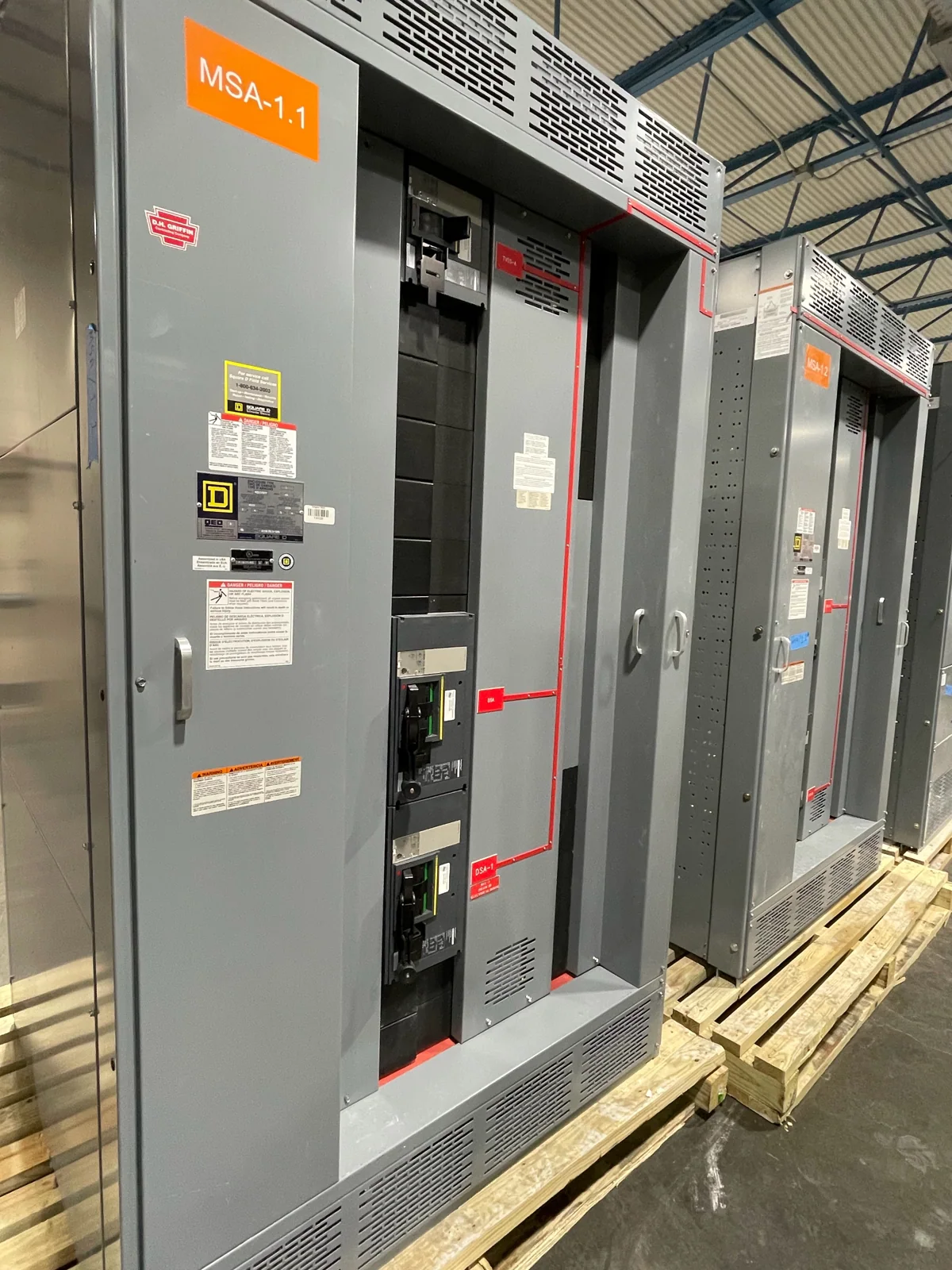
What information is visible without disturbing the gear? Share safe exterior photographs of nameplates, section labels, breaker identification plates, and the overall lineup. Record the manufacturer, documented voltage and current ratings, section designations, and protective-device descriptions. Do not infer construction, voltage class, or breaker fit from cabinet size, paint, or a familiar-looking handle.
How does a phased removal change the lot?
A possible phased removal needs more than a total number of cabinets. Which documented sections are released in the first phase, and which remain required until a later outage or expansion step? A drawing with section numbers can answer that question without asking anyone to operate a device. Count each proposed section, note its recorded function when known, and identify the planned release date or approval status as an open item if it is not settled.
Stored devices deserve their own line in the inventory. A removable breaker, spare carriage, relay, or related component should be associated with the lineup section shown in records, not simply placed in a general pile. If the association is unknown, say so. An uncertain spare is evaluated differently from a device whose position, rating, and ownership are documented.
What makes an inventory complete enough to evaluate?
Completeness means describing the proposed lot as a set of identifiable sections and devices, not treating the lineup as one undifferentiated object. Include the number of sections, section labels, documented breaker positions, removable devices, relays or control components listed in the available schedule, and loose parts believed to belong to the same lot. Note missing covers, unknown accessories, separated hardware, and records that do not match what is visible from outside.
Hypothetical example: A Cincinnati facility has a documented six-section lineup, but a phased project proposes release of sections 1 through 4 first. The records show two removable devices assigned to section 2 and one stored device marked for section 4. The inventory should list those four sections, each known device, the two stored items, and sections 5 and 6 as retained—not report “one six-section lineup” as available. That clarity helps define the sale without claiming that this example describes an actual local project.
How are condition and value considered?
Condition review can begin with safe exterior observations and existing records. Note corrosion, dents, water staining, missing doors or covers, visible damage, storage exposure, labeling quality, and whether sections were protected during a shutdown. Describe facts separately from assumptions. “Exterior staining observed” is useful; “internally damaged” is not established without authorized documentation. The seller does not need to open compartments, touch equipment, operate mechanisms, or test anything.
Valuation can reflect documented ratings, manufacturer identification, section count, completeness, device association, age information when available, visible condition, storage history, and the cost and complexity of coordinated removal. It can also reflect whether the proposed lot is released together or split across phases. Unknown data does not automatically make equipment unusable, but it may reduce confidence until records clarify it. All voltage classes are considered; rely on documented assembly and device ratings, never visual estimates.
What should be planned for access and safe release?
Who controls the Cincinnati site, and who can authorize access? Identify the owner or authorized representative, the facility contact, any landlord or utility boundary that affects ownership, and the approvals required before a release. Access approvals are a coordination matter, not a request for the seller to perform removal work. A qualified, authorized team must establish safe conditions and handle disconnection. The seller should provide existing records and safe exterior photos only.
After agreement, the buyer handles qualified disconnect coordination, crane or other lifting arrangements, rigging, loading, freight, and hauling. Useful planning details include door and dock dimensions, route restrictions, overhead clearance, loading-hour rules, security procedures, and whether the lineup can leave by the planned path. Confirm these facts with site personnel; do not invent an access route or promise a removal date before approvals are known.
Which questions should accompany the inventory?
- Do the drawings or nameplates explicitly identify the assembly as metal-clad, and which records support that designation?
- How many sections are proposed for release in each phase, and which sections remain in service?
- Which removable devices are installed, which are stored separately, and what documentation connects them to particular positions?
- Are ownership, release authority, site access approvals, and the proposed boundary confirmed?
- What exterior condition observations, storage details, missing parts, or record discrepancies should be disclosed?
- What are the known route, lifting, security, and loading constraints for coordinated removal?
Once the records and boundaries are clear, the buyer can review the opportunity and discuss a cash offer. After an agreement is reached, payment is made upfront, and the buyer coordinates the qualified removal and transportation work. No seller testing is required. The safest evaluation is one built from accurate documentation, honest unknowns, and a release plan that keeps energized equipment and unauthorized handling out of the seller’s responsibilities.