What should a Cincinnati low-voltage switchgear seller identify first?
Start with existing records and labels, rather than trying to operate, open, dismantle, or test anything. For a possible expansion changeout in Cincinnati, a drawing set, one-line diagram, equipment schedule, purchase record, or asset list can show which lineup is proposed for release. Existing location records place Cincinnati in Hamilton County; the facility, ownership, and release authority still need seller confirmation.
Use the full voltage and current wording printed on assembly and device labels. A lineup’s main-bus rating describes the assembly, while a breaker’s continuous-current rating describes that device. An interrupting rating is separate and must not be inferred from enclosure size, appearance, or brand. Manufacturer, catalog or frame designation, section number, bus information, device position, and visible date code are useful when documented. Unknown values should remain unknown.
How do drawings define the proposed sale?
A drawing can distinguish the main section, feeder sections, tie equipment, metering space, and sections that remain in service. That boundary matters in an expansion: the sale may involve a complete lineup, selected sections, or surplus devices associated with part of it. Compare the proposed scope with the latest one-line and section schedule, without assuming an old drawing reflects current conditions.
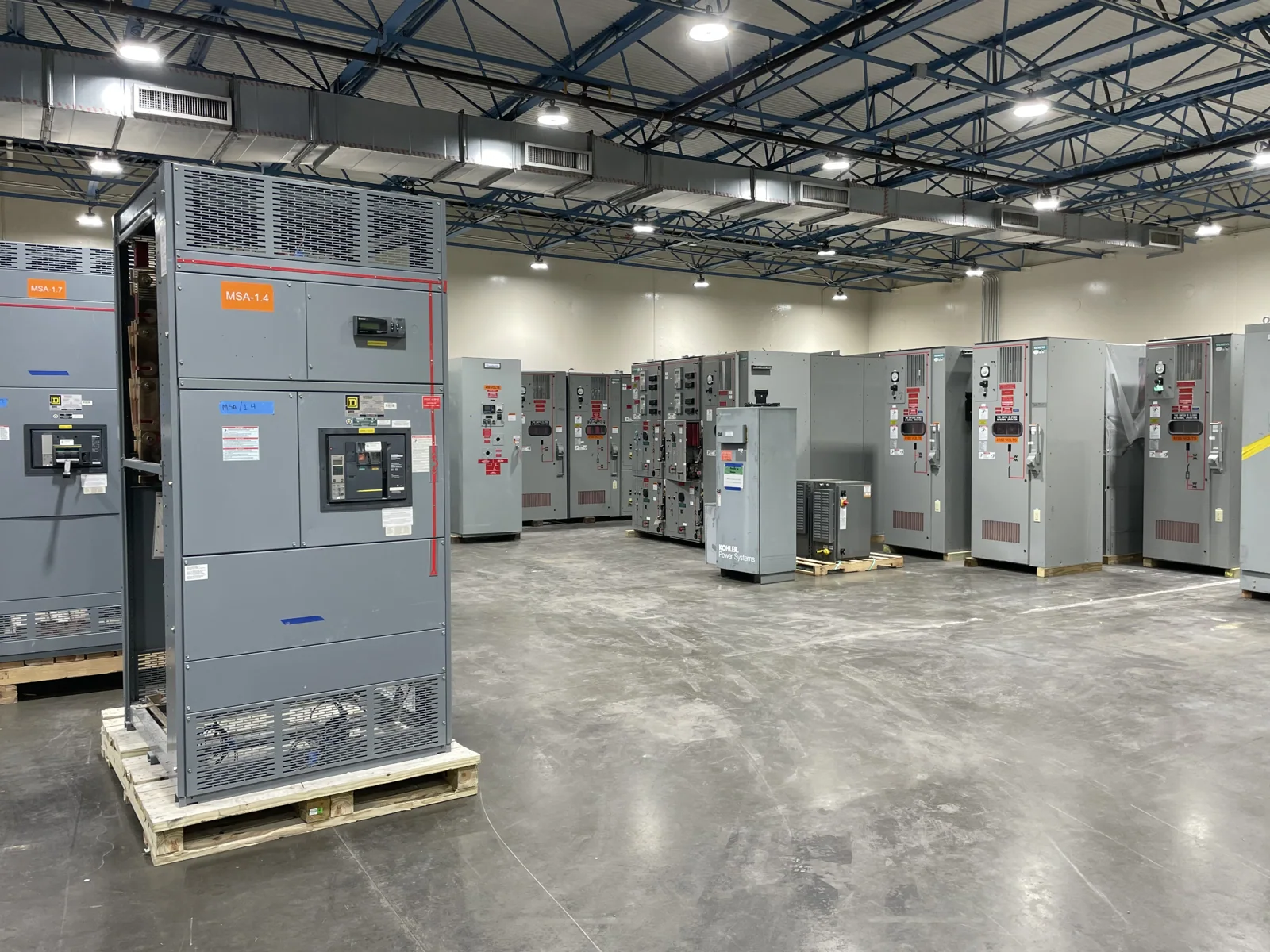
What makes a useful inventory? Count every section individually, then list the main device and each feeder device by position. Note removable breakers that are actually present, separately stored breakers that are documented as belonging to the lineup, shutters or covers, control components, and any loose hardware. Do not pool a stored device with installed equipment merely because its label resembles another label. A complete section count helps define the lot; it does not guarantee compatibility or resale value.
What makes a low-voltage switchgear lot complete enough to evaluate?
Completeness is a relationship between the proposed boundary and what records show. Identify each section designation, documented sequence, and whether its front panel, barriers, covers, breaker, auxiliaries, and nameplate are present. Call out missing shutters, doors, control fuses, trip units, bus links, hardware, or paperwork. If a breaker is stored elsewhere, provide its storage description and documented association without moving it for a photograph.
Hypothetical example: an expansion plan may show one main section and four feeder sections, while the proposed release includes only the main and two feeders. The remaining sections may continue serving the building. A seller could provide the relevant drawing pages, a section-by-section count, and a note identifying the two retained feeders.
How does condition affect an offer?
Condition review should rely on existing records and safe exterior observations only. Useful information includes whether equipment was installed or stored; visible corrosion, impact, water staining, dirt, missing paint, damaged doors, bent hardware, or incomplete labeling; and whether devices are loose, mounted, or separately packaged. Share safe exterior photos of labels and closed enclosures when permitted. The seller does not need to energize, test, open, or touch equipment.
Condition is weighed alongside identity and completeness. A documented assembly with all sections and clear device associations is easier to value than an attractive enclosure with uncertain internals. A newer-looking breaker without proof of its section, rating, or included accessories should not be treated as a confirmed match. Contamination, fire or water history, storage exposure, and unknown ownership can affect the evaluation and should be disclosed rather than guessed.
Which details influence the valuation?
The evaluation can consider documented voltage class, current ratings, interrupting ratings, manufacturer, construction, section count, device mix, completeness, condition, and practical handling cost. It also matters whether equipment is customer-owned and available, whether a utility or landlord boundary applies, and whether release leaves required building power undisturbed. No seller should promise a price from a photograph alone or fill unknown technical information by assumption.
It considers equipment across voltage classes from industrial, commercial, infrastructure, and other settings, including decommissioned data centers and shut-down power plants.
How are access, release, and freight coordinated?
After agreement, the buyer handles the crane, qualified disconnects, rigging, loading, freight, and hauling. The seller’s role is to identify the owner, authorize the release, provide known site rules, and coordinate access approvals with the facility, landlord, security team, or other authorized parties. Access coordination is not a request for the seller to perform removal or absorb those handling costs.
Before scheduling, share the loading window, dock or gate restrictions, overhead or doorway constraints, route information, staging limits, and a site contact who can confirm access. These details help plan safe release without asking anyone to move energized equipment. The buyer’s qualified team must establish safe conditions and handle disconnection; the seller should not perform electrical work.
What can a seller include with an inquiry?
- Manufacturer and full assembly and device label wording, including voltage and current fields.
- One-line diagrams, schedules, section drawings, ownership records, and the proposed release boundary.
- A count of main, feeder, tie, and other sections, plus installed and separately stored devices.
- Known missing parts, damage, storage conditions, contamination, prior exposure, and unknown items.
- Safe exterior photos only, along with access approvals, release authority, timing, and loading constraints.
Questions worth answering are: Which sections are included? Which remain in service? Are the stored breakers documented as part of this lot? Who can authorize release? What records are current, and which details are unknown? Once scope and authority are clear, the buyer can make a cash offer; after agreement, payment is made upfront. No testing is required from the seller.