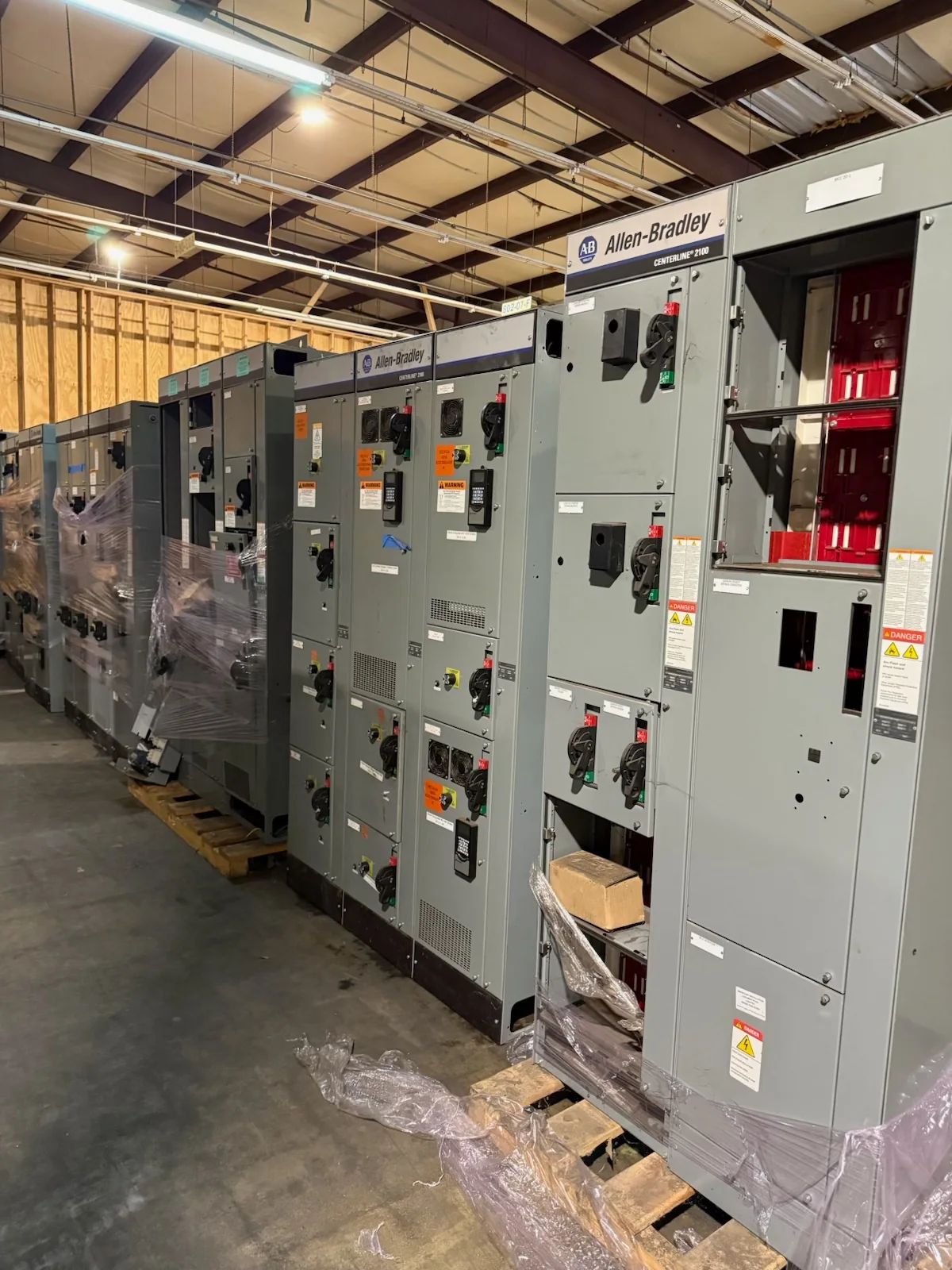
Sell Low-Voltage Switchgear in Cleveland, Ohio
A stored low-voltage switchgear lineup can be valuable when its identity, completeness, and release boundary are clear. In Cleveland and elsewhere in Cuyahoga County, an evaluation begins with records and exterior labels, not assumptions based on cabinet size. The buyer considers equipment from all voltage classes; this route focuses on low-voltage assemblies and their documented devices. A seller does not need to test the equipment. After agreement, payment is made upfront under the settled terms, while the buyer coordinates qualified work and logistics for removal.
Read the assembly record and device labels separately
Share available one-line diagrams, equipment schedules, purchase records, storage lists, nameplate transcriptions, and safe exterior photographs. Capture manufacturer and series information if visible, section identifiers, full voltage wording, continuous current wording, and any stated bus rating. Do not shorten a label to “480” or “1200 amps” when its complete wording is available. The notation may distinguish system voltage, maximum voltage, frequency, phases, or main-bus current.
List each breaker or protective device separately. A main-bus rating describes the assembly or bus arrangement; it is not automatically the rating of every breaker. A breaker’s frame or sensor current also differs from its interrupting rating. Record visible markings independently and call anything unreadable unknown. Never turn an individual device marking into a claim about the whole lineup.
Define the stored lot before calling it complete
Describe the boundary section by section. List the number and order of vertical sections if known, main and feeder positions, shutters or covers, neutral and ground components, control equipment, and loose parts. Then separately list removable breakers, trip units, fuses, hardware, and spare devices stored nearby. A breaker beside a lineup is not automatically part of it; its association should be supported by a tag, drawing, schedule, or other record.
- Identify the lineup label independently from every individual breaker label.
- Mark sections that are present, partially stripped, or not located.
- State whether doors, barriers, covers, drawout elements, and shipping supports are visibly included.
- Separate documented spares from unverified loose equipment.
Hypothetical example: a warehouse record says “six-section low-voltage lineup,” while storage visibly contains five cabinets, three labeled drawout breakers, and two unlabeled breakers. The accurate description is five located sections, three documented associated devices, and two devices of unknown association—not a complete six-section package.
Describe condition without opening or operating equipment
Safe exterior photographs can show dents, bent doors, missing paint, corrosion, water marks, broken viewing windows, damaged handles, missing labels, pallet condition, and packaging. Note whether cabinets are indoors, under cover, or exposed, and whether any impact or moisture event is known. Do not open compartments, operate handles, remove covers, touch conductors, or test energized or de-energized equipment. If the interior is unknown, say so. Photos should be taken only from a safe position by an authorized person.
Storage history matters even when the exterior looks clean. Record known movement, outdoor exposure, contamination, missing fasteners, or separation of breakers from original sections. A qualified, authorized team must establish safe conditions and handle any required disconnection; the seller is not asked to perform electrical work.
Offer factors and the exact release boundary
Valuation reflects more than cabinet count. Complete documentation, traceable breaker-to-section associations, recorded ratings, matching doors and barriers, protected storage, and a coherent lot support a useful evaluation. Unknown ratings, mixed manufacturers, missing drawout parts, corrosion, impact damage, incomplete records, and unverified spares can reduce confidence. Incomplete or surplus equipment may still be considered, but the offer depends on what can be responsibly identified.
Confirm whether the lineup belongs to the seller, a landlord, contractor, estate, or another party. State what is included and excluded: adjacent panels, permanently installed raceway, building wiring, spare parts, pallets, or equipment reserved for another project. If records conflict, preserve the conflict as an open question rather than selecting the more favorable rating or boundary.
Coordinate access, loading, and freight
Provide general access requirements, storage-room location, door and route restrictions if known, dock information, loading-hour rules, escort needs, and the contact responsible for release approval. These are coordination details, not a request for the seller to dismantle or move electrical equipment. The buyer handles crane arrangements when needed, qualified disconnects, rigging, loading, freight, and hauling. The seller identifies ownership, authorizes access, and shares accurate records and safe exterior views.
For a heavy stored lineup, mention known dimensions, weights from records, palletization, overhead obstructions, narrow turns, stairs, and whether sections are separated. Unknown dimensions should remain unknown until verified through records or coordinated review. Agree security procedures and release windows in advance so qualified labor and transportation can be planned.
Questions to include with the inventory
- What is the full wording on lineup and device nameplates, including voltage, current, and interrupting information?
- Which sections and breakers are physically present, and which appear only in records?
- Are loose breakers documented spares for this lineup, or is their association unknown?
- Where was the equipment stored, and is water, corrosion, impact, contamination, or packaging damage known?
- Who owns it and who can approve release, site access, and the final lot boundary?
- What escorts, loading hours, route limits, or dimensions should be coordinated?
Send the available documentation and safe exterior views for review. The evaluation can distinguish recorded facts from unknowns, define the sale lot without disturbing energized equipment, and establish a practical release plan for surplus low-voltage switchgear in Cleveland.