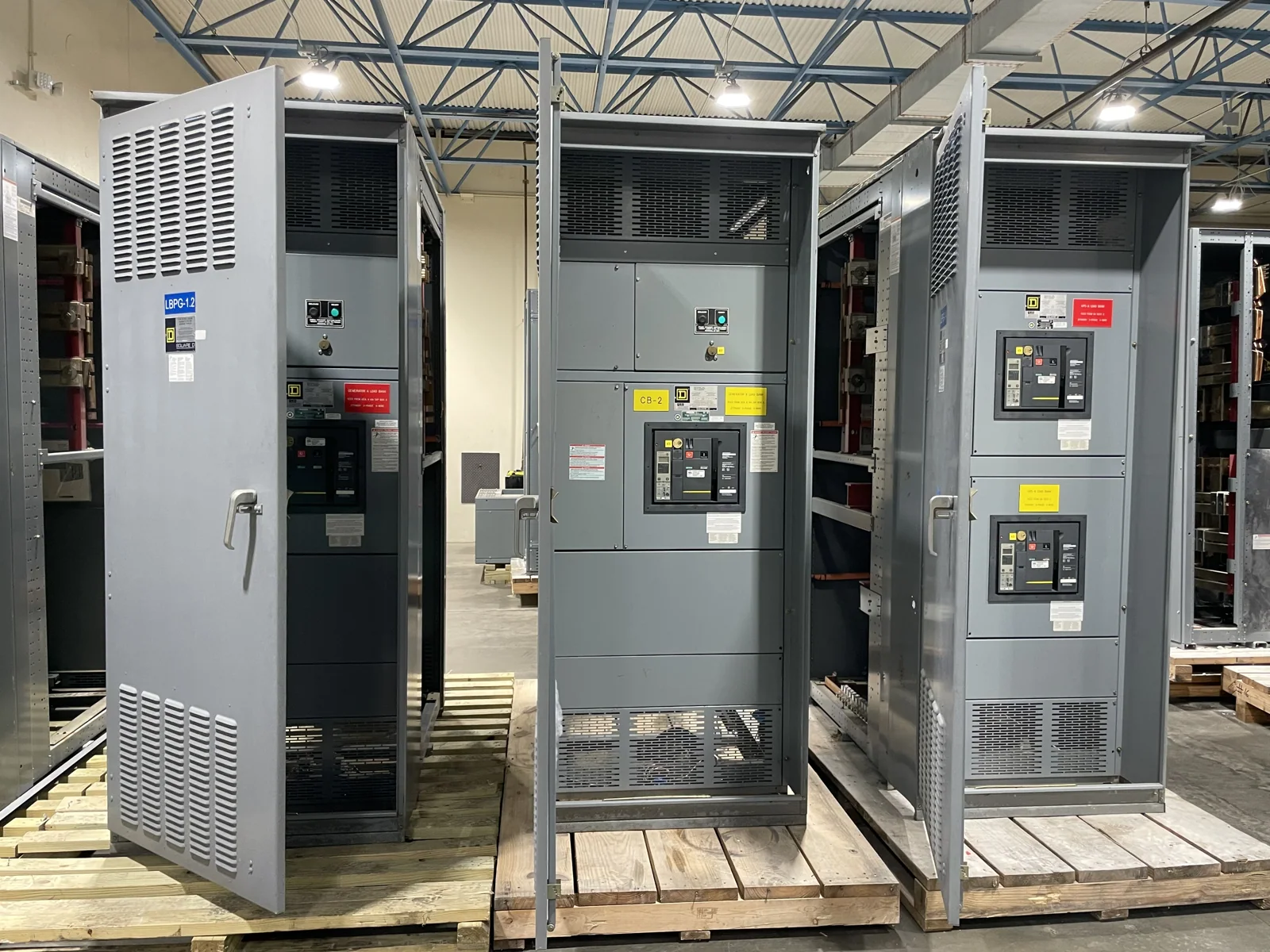
Start with records and the ownership boundary
For a Cleveland, Ohio pad-mounted switchgear lot, the first problem is often not the enclosure but the paperwork around it. A seller may have an outdoor cabinet left after a facility change, a spare in storage, or equipment associated with a service that is still active. Tell the buyer whether the asset is customer-owned, controlled by a landlord, or believed to be utility-owned. Utility ownership, easements, service agreements, and release approvals can prevent a sale even when the cabinet appears surplus. The exact site and authority to release it remain unknown until documented.
Existing one-lines, equipment schedules, purchase records, work orders, and decommissioning paperwork can establish manufacturer, enclosure identification, switch arrangement, voltage, current, frequency, and other ratings without asking anyone to operate the equipment. The buyer considers equipment across voltage classes; never infer a class from cabinet size, paint, or a familiar brand name.
Identify the enclosure without opening it
Begin with what can be read or photographed safely from the exterior. Record complete nameplate wording, serial or catalog information, visible labels, number of ways or compartments described by the records, and the quantity of switches, fuses, load-interrupter devices, or other documented devices. A cabinet label is not automatically the rating of every device inside it. Keep assembly ratings, individual device ratings, and fault or interrupting designations separate. If a label is faded, report partial text rather than filling in a likely value.
Safe exterior photographs can show the nameplate, doors, hinges, pad, cable entry area, lifting features, vents, warning labels, and surrounding clearance. Do not open the enclosure, move a handle, remove a cover, touch conductors, or test anything. If records do not identify the internal arrangement, say so; an unknown device count is more useful than an invented one.
Make the stored lot complete—or clearly incomplete
A possible Cleveland surplus lot should be itemized rather than described as one outdoor box. List each enclosure separately, then list loose switches, fuse assemblies, operating accessories, barriers, keys, manuals, and spare components only when their relationship is documented. A separately stored device might belong to another cabinet. Conversely, a cabinet can be present while removable or serviceable parts are absent. Note whether accessories are inside the enclosure, boxed nearby, or missing.
Hypothetical example: an owner has one pad-mounted enclosure in a fenced yard and two tagged replacement devices in a warehouse. The inventory should identify the enclosure, quote its visible label, record each device tag, and state that the association is unconfirmed unless drawings or owner records connect them. This is not a claim about a Cleveland project; it illustrates why count, identity, and lot boundary must be reconciled.
Describe condition and environmental concerns plainly
Condition reporting should stay observational and safe. Note exterior corrosion, dents, bent doors, missing hardware, damaged nameplates, water staining, standing water around the pad, impact evidence, or packaging damage. Also disclose known contamination, oil or other fluid concerns, unusual odors, and environmental restrictions. Do not clean, drain, sample, or disturb a suspected release. Unknown interior condition should remain unknown.
What influences an offer
Valuation reflects more than a manufacturer label. Useful factors include verified voltage and current information, device configuration, completeness, documented ownership, age or service history, corrosion and environmental concerns, dimensions and weight from records, and identifiable accessories. A traceable enclosure with uncertain missing parts may be assessed differently from a complete documented assembly; neither should be valued from appearance alone. Brand and model information can help, but compatibility with another system should not be promised without supporting documentation.
After reviewing the lot, the business can provide a cash offer; once the seller accepts and the sale is agreed, payment is made upfront before the agreed pickup. The seller is not expected to test the equipment or pay for removal. The buyer handles coordination of qualified disconnects, crane work, rigging, loading, freight, and hauling. Removal responsibilities are coordinated rather than shifted to the seller, but truthful records and ownership approval remain necessary.
Coordinate release and site access
For an outdoor lot, share the authorized release contact, access rules, gate or escort requirements, permitted pickup window, surface conditions, overhead obstructions, and vehicle or lifting restrictions. If the enclosure sits near an active service, identify the boundary between the proposed lot and equipment that must remain. A qualified, authorized team must establish safe conditions and handle disconnection. The seller should not open, operate, dismantle, or approach energized equipment.
Access approvals are part of planning, not a request that the seller remove the gear. The buyer can coordinate the crane, qualified disconnects, rigging, loading, freight, and hauling once ownership and release date are clear. Dimensions and lifting points should come from records or the authorized removal team, not guesses from a photograph.
Questions that make the review efficient
- Who owns the enclosure and has authority to release it?
- What manufacturer, full ratings, serial information, and device quantities appear in existing records?
- Is the equipment installed, staged, or stored, and what condition is visible from the exterior?
- Are switches, fuses, accessories, keys, drawings, or spares included, excluded, or unconfirmed?
- Are contamination, fluid, flood, fire, impact, or environmental issues known?
- What approvals, escort requirements, release date, and access limits apply?
Send available records and safe exterior photos, identify every unknown, and describe the intended lot boundary. That gives the Cleveland evaluation a defensible starting point without asking the seller to handle electrical risk.