Sell Low-Voltage Switchgear in Cuyahoga County, Ohio
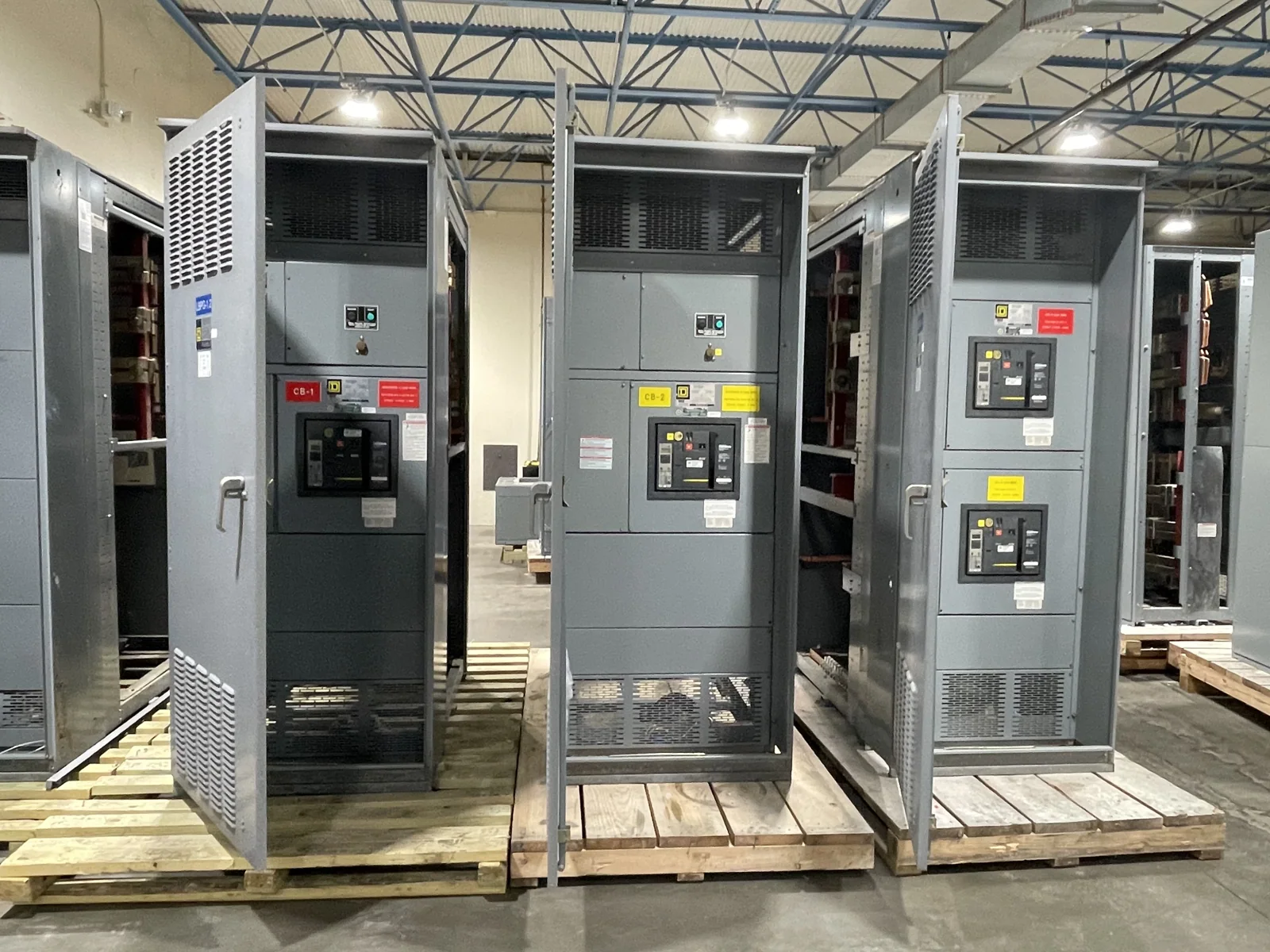
A low-voltage switchgear sale is easier to evaluate when the proposed lot is described as an assembly rather than as a pile of cabinets and breakers. The pickup site may be in Cuyahoga County, but the useful starting point is the equipment record: manufacturer, lineup designation, section count, documented voltage, current, bus details, protective devices and any available drawings. We buy electrical equipment across voltage classes, including low-voltage equipment, and consider material from decommissioned data centers and shut-down power plants. A seller does not need to test, operate, open or dismantle anything. Existing records and safe exterior photos are enough to begin a review.
Two hypothetical sale situations
Hypothetical situation one: a phased operating-building replacement
Imagine an occupied building replacing a low-voltage lineup in phases. The proposed sale might include one main section, several feeder sections and removable breakers, while other sections continue serving active loads. The inventory should identify the exact sections offered, the sections retained, and the expected release window for each group. A lineup label can describe the assembly’s bus and current rating; a breaker label may show a different frame, trip or interrupting rating. Neither rating should be inferred from cabinet size or from a neighboring device. A marked drawing, section schedule or asset list can show which main and feeder positions belong to the sale without asking anyone to operate a device.
Hypothetical situation two: a stored surplus lot
Now consider a hypothetical stored lineup from a decommissioned data center or shut-down power plant. The cabinets may be disconnected and staged, with individual breakers stored nearby. Here, the central question is not only what is visible on a nameplate, but whether each loose device can be associated with a particular section or position. List the lineup label separately from every breaker label, and mark an association as unknown when the records do not establish it. Note whether doors, barriers, covers, hardware, control components and shipping supports are present. Storage conditions matter: indoor, dry and protected equipment presents a different review from gear exposed to moisture, impact, contamination or prolonged open-air storage.
Identification, completeness and condition
Useful documentation may include nameplate transcriptions, one-line diagrams, factory drawings, breaker schedules, prior inspection records, ownership documentation and a simple section-by-section count. Use the full voltage and current wording exactly as shown on the assembly and device labels. Keep three concepts distinct: the main-bus rating, an individual breaker’s rating and its interrupting rating. A higher-looking number on one device does not establish the rating of the lineup, and a lineup label does not prove that a loose breaker fits every position.
For completeness, describe each section by position or identifier, then list installed main or feeder devices, removable breakers, meters, relays, control power components and separately stored spares. Record known missing parts instead of silently treating them as included. Condition notes should stay observable: dents, corrosion, scratched finishes, broken handles, missing covers, water marks, dirt, packaging damage or unknown interior condition. Exterior photos should show labels and overall condition without opening compartments. Do not touch energized equipment or attempt a test; a qualified, authorized team must establish safe conditions and handle disconnection.
What can affect valuation
Valuation depends on more than a brand name. Documented voltage and current, identifiable manufacturer and series, section count, breaker quantity, interrupting information, completeness, storage history and physical condition all influence review. So do ownership and release authority: equipment that remains building-owned, utility-controlled or reserved for another phase cannot be treated as available merely because it is nearby. The practical boundary of the lot should be written down. Unknown information is useful when labeled honestly; it is safer than assigning a rating, compatibility or condition that the records do not support.
Agreement terms also depend on release readiness. A cash offer can be made, and after agreement payment is made upfront as agreed; no testing is required from the seller. We handle the qualified disconnect coordination, crane needs, rigging, loading, freight and hauling rather than asking the seller to perform removal. Site access approvals, outage coordination, escort rules, loading hours and security procedures should be arranged with the authorized facility contact. Those approvals coordinate the work; they do not shift removal costs or technical responsibility to the seller.
Example inventory and seller questions
An example inventory might read: Lineup A, six documented sections; one main device and four feeder devices identified by their visible labels; two loose breakers stored in a labeled crate; one missing trim cover; bus wording recorded from the assembly nameplate; interior condition unknown; release subject to owner approval. That format separates facts from assumptions and makes a stored device easier to evaluate without claiming compatibility.
- Which sections are included, and which must remain in service?
- What do the assembly and individual device labels state for voltage, current and interrupting information?
- Are loose breakers, meters, relays, covers and control parts included, and can their original positions be documented?
- Who owns the equipment and who can authorize its release?
- Where is each section stored, what access approvals apply, and what condition is visible from the exterior?
Provide the records you have, safe exterior photos and the authorized contact for release coordination. Do not open, operate, dismantle, energize or test the equipment. A description lets the buyer assess the Cuyahoga County lot, distinguish confirmed details from unknowns and plan safe removal after an agreement.