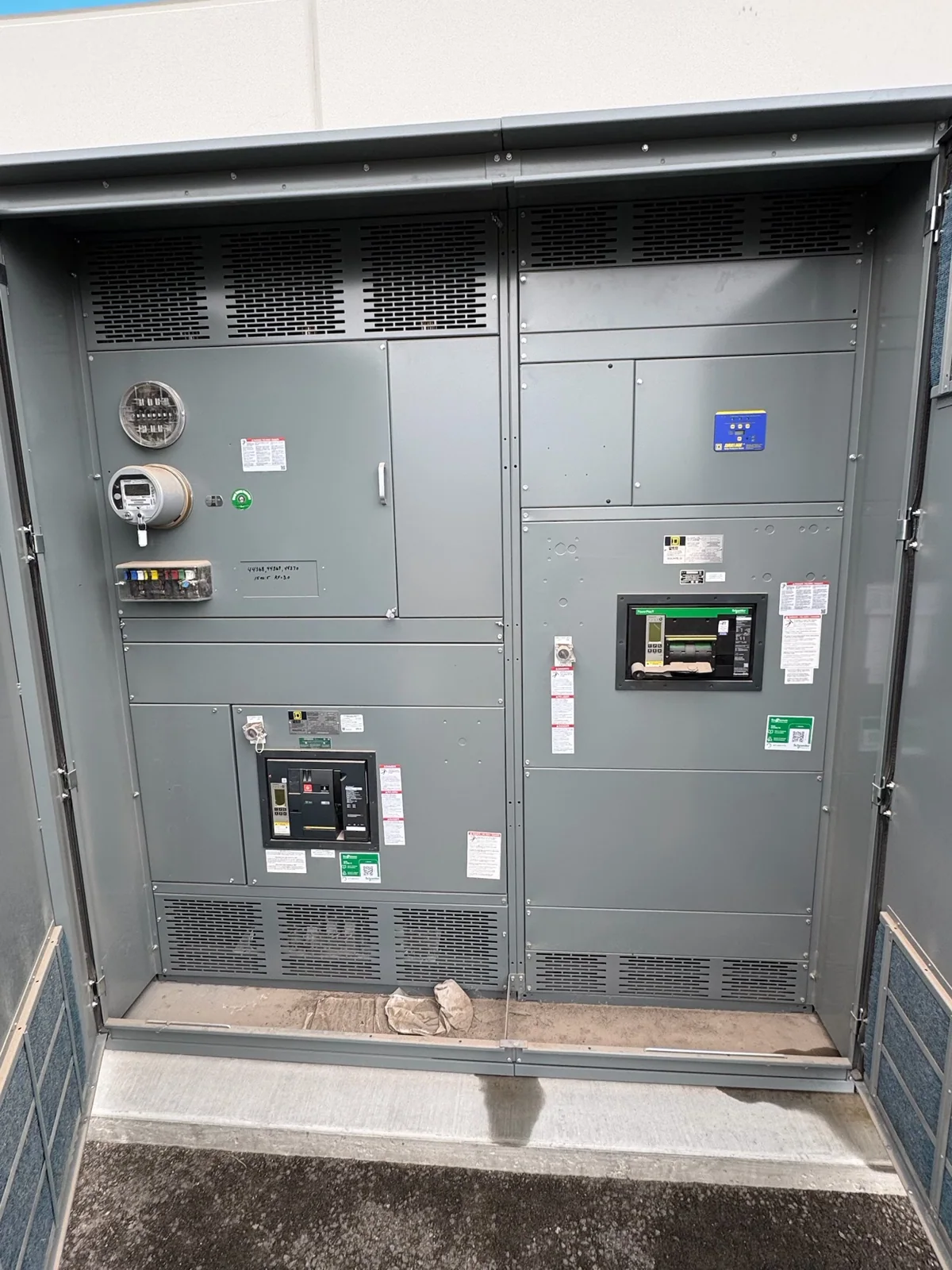
Define the Hilliard switchgear lot room by room
A useful switchgear evaluation begins with a precise physical lot, not a guessed quantity based on a building or one photograph. For equipment in Hilliard, Ohio, identify the room or storage area where each item is located and keep those locations separate. Franklin County is the route area, but the exact facility, ownership boundary and access conditions remain facts to document.
For every room, list the complete assembly if present, including main sections, feeder sections, bus sections, control sections and end sections. Then list loose items in that same room: removable breakers, relays, fuses, covers, drawout hardware, spare parts and crates. A breaker sitting on a shelf should not be pooled with a breaker installed in another lineup unless records establish the association. A room-by-room list makes the proposed sale boundary visible and helps prevent retained equipment from being included accidentally.
Capture identification without inferring a rating
Use schedules, one-line drawings, asset records and nameplate information whenever available. Record the manufacturer, lineup designation, section numbers, visible catalog or serial information, documented voltage class, continuous current, bus rating and interrupting information. An assembly rating is not automatically the rating of every device inside it. A feeder breaker marking does not establish the complete lineup rating. If a label is unreadable or a record conflicts with a visible marking, record the discrepancy as unknown.
Describe main and feeder positions separately. Note which breakers are installed, which positions are empty, and which removable breakers are stored nearby. A separately stored spare may be valuable, but its fit, rating and association must be supported by documentation rather than appearance. The buyer considers all voltage classes, so do not discard an item merely because its voltage is not known yet; provide the exact wording that can be read safely from the exterior.
Show completeness and condition by location
Completeness affects usefulness. For each Hilliard room, report the number of sections and identify missing doors, escutcheons, barriers, instrument transformers, control wiring, shutters, hardware or removable devices if known. Separate installed equipment from boxed spares and mark whether packaging appears original, weathered or damaged. Do not combine counts across rooms simply to produce a larger total.
Condition notes should be observational and safe. Existing records can identify prior service, storage duration, refurbishment history, contamination concerns or known water exposure. Safe exterior photos may show nameplates, closed doors, enclosure surfaces, labels, pallets and the route to the equipment. Do not open compartments, operate devices, touch energized equipment or test anything for the evaluation. A qualified, authorized team must establish safe conditions and handle any required disconnection.
Offer factors and ownership questions
Valuation reflects documented identity, voltage and current information, section counts, breaker availability, condition, storage environment and recovery complexity. It also depends on whether the equipment is a coherent assembly or uncertain parts. A clear lot boundary distinguishes included hardware from equipment serving an active area or another owner.
Before an agreement, confirm who owns each room’s equipment and who has authority to release it. Ask whether a landlord, tenant, utility, lender, insurer or other stakeholder must approve the disposition. If a possible building changeout is involved, identify the gear that remains in service and the proposed release date. These are coordination questions, not instructions for the seller to disconnect or remove anything.
Access, release and freight planning
For each room, provide the access route: floor or dock location, doorway and corridor constraints if known, stairs or elevators, overhead clearance, staging space, loading-hour restrictions and required escorts or badges. Note whether rooms require separate approvals. A measured doorway, floor-loading limit or facility rule is more useful than saying a truck can reach the property.
After agreement and authorized release, the buyer handles qualified disconnects, crane coordination where needed, rigging, loading, freight and hauling. The seller does not need to test, dismantle or prepare energized equipment. Access approvals, outage coordination and site rules should be identified early so the removal plan can be scheduled responsibly without shifting the buyer’s removal responsibilities to the seller.
Hypothetical room-by-room inventory
Hypothetical example: Room A contains one documented switchgear lineup with six sections, three installed feeder breakers and one empty position. Room B contains two separately stored breakers in labeled cabinets, while Room C contains covers and shipping hardware with uncertain association. The inventory should state those facts room by room, identify the records supporting the breaker associations, and mark the uncertain match unknown. It should not report “one lineup plus five breakers” without explaining where each item is and whether it belongs to the sale.
Questions to include with the submission
- What room or storage area contains each assembly, breaker, spare and accessory?
- Which drawings, schedules, nameplates or asset records identify the sections and devices?
- Which equipment is owner property, and who can authorize its release?
- What is installed, what is stored separately, and what is known to be missing or damaged?
- Which rooms have restricted access, required escorts, staging limits or separate release dates?
- Are there known water, corrosion, contamination or storage concerns documented in existing records?
Send the room-by-room inventory, available documentation and safe exterior photos for review. After reviewing the documented lot and authorized release conditions, the buyer can make a cash offer; once the seller accepts and the sale is agreed, payment is made upfront before the agreed pickup, with the final scope based on the documented lot and authorized release conditions.