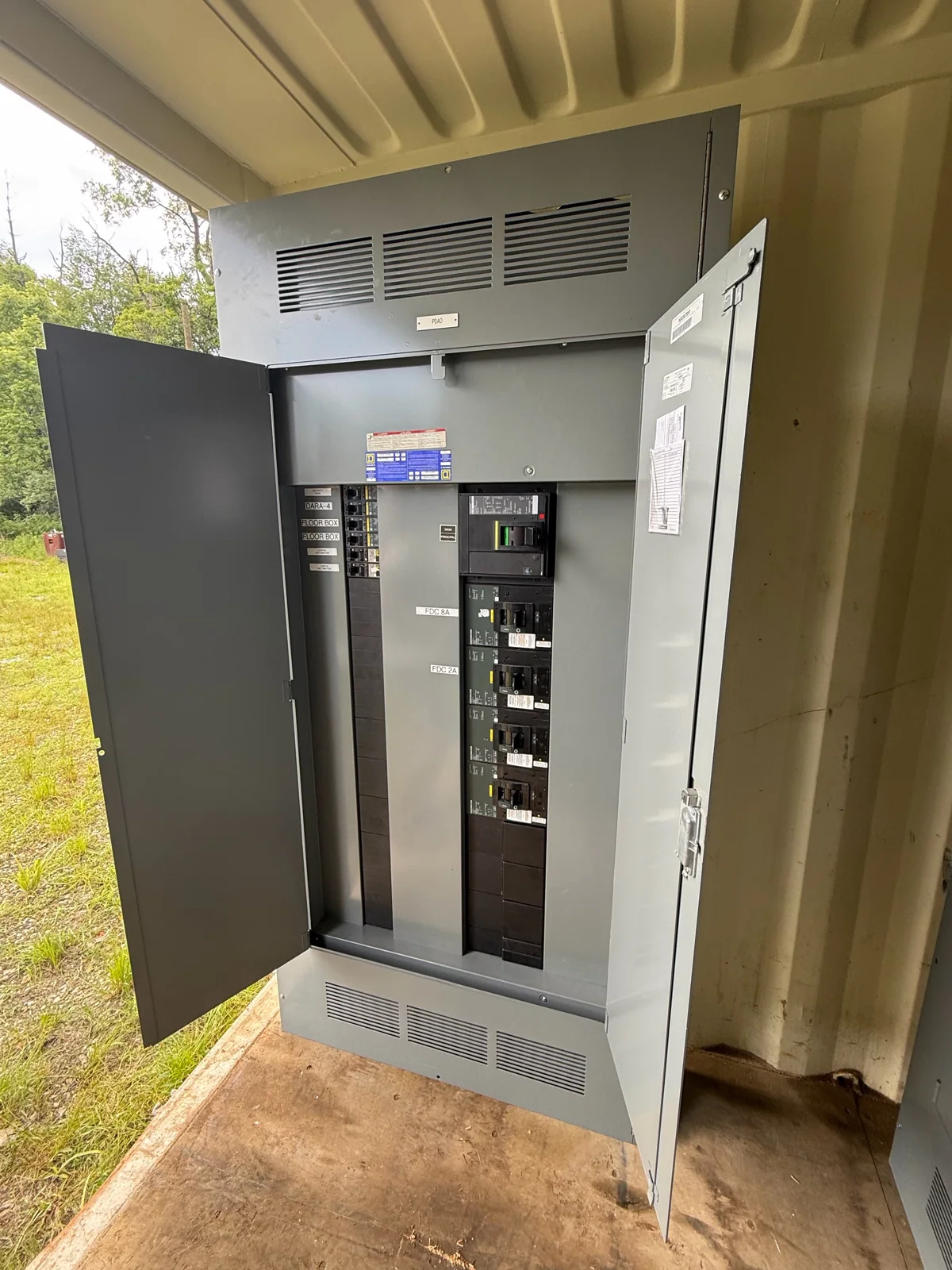
A portfolio is consolidated, and a manager finds three switchgear lineups on an asset list: one in a main electrical room, one in an operations building, and one in storage. The list does not show which sections serve loads, which breakers are loose, or who can release each building’s equipment. Existing records identify Delaware as the county seat, but the pickup site may be elsewhere.
Identify every lineup by building
List each building’s lineup as its own lot or sub-lot. Note the room or storage area, lineup designation, number of sections, and whether the equipment is installed, staged, or separately stored. Describe main and feeder sections separately when records support that distinction. A main section may receive incoming power while feeder sections distribute power onward; that functional description does not prove a particular rating or configuration.
Record visible bus labels, device labels, manufacturer name, nameplate wording, and drawing references without guessing at unreadable text. Count removable breakers separately. A breaker beside a lineup is not automatically part of it, even if its brand looks similar. Separately stored spares should be listed with tags, documented cabinet association, and unknowns clearly marked.
Keep ratings attached to the correct item
Use the voltage and current wording shown on assembly and device labels. An assembly rating is not an individual breaker rating, and neither is the same as an interrupting rating. Keep bus, main-device, and feeder-device information tied to the item where it was found. Do not infer a rating from enclosure size or appearance. If a label, drawing, or breaker association is unknown, say so.
Show lot completeness clearly
Separate the installed lineup from accessories and loose components. Count complete sections, identify missing doors or covers, and note barriers, hardware, and control-power parts only when documented. List each removable breaker by visible identification and documented position. A stored spare may add value, but its value depends on traceable identity.
For a hypothetical portfolio, an example inventory might say: Building A has one documented main section and four feeder sections, two breakers associated by schedule, and one spare with an uncertain position; Building B has two feeder sections; Storage has three tagged breakers and two unlabeled crates.
Describe condition without unsafe inspection
Share existing records and safe exterior photos only. From a safe position, photos may show labels, doors, exterior corrosion, impact marks, missing covers, packaging, water staining, or obvious contamination. Do not open compartments, operate handles, remove panels, touch conductors, or test anything. A qualified, authorized team must establish safe conditions and handle disconnection. If a lineup remains in service, identify it as retained or active from owner records, not from an attempted inspection.
Separate observed facts from assumptions. “Exterior paint is chipped near the lower enclosure” is useful; “fully operational” is not supported without documentation. For loose breakers, record packaging and visible damage without installing or exercising them. Unknown internal condition should remain explicit.
Factors that can influence an offer
Evaluation may consider documented voltage class, current ratings, manufacturer and series information, section count, breaker completeness, physical condition, and whether components form a coherent lot. A complete lineup with traceable device positions is easier to assess than a mixed pallet of unidentified breakers. Missing covers, uncertain ownership, corrosion, environmental concerns, and incomplete records can reduce confidence. These are evaluation factors, not a promise of price.
Confirm which entity owns each building’s equipment, whether a landlord or tenant controls it, and whether a utility or other authority has an interest. Identify one authorized release contact per building. Do not assume the county seat, property owner, facilities vendor, or person holding an old list can sell every item. The sale boundary should identify what is included and what must remain in service.
Coordinate release and freight planning
Provide the actual pickup address or site description during evaluation, together with building name, access restrictions, loading hours, security or escort requirements, floor level, doorway dimensions, and known route limitations. These details support coordination. The buyer handles qualified disconnects, crane needs, rigging, loading, freight, and hauling; the seller is not asked to perform those tasks. Access approvals, escorts, outage coordination, and release paperwork are coordinated with authorized site contacts rather than treated as removal work for the seller.
For multiple buildings, align each lineup with its release date and access contact. A main lineup may be available before a storage lot, while a retained feeder section may not be releasable until a later stage. Do not compress separate windows into one assumed schedule. The site team should describe the route to loading without moving or dismantling equipment.
Questions for a Delaware County review
- What is the actual pickup location for each building, and who is authorized to release its equipment?
- Which sections are included, which remain in service, and where are the main and feeder labels?
- Which removable breakers and stored spares have documented positions or tags?
- What drawings, schedules, nameplate photos, ownership records, and storage notes exist?
- Are there known missing covers, corrosion, water exposure, contamination, impact damage, or environmental restrictions?
- What access approvals, escort rules, loading hours, and release dates must be coordinated?
Those answers distinguish a documented lineup from unrelated surplus. After reviewing the lot, the business can provide a cash offer; once the seller accepts and the sale is agreed, payment is made upfront before the agreed pickup, with no testing required from the seller. Safe release remains the priority: the seller supplies records and authority, while qualified personnel manage disconnection and the buyer manages rigging, loading, freight, and hauling.