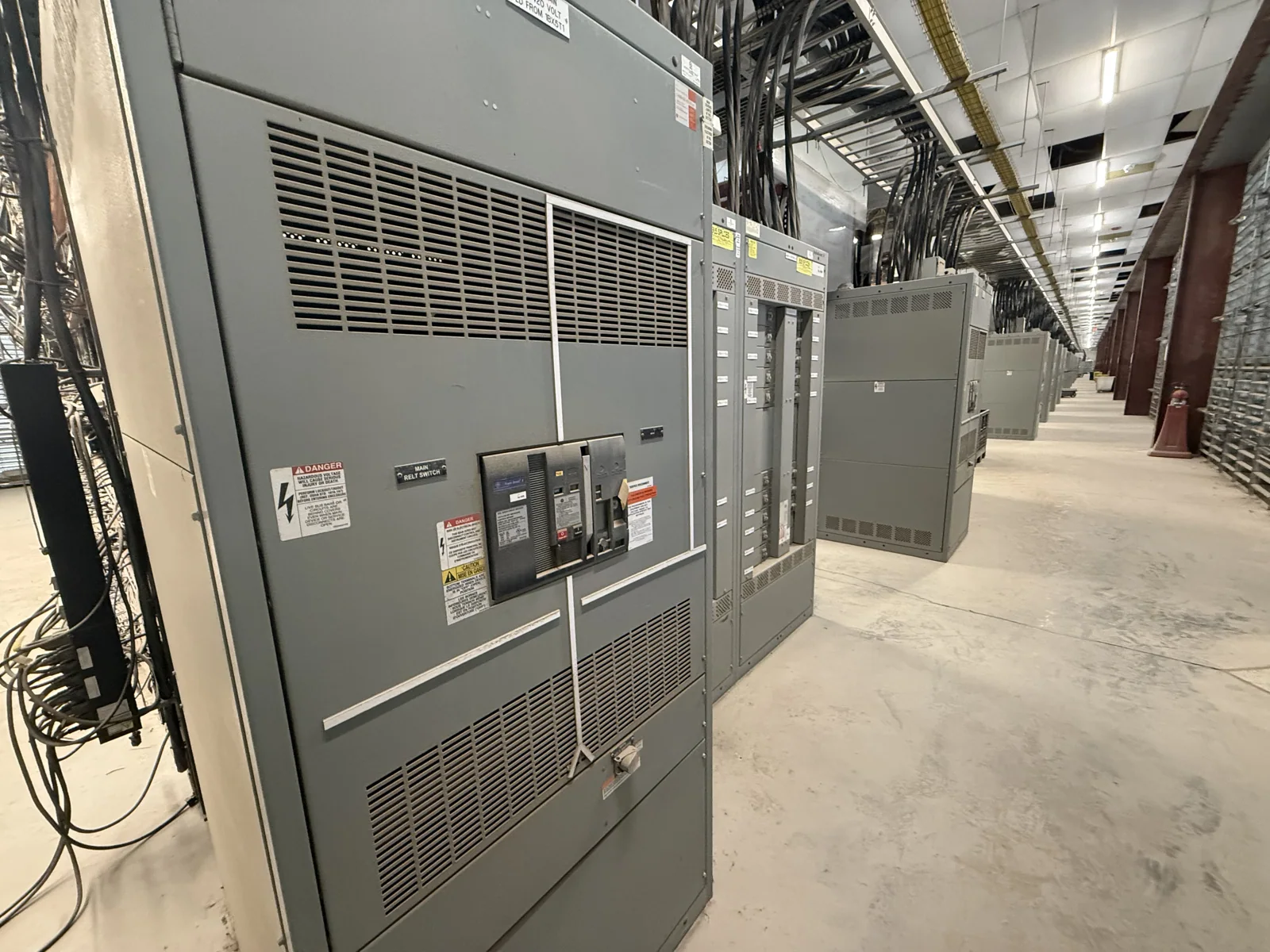
What should a Delaware County switchgear seller identify first?
For an evaluation, begin with what the equipment actually is, where it is, and who has authority to release it. The county reference is not a guaranteed pickup address: the actual site may be elsewhere in Delaware County, and a portfolio may include more than one building. Existing one-line diagrams, equipment schedules, nameplate transcriptions, purchase records, or decommissioning documents are useful.
Switchgear is best described by its lineup or assembly and by the devices inside it. Note the manufacturer name, documented voltage and current information, section count, bus wording, main section, feeder sections, protective devices, and any visible identification numbers. If a value is absent, write unknown rather than estimating from enclosure size or appearance.
How do main sections, feeder sections, and spares affect the lot?
Describe the lineup in functional pieces. The main section may be associated with incoming power, while feeder sections distribute power onward; the records should establish those roles. Count removable breakers in their installed positions, then list loose breakers separately. A stored device may be a spare for the lineup, a replacement from another system, or an unrelated item. Its association should be documented, not assumed because the faceplate looks similar.
For a hypothetical multi-building portfolio, imagine three buildings with one documented lineup in each. A useful inventory would name them Building A, Building B, and Building C, state the section count for each, and list the main and feeder positions shown on the schedule. A separate line could say “two loose breakers, intended association unknown” until the owner supplies a matching record. Include the authorized release contact for each building and identify which records belong to which lineup. This keeps a complete Building A lot from being mistakenly combined with partial equipment from Building B.
What makes a switchgear lot complete enough to evaluate?
Completeness concerns more than the number of metal sections. Note whether documented breakers, drawout elements, shutters, barriers, doors, covers, control components, relays, instrument transformers, hardware, and spare parts are present, stored elsewhere, or missing. Do not call a component included merely because a drawing shows it. Conversely, do not discard value because a small item is not visible in a photograph; identify the uncertainty for review.
Ownership and boundary matter just as much. A seller should distinguish customer-owned switchgear from utility-owned equipment, landlord-retained equipment, or gear still serving another building. In a portfolio, the release authority may differ by building.
Which condition details influence valuation?
Report observable exterior condition without manipulating the equipment. Useful notes include storage indoors or outdoors, dust, moisture exposure, corrosion, impact marks, damaged paint, missing doors or covers, bent handles, removed nameplates, packaging, and signs of prior disassembly. Mention whether loose devices are boxed, palletized, or unprotected. If contamination, fire exposure, water intrusion, or environmental restrictions are known, say so plainly. Unknown internal condition remains unknown; the seller does not need to test, energize, open, or operate anything.
Valuation commonly reflects documented identity, voltage class, section quantity, device completeness, condition, ownership clarity, and the practical cost of handling a particular lot. Brand information can help match records, but A hypothetical lot with complete schedules, clearly associated removable breakers, dry indoor storage, and intact exterior panels may be easier to evaluate than a larger mixed lot with missing labels and uncertain ownership. That is an example only, not a prediction of an offer.
How are safe release and freight handled?
After agreement, a qualified and authorized electrical team must establish safe conditions and perform any required disconnection. The seller should provide records, exterior observations, and access coordination; no seller should touch energized equipment, remove covers, dismantle sections, or perform testing for this evaluation. The buyer handles qualified disconnects, crane or other lifting arrangements, rigging, loading, freight, and hauling rather than shifting those removal tasks to the seller.
Access planning still benefits from practical facts. For every building, provide the approved contact, entry rules, loading hours if known, dock or doorway constraints, stairs or level changes, and any security or escort requirements. State whether a lineup is installed, staged, or stored, and whether the route to the loading point is known. Unknown dimensions, weights, or travel paths should remain labeled unknown until supported by records or an authorized site review.
What information should a Delaware County seller send?
- Building or site identifier, ownership status, authorized release contact, and proposed release window.
- Manufacturer, documented assembly voltage and current, section count, lineup labels, and available drawings or schedules.
- Main and feeder position descriptions, removable breaker records, separately stored spares, and known missing components.
- Exterior-only photographs of labels and panels, plus notes about storage, moisture, corrosion, impact, contamination, or packaging.
- Known access approvals, loading constraints, and whether qualified personnel can coordinate safe disconnection.
Questions worth answering before an offer
Which building contains each lineup? Who owns each section and each loose device? Which breakers are documented spares, and which associations are unknown? What equipment must remain in service? Are any utility, landlord, or tenant boundaries involved? Are records current, and do they match the visible section labels? What access approval is required for the buyer’s qualified crew and hauling providers? Clear answers help separate a defined sale lot from equipment that cannot yet be released. Once the scope and terms are agreed, payment is made upfront and the buyer coordinates the removal logistics.