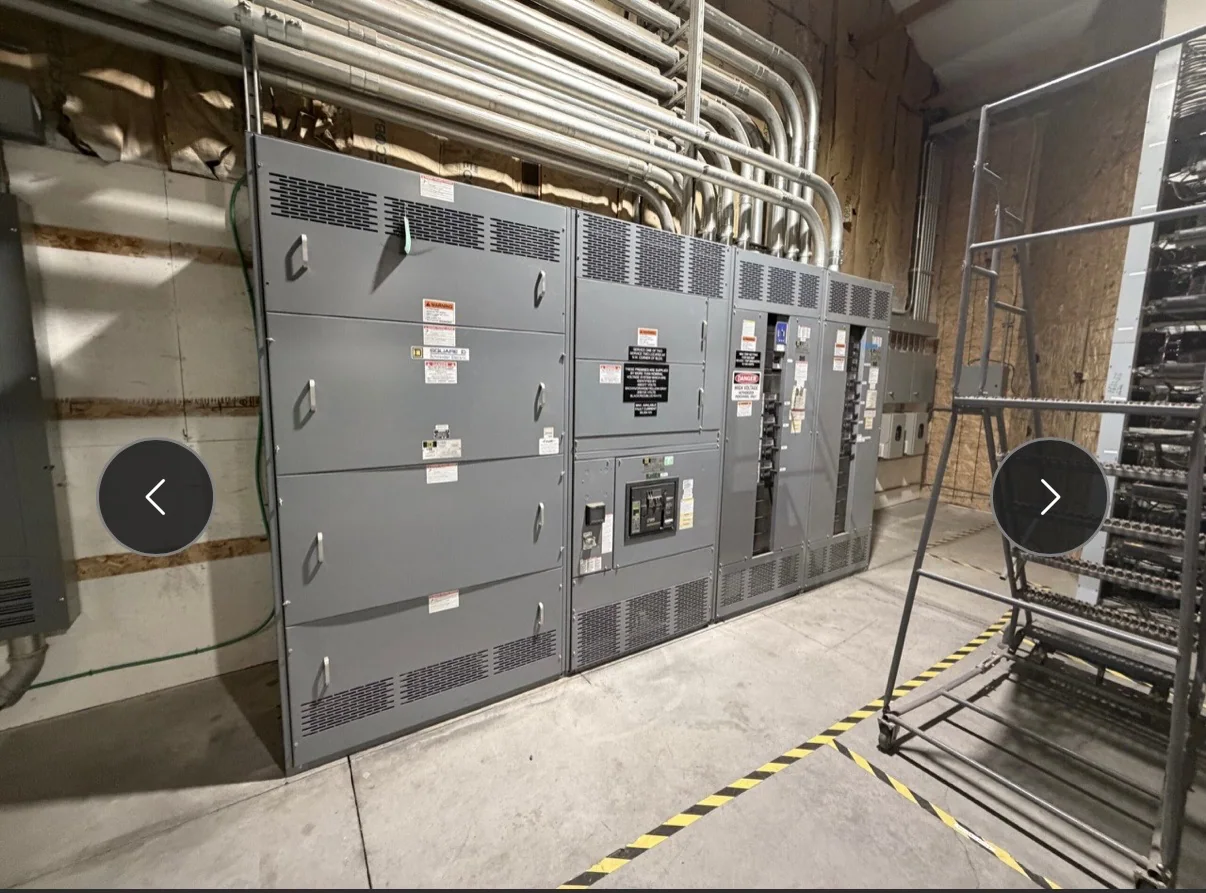
Sell Switchboards in Wood County With a Clear Equipment Boundary
Switchboard released during a building turnover is identified by records and exterior labels, not cabinet width or appearance. The pickup site may be anywhere in Wood County; Bowling Green is the county seat, not a confirmed location. The buyer considers all voltage classes, including decommissioned data-center and shut-down power-plant equipment. No seller testing is required.
Ownership and release authority matter alongside electrical description. In a hypothetical building turnover, some enclosures could be included in a property transfer while sections, spare devices, or stored covers could be available separately. That boundary should be documented rather than assumed. Identify the owner, authorized release party, and equipment retained with the property. Unknown ownership, unknown release dates, or an unknown utility boundary should be stated plainly.
Record the Service, Metering, and Feeder Sections
Begin with schedules, one-line drawings, nameplate records, existing facility photographs, and section labels visible from a safe exterior position. Describe the service section where documented, then separate any metering section and each feeder section. Note the main device, feeder devices, bus information, enclosure identification, manufacturer marking, and any recorded voltage or current wording. Do not treat enclosure size as a rating. A broad cabinet may contain an unexpected arrangement, and appearance cannot substitute for a readable record.
Ratings belong to specific components and assemblies. Keep the switchboard assembly rating distinct from the main device rating, individual feeder-device rating, interrupting information, and any other documented limitation. Record the wording rather than converting it into a guess. If a label is obscured, missing, or inconsistent with a drawing, mark it for review. Do not open compartments, operate handles, remove covers, or approach energized equipment for a better view. Safe conditions and disconnection must be established by a qualified, authorized team.
Build a Complete Lot Inventory
Completeness affects how the equipment can be valued and released. Count the lineup sections and identify the main device and feeder devices individually when records permit. List covers, barriers, doors, trim, metering components, documented accessories, and known missing pieces. Separate installed equipment from loose parts. Do not assign a nearby stored breaker or cover without its label, location, and documented association.
- List every included enclosure or section by its visible identifier and recorded function.
- Describe the main device, feeder devices, meters, and other included components without inferring unrecorded ratings.
- Count spare devices, covers, barriers, hardware containers, and drawings as separate inventory lines.
- Mark missing, damaged, unidentified, or property-retained components instead of pooling them into a single count.
- State which items are available separately from the building-transfer boundary and who approved that release.
Condition notes should be factual: storage location, moisture, corrosion, impact, contamination, removed trim, packaging quality, or visible damage. Exterior photos are welcome when taken safely and from an authorized location. Show labels, section sequence, storage, and access constraints without touching equipment.
What Shapes the Offer
Valuation reflects documented identity, completeness, condition, and practical release—not enclosure size. Records of voltage, current, device descriptions, manufacturer, section count, and configuration reduce uncertainty. A complete service and feeder lineup with matching covers may be evaluated differently from a partial assembly with unidentified devices. Separately stored parts can help when their association is supported, while unverified compatibility remains unknown.
The buyer also considers whether the lot is owned outright, subject to a property transfer, or restricted by another party. A defined release boundary prevents a retained service section from being accidentally included. After reviewing the lot, the buyer can make a cash offer; once the seller accepts and the transaction is agreed, payment is made upfront before the agreed pickup. No seller testing is required. The buyer handles qualified disconnects, crane coordination, rigging, loading, freight, and hauling.
Plan Access and Safe Release
Access is coordinated with the owner, facility representative, property-transfer parties, and security or scheduling contacts. Share the pickup contact, release approval, access window, loading area, route dimensions, dock restrictions, and crane-clearance concerns when available. These details plan the work without shifting crane, rigging, loading, freight, or hauling costs to the seller. The buyer coordinates qualified disconnection and removal after safe conditions are established.
For an active building, identify the sale boundary without directing anyone to isolate a circuit or manipulate equipment. Note adjacent gear that remains in service, restricted rooms, controlled gates, and whether the route passes through occupied space. Identify unknown facts plainly. A seller should provide records and safe exterior photos only, then let the authorized team determine the safe release method.
Hypothetical Inventory Example and Seller Questions
Hypothetical example: A building turnover record describes one service section, three feeder sections, a separate metering section, several loose covers, and two stored devices. The property-transfer documents retain the service enclosure, while the owner offers the feeder sections separately. The inventory should preserve that distinction, identify the recorded ratings for each assembly and device, flag whether the stored devices match any section, and list visible moisture or missing trim. This example does not assert a Wood County project or manufacturer.
For an evaluation, ask: Which sections are included? Which remain with the property? Who can authorize release? What voltage and current wording is recorded? Are the main and feeder devices identified? Which covers, barriers, meters, drawings, and spares are present? What is visibly damaged or missing? Where is each item stored? What route, dock, gate, clearance, or access approval must be coordinated? Record supported answers; label unanswered questions unknown. This inventory supports evaluation of the available Wood County switchboards.