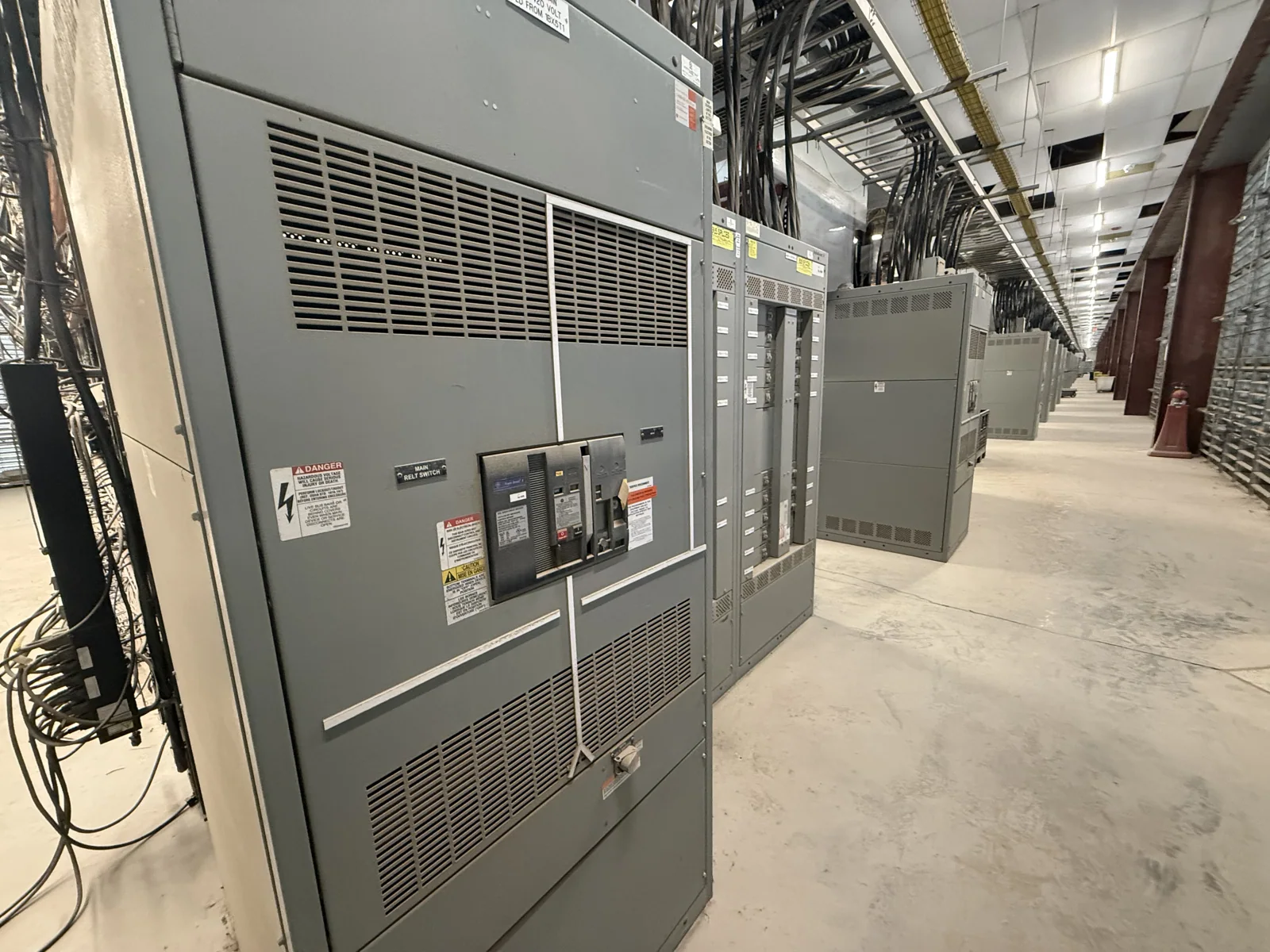
Sell Switchboards in Fairfield County, Ohio
If you have a surplus switchboard anywhere in Fairfield County, Ohio, begin with what you can document about the equipment and its proposed release. The pickup site may be anywhere in the county; it does not have to be in a particular city. A useful submission distinguishes service, metering and feeder sections, identifies the equipment owner, and explains what can be released and when. This buyer considers switchboards across voltage classes, but a cabinet’s size or appearance does not establish its electrical rating.
Identify each switchboard from existing information
Gather existing one-line drawings, switchboard schedules, changeout records and nameplate information. Where documented, record the manufacturer, assembly designation, section count, voltage, current, serial or other identifying numbers, and the wording on the main and feeder device labels. Note which label or record supplies each detail. An assembly rating, main device rating and feeder device rating can be different; do not transfer a value from one component to another. Mark missing, unreadable or conflicting information as unknown rather than estimating it.
Count the service, metering and feeder sections separately. Within the proposed lot, list the main device and feeder devices, along with doors, covers, barriers, trim and any separately stored components. Identify a loose part as associated with a particular section only when existing records support that connection. A schedule may describe a position even if its device is no longer present, so list empty positions and known missing components rather than treating the entire lineup as complete.
A hypothetical inventory at two separate sites
The following examples are invented to show how one seller or two authorized owners could describe two separate Fairfield County locations. They are not accounts of actual facilities, equipment or scheduled pickups. Quantities, conditions, dates and access arrangements for any real sale must be confirmed independently.
Site A: a service changeout
Suppose the proposed Site A lot consists of one old service section with one main device, one documented customer-owned metering section and three feeder sections. Existing records show two feeder devices present and one feeder device missing. Doors and installed covers are present, while two loose covers have an uncertain association. The replacement lineup, an adjacent transformer and equipment that must remain in service are excluded. Metering components inside the included section are unknown from the available records.
For this hypothetical site, the owner proposes release on June 10 after the service changeout and required approvals. A loading dock is available by appointment, but the doorway clearance and route from the electrical room still need confirmation from existing site information. The proposed date and dock arrangement apply only to Site A in this example; neither is a promise of safe access or a release for another property.
Site B: separately stored sections
Suppose Site B has one stored service section with one main device and two feeder sections with one documented feeder device in each. No metering section is included. One exterior cover is known to be missing, and a separately stored cover has no documented match. Existing records do not establish the assembly voltage or the devices’ current ratings, so those fields remain unknown. The stored sections are a separate lot, not an assumed continuation of Site A’s lineup.
For the example, the Site B owner proposes release on June 24 after confirming authority over the stored equipment. Pickup would be through a gated storage area during an arranged access window; the surface, available loading space and documented weights remain to be confirmed. Site B’s date, contact and access arrangements are separate from Site A’s, even if one person submits both inventories.
Completeness and condition affect the review
For each site, distinguish present equipment from equipment shown only in records. Disclose known missing doors, covers, devices or barriers and identify parts stored separately. A list of included items and exclusions is more useful than a single count of cabinets. Do not assume that loose devices fit a lineup, that a meter belongs to the seller, or that an apparently intact enclosure is complete inside.
Describe condition using existing records and safe exterior observations: storage conditions, dust, corrosion, water staining, dents, damaged packaging or visible impact. Disclose known fire exposure, contamination or fluid concerns. If internal condition or operating history is not documented, say so. Existing reports may be shared, but a seller is not asked to test, energize, operate, open, dismantle or remove anything to prepare an inventory.
Ownership and release must be established separately
Identify the owner and authorized decision-maker for each lot. A tenant, contractor, landlord or utility may have a different interest in some equipment, so do not assume everything near a switchboard belongs to the seller. Confirm any necessary owner, landlord, utility or facility approvals and describe which adjacent service, metering or feeder equipment stays. If ownership is uncertain, mark it unknown until the responsible party resolves it.
Record the earliest proposed release date for each location and any prerequisites, such as an authorized service changeover, outage or facility approval. Dates can change; the owner must confirm written release conditions before equipment is moved. A release at one site does not authorize entry or removal at the other. Retained active equipment must remain outside the sale boundary.
Offer, agreement and payment
The buyer reviews the available identification, completeness, condition, ownership, release and logistics information before deciding whether to make a cash offer. An offer follows that review and comes before a sale agreement; submitting information does not guarantee a purchase or price. If the seller accepts the offer, the parties finalize the sale terms. Payment is made upfront, before the agreed pickup, subject to those terms.
Coordinate access and freight for each location
Provide the actual site address and the authorized access contact for each lot during the sale process. Share existing information about permitted hours, escorts, security rules, doors, turns, stairs, docks, overhead obstructions, floor conditions, staging space, dimensions and documented weights. Flag unknowns rather than asking anyone to enter a restricted area or approach hazardous equipment to measure it. Site A’s indoor route and dock appointment, for example, would need a different plan from Site B’s gated storage access.
The buyer handles crane needs, rigging, qualified disconnects, loading, freight and hauling through the appropriate team. Qualified, authorized personnel must establish safe conditions and handle the disconnection and physical work; the seller is not expected to perform these tasks. The owner coordinates access, facility rules, approvals and the identification of retained equipment.
Questions to send with the inventory
- What are the separate pickup locations, section counts and included devices at each site?
- Which service, metering and feeder sections are included, and which equipment stays in service?
- Who owns each lot and who can authorize its release, access and any required approvals?
- What existing drawings, schedules, labels, condition records and safe exterior photos are available?
- Which components are missing, separately stored, damaged or of uncertain association?
- What are each site’s proposed release date, access requirements and known loading constraints?
Send the available records and safe exterior photos with unknowns clearly labeled. A separate, accurate inventory for each site helps the buyer review the switchboards without asking the seller to test equipment or take unsafe access risks.