Start with the records, not the cabinet size
For a switchboard located in or associated with Greene County, Ohio, start with an identification packet. Existing records identify Xenia as the county seat, but the actual pickup site may be elsewhere, so a county name alone does not establish location. Share the available one-line diagram, equipment schedule, nameplate transcription, maintenance record and ownership information. Safe exterior photos can show labels, sections, doors and visible damage. Please do not open compartments, operate devices, remove covers or approach anything that may be energized.
Identify the documented service, metering and feeder sections separately. Record the main device and each feeder device as listed, including manufacturer, series, voltage, ampere wording and any interrupting or withstand information that appears in the records. Enclosure height or width is not a rating. A bus label, main-device label and feeder-device label can describe different characteristics, so unknown fields should remain unknown rather than being estimated from appearance. All voltage classes can be considered when the documentation and ownership are clear.
Define the partial-replacement boundary
A hypothetical partial service replacement may leave some metering sections in place while releasing other sections. In that situation, the proposed lot needs a written boundary: which service section, main device, feeder devices, barriers, covers, instruments and loose parts are included, and which remain installed. Mark retained equipment on a drawing or inventory sheet. Do not treat an entire lineup as surplus simply because one section is being changed.
The same distinction applies to a feeder change. Describe the proposed removal area without promising adjacent equipment. Note whether the metering section is retained, whether a feeder device is still needed, and whether a spare cover or control component belongs to the retained side. The buyer can evaluate a partial lineup more accurately when the lot and keep-in-service boundary are documented separately.
Make completeness and condition visible
Inventory the main device, feeder devices, meter compartments, barriers, doors, trim, cable sections and known missing components one by one. If a device is stored separately, give its label and stated association to a section; do not attach it to the lot merely because its dimensions look similar. List spare fuses, relays, meters or hardware only when their identity and ownership are known. A discrepancy between the drawing and the visible lineup is useful information, not a reason to guess.
Describe condition from records and safe exterior observation: storage setting, water marks, corrosion, impact, missing doors, damaged paint, bent trim, contamination, packaging and loose-part protection. A switchboard from a decommissioned data center or shut-down power plant may have valuable documented assemblies, but service history, storage and completeness still affect valuation. No seller testing is required. A qualified, authorized team must establish safe conditions and handle disconnection.
What shapes the offer
Valuation reflects more than a brand name. Documented voltage and current information, manufacturer and series, section count, main and feeder device details, metering arrangement, completeness, age evidence, condition, ownership, and the clarity of the retained boundary all matter. A complete, identifiable service section may be evaluated differently from an enclosure with unknown internals. Separately stored parts can add usefulness when their labels, quantity and relationship to the lineup are credible.
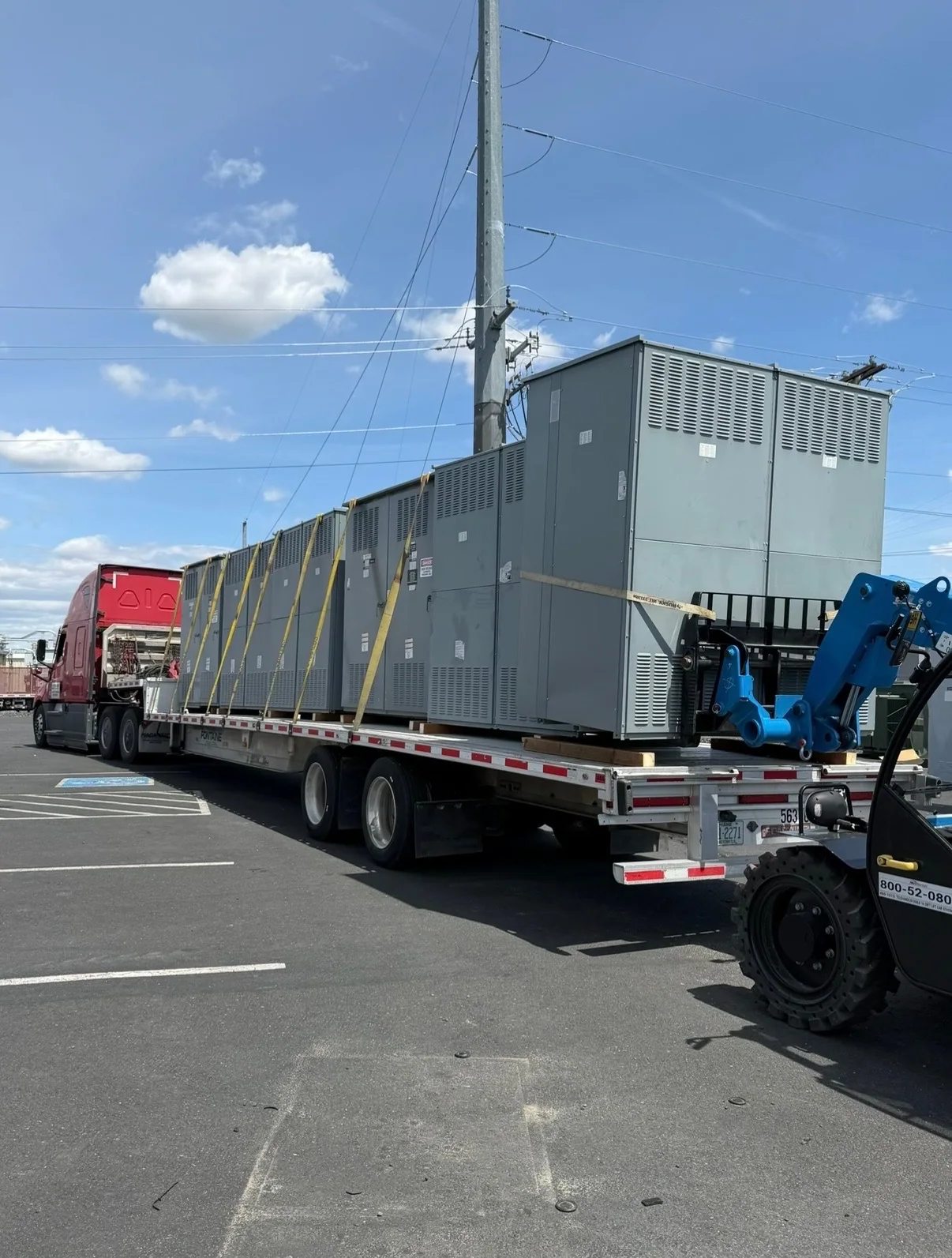
Offer review also considers practical release factors: accessibility, outage or release approval, distance to loading, section dimensions and weight records, stairs or narrow turns, dock or door limitations, and the freight route. The seller is not expected to dismantle equipment.
Coordinate access and safe release
For an evaluation, provide the site contact, ownership or landlord authorization, access rules, approved release date, outage window if applicable, and any building, utility or environmental approvals that govern removal. If the property is occupied, identify what remains active and who can authorize entry. Coordination does not transfer removal costs to the seller: after agreement, the buyer handles qualified disconnects, crane needs, rigging, loading, freight and hauling. The seller should not move, open, test or disconnect the switchboard.
Access details should be specific enough for a plan. Note the room entrance, clear doorway and ceiling constraints, route to loading, lift or crane restrictions, surface conditions, access hours and escort requirements. A maximum shippable dimension or outage window may be unknown; label it for confirmation rather than inventing it. Safe exterior photos can show the route without unsafe activity.
Example inventory and useful questions
Hypothetical example: an owner proposes releasing two feeder sections from a larger service switchboard while retaining the metering section and main device. A useful inventory could say: one documented service lineup; two identified feeder sections; one feeder device with a readable label; one feeder device with unknown rating; retained metering section; six doors and covers, with one cover reported missing; and three loose parts whose association is unconfirmed. That description is more useful than calling the whole cabinet a complete switchboard.
- Which sections are included, and which metering or service sections remain in place?
- What do the drawings and nameplates state for voltage, current, manufacturer and device identity?
- Are the listed covers, barriers, doors and feeder devices physically present?
- Who owns the equipment and who can approve release and site access?
- What are the known condition issues, storage history and environmental concerns?
- What doorway, route, loading-hour and outage information is documented?
Send the records and safe exterior information for review. After agreement, payment is made upfront and the buyer coordinates the qualified removal and transportation work.