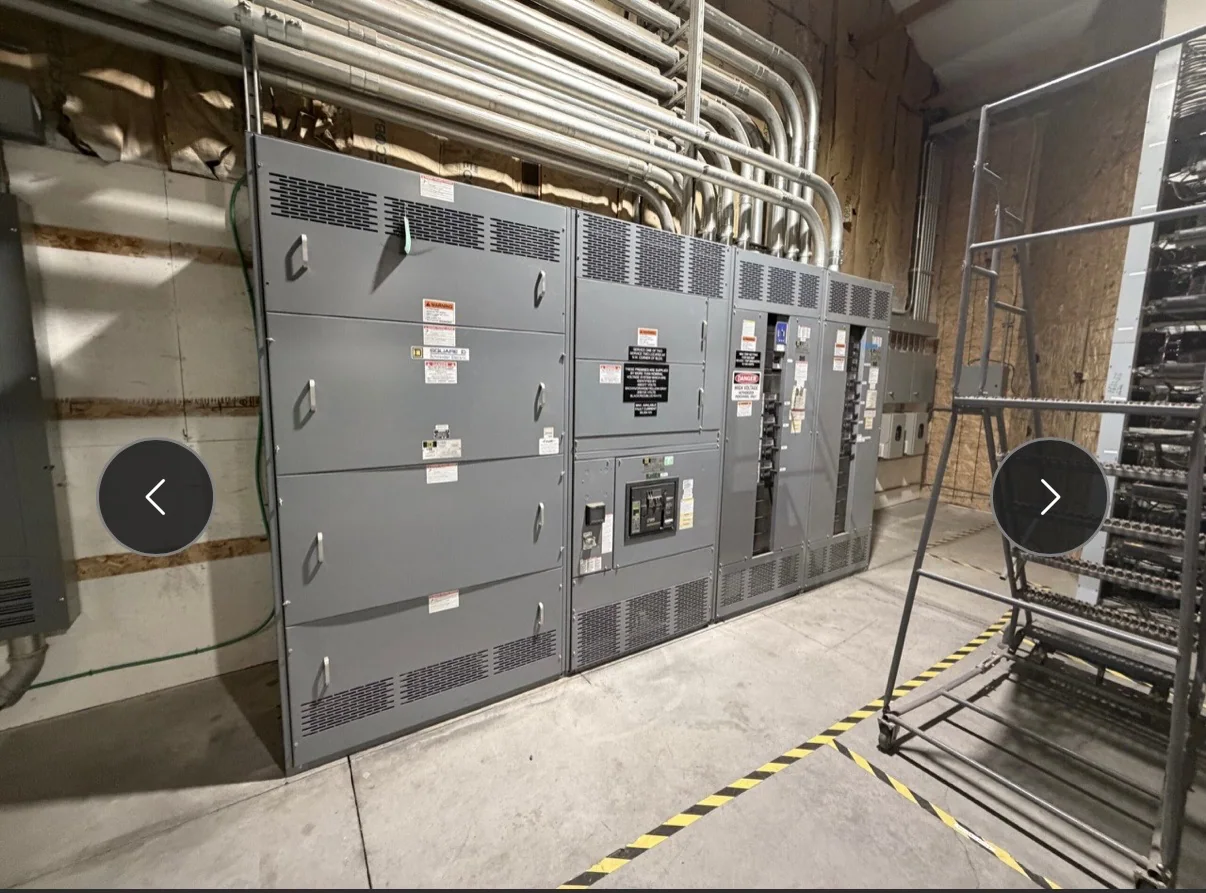
Selling metal-clad switchgear in Greene County requires more than counting cabinets. Existing records identify Xenia as the county seat, but the actual pickup site may be elsewhere, so begin with accurate equipment records and a clear release boundary. We buy electrical equipment from settings including decommissioned data centers and shut-down power plants, and we consider all voltage classes. After reviewing the lot, the buyer can make a cash offer; once the seller accepts and the sale is agreed, payment is made upfront before the agreed pickup, and the seller does not need to test the gear.
Confirm the construction and ratings
Verify the metal-clad designation through existing drawings, schedules, purchase records, or readable nameplate documentation. A gray enclosure or familiar-looking breaker cannot establish construction, voltage class, or compatibility. Share the documented manufacturer rather than guessing from a photograph. Names such as ABB, Eaton, Siemens, or another brand are useful only when actually shown on records; no model or series should be inferred.
Record assembly voltage, continuous current, interrupting information where shown, bus details, section count, and protective-device information exactly as written. An assembly rating is not automatically the rating of every removable breaker, and a loose breaker that looks similar may not fit a cell. We consider low-, medium-, and higher-voltage equipment when documentation supports it. An unknown voltage remains unknown until reliable records clarify it.
Define the lot section by section
List every lineup section separately. Note its identifier, position, main or feeder function if documented, visible device label, and whether a removable breaker is installed. Count stored breakers, fuses, relays, shutters, control parts, doors, and other loose pieces separately from installed equipment. Include each spare’s recorded association; do not pool unmarked devices because their dimensions appear similar.
Hypothetical building changeout: suppose a building replaces a documented metal-clad lineup in stages. Drawings show eight sections, but the proposed release includes five because three remain on site for continuing service. The inventory should identify those five sections, their associated breaker positions, and stored devices assigned to the lot. The retained sections must be excluded. This is an example only, not a claim about a Greene County project.
Record whether the equipment is customer-owned, leased, utility-controlled, or retained by a building owner. If ownership or the release boundary is unresolved, say so. Do not promise equipment serving an occupied building or another owner’s circuit.
Condition and completeness
Describe visible condition from outside: corrosion, dents, missing covers, cracked windows, water marks, damaged nameplates, storage exposure, or impact. Mention whether sections are protected indoors, wrapped, palletized, or standing in their original room. Maintenance records, inspection reports, and work orders can add context, but seller testing is not required. Do not open compartments, operate handles, remove covers, or touch equipment to obtain information.
Completeness matters with metal-clad gear. A lineup with its documented removable devices, matching doors, barriers, and control components may evaluate differently from an enclosure with empty cells and unidentified loose parts. List missing hardware plainly. Unknown internal condition must remain unknown rather than being described as functional or tested.
Offer factors and site logistics
The evaluation can reflect documented voltage and current, manufacturer and construction, section count, device identity, lot completeness, age information, visible condition, and whether records establish an associated system. It can also reflect whether equipment is installed, stored, or already isolated by an authorized team. Drawings reduce uncertainty about matching sections and breakers, but they do not replace safe electrical control.
Location affects logistics, not an assumed local price. For an indoor lineup, record doorway width, height restrictions, turns, stairs, dock availability, truck approach, floor conditions, and any known access window.
Safe release and freight planning
A qualified, authorized team must establish safe conditions and handle disconnection. The seller’s role is to provide records, ownership information, release authority, and safe exterior photos only. We do not ask the seller to energize, test, dismantle, or disconnect switchgear. After agreement, we handle the crane or other lifting plan, qualified disconnects, rigging, loading, freight, and hauling. Access approvals, escorts, outage coordination, and building rules still require coordination with site contacts; removal costs are not shifted to the seller.
For large sections, tell us whether equipment is on a slab, mezzanine, raised floor, or other known support, and identify overhead obstructions without entering a hazardous area. A decommissioned data center may have controlled loading hours and restricted corridors; a shut-down power plant may have heavier assemblies, legacy records, or multiple authorization layers. These are planning possibilities, not claims about a particular property. Coordinate the safe path and release schedule before the carrier arrives.
Example inventory and seller questions
- Documented manufacturer, construction designation, voltage, current, and drawing or nameplate references.
- Section-by-section list identifying main, feeder, tie, or unknown function; installed device labels; and empty positions.
- Separate count of stored breakers and parts, with documented section association and a note for unmatched items.
- Exterior condition, storage method, missing covers, visible moisture or corrosion, and known environmental concerns.
- Ownership, authorized release contact, proposed release date, retained sections, and actual pickup city or site description if known.
- Safe exterior photos showing labels and overall condition, without opening compartments or approaching energized equipment.
Ask: Which drawings are current? Which sections remain in service? Are loose devices included, and where are their associations documented? Is Greene County the pickup point or only an administrative reference? What access approvals and loading restrictions apply? If an answer is unavailable, label it unknown. This disciplined information helps match the equipment and plan logistics while keeping release safe.