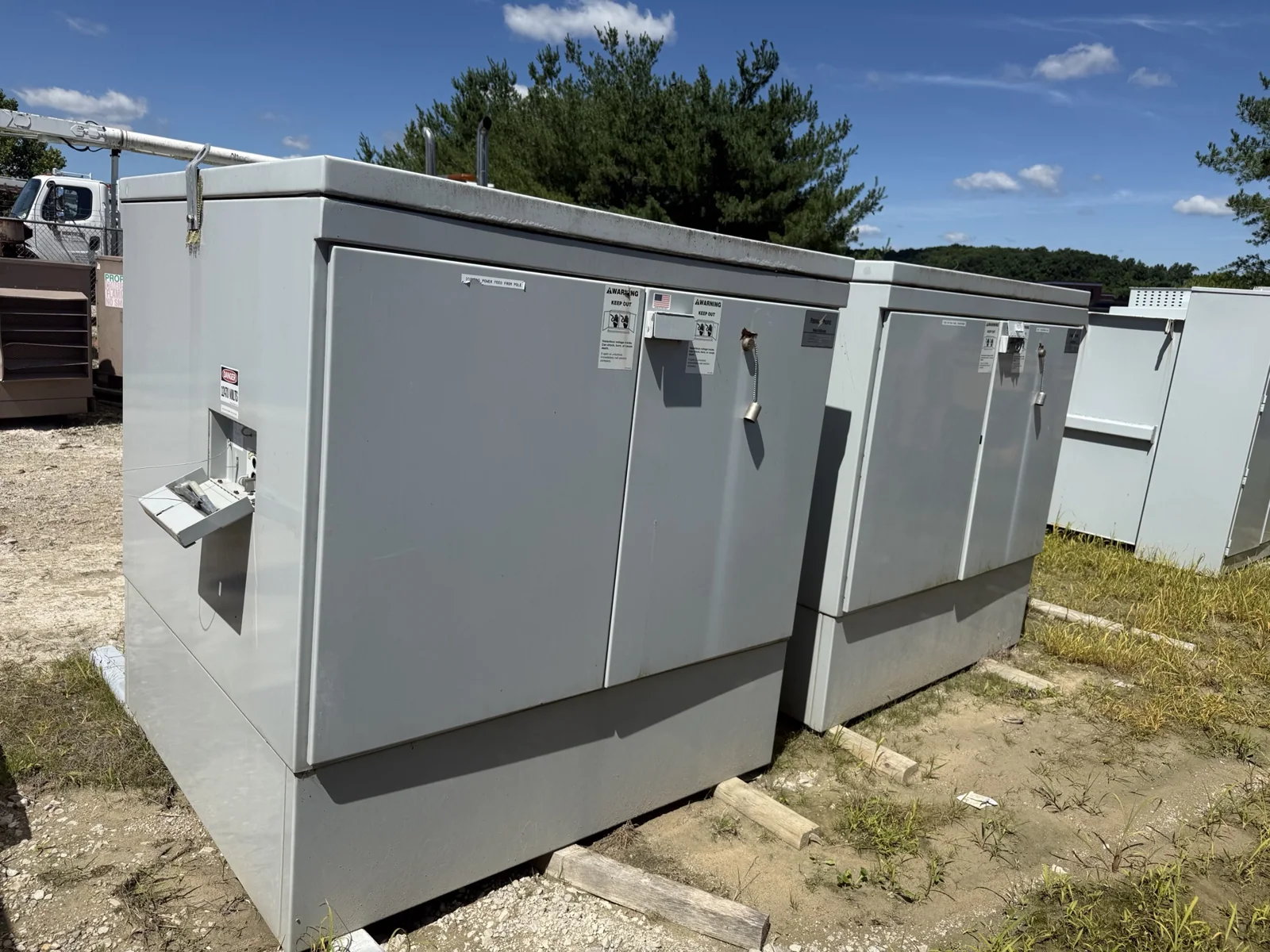
Document the Lima switchboard before discussing a sale
A switchboard evaluation starts with what can be documented, not with the size of the enclosure. In Allen County, the pickup site and ownership details still need to be confirmed by the seller; no particular facility, project, or local installation is assumed here. Share the available nameplate information, one-line drawings, schedules, prior purchase records, and an inventory prepared by an authorized person. Useful records may show the assembly voltage, ampere rating, short-circuit information, manufacturer, sections, and date or revision markings. If a value is absent, label it unknown rather than estimating it from appearance.
Describe the lineup in functional pieces where the records support that description. Identify the service section, any metering section, and each feeder section. List the main device, feeder devices, covers, barriers, instruments, and loose parts separately. An enclosure’s height or width is not a rating, and a device marking should not be presented as the rating of the complete assembly. Consider all voltage classes; the actual documented voltage determines how the equipment is evaluated.
Set a precise lot boundary when the room remains in use
If an electrical room is still operating, the proposed sale must identify the exact lineup or sections being released and distinguish them from adjacent gear that remains active. A hypothetical example would be a three-section switchboard beside a retained distribution section: the hypothetical sale might include the labeled service and feeder sections, while the neighboring section stays in service. That example does not establish a Lima project or a known configuration. The seller should identify the boundary from existing records and authorized site knowledge, not by opening equipment or moving labels.
Record the available travel path for the sold lineup: room door dimensions, corridors, thresholds, stairs, elevator restrictions, overhead clearance, and the path to the loading point. These are planning facts, not instructions to dismantle anything. Note whether access requires a building escort, outage coordination, tenant approval, security scheduling, or a property owner’s release. The buyer coordinates qualified disconnects, rigging, crane work, loading, freight, and hauling after agreement; the seller is not expected to perform removal.
Completeness and condition affect the evaluation
For each section, count and describe the main device, feeder devices, metering components, covers, barriers, and known missing components. Include separately stored covers, hardware, labels, keys, control transformers, or documentation only when their association is supported by records. A loose device should not be assigned to a section merely because its size looks similar. Note whether components are installed, boxed, palletized, or location-unknown. That simple separation helps prevent a complete lineup from being confused with a partial assembly.
Condition notes should be factual and observational. Existing records can identify prior service, storage duration, water exposure, corrosion, impact, contamination, paint loss, missing hardware, or damaged doors. Safe exterior photographs of nameplates, closed doors, section fronts, stored parts, and the access route can help; do not open compartments, operate handles, touch energized equipment, dismantle anything, or test the switchboard for this inquiry. A qualified and authorized team must establish safe conditions and handle disconnection. Unknown interior condition remains unknown until an appropriate professional process addresses it.
How documentation shapes value and release
Valuation can reflect documented ratings, manufacturer and configuration, section count, device completeness, condition, storage protection, and whether the lot has a clear ownership and release boundary. Records that match section labels to drawings reduce uncertainty. Missing covers, unidentified devices, incomplete metering, or a gap between the proposed lot and the available release authority can reduce the usefulness of an otherwise substantial lineup. The evaluation is not a promise that a particular brand, model, compatibility, price, or acceptance outcome will apply.
Release readiness matters as much as physical condition. Explain who owns the equipment, whether a landlord, utility, lender, insurer, or other party has an interest, and when the seller is authorized to release it. If the room remains in use, provide the proposed release window and the contact who can coordinate access, while keeping active equipment outside the lot. After agreement, payment is made upfront and the buyer manages qualified disconnects, rigging, loading, freight, and hauling. Access approvals are coordinated with the seller; they do not shift removal costs to the seller.
A useful inventory example and seller checklist
A hypothetical inventory could read: “One documented switchboard lineup; service section, two feeder sections, one metering section; three recorded feeder devices; two stored covers; one feeder device association unknown; one damaged exterior panel noted; adjacent active gear excluded.” This is only a formatting example, not a claim about equipment in Lima. Add the source of each fact, the record revision, the storage location, and any missing-component note. Do not combine unknown items with confirmed counts.
- What are the documented assembly voltage, current, manufacturer, section identifiers, and ratings?
- Which sections are service, metering, and feeder sections, and which main or feeder devices belong to each?
- Which covers, barriers, meters, labels, and loose devices are included, missing, or of unknown association?
- Who owns the equipment, who can authorize release, and what equipment must remain active?
- What access approvals, travel-path limits, loading hours, and release window must be coordinated?
Send the records and safe exterior views for an evaluation, stating clearly what is confirmed and what is unknown. No seller testing is required. Once terms are agreed, the buyer handles the qualified removal and transportation work.