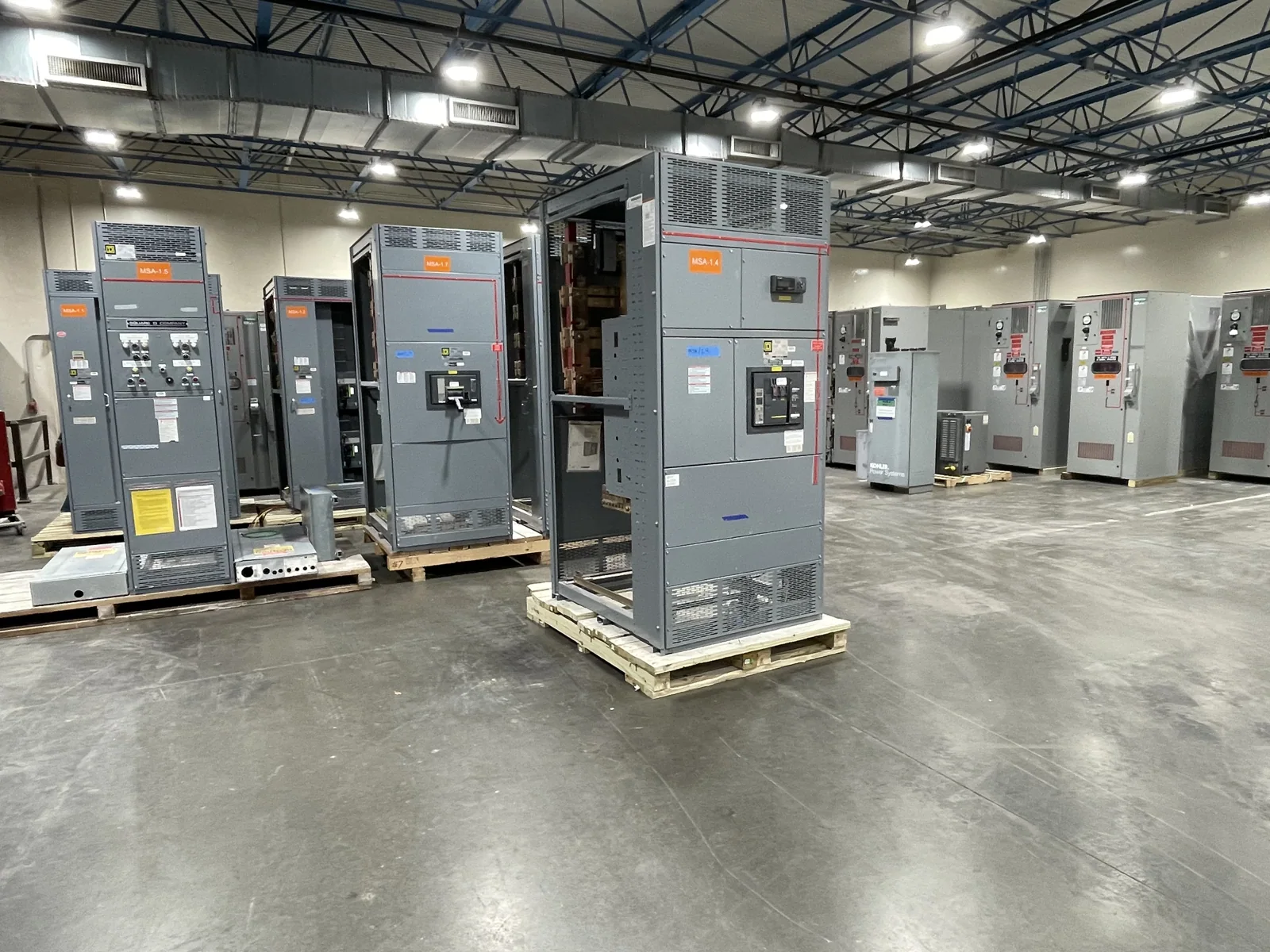
Start with documents, not cabinet size
For a Fairfield, Ohio switchboard evaluation, the useful starting point is evidence showing what the assembly actually did. Existing one-line drawings, panel schedules, equipment lists, changeout specifications, purchase records, and service notes can show whether a lineup contained a service section, metering section, feeder section, or a combination. Enclosure size does not establish rating. Share wording visible on the assembly nameplate and main and feeder devices, including documented voltage, current, interrupting information, manufacturer, and serial or date details when available. All voltage classes may be considered; records must establish the class rather than appearance.
Fairfield-area records may reference Butler and Hamilton counties, but a county label does not identify the equipment, owner, or release authority. The evaluation needs the actual site description, authorized seller, and boundary of the proposed lot. Unknown information is more useful when labeled unknown than guessed.
Separate service, metering, and feeder boundaries
A switchboard lot can lose clarity when its sections are pooled into one vague count. List the service section separately from metering and distribution sections where documentation supports that distinction. Record the main device, each feeder device, visible covers, barriers, instrument compartments, and spare or loose components. Note which feeder positions are populated, blank, reserved, or undocumented. A main device rating is not automatically the rating of every feeder device, and an assembly rating should not replace an individual device marking.
Hypothetical example: a facility changeout may identify an old service section, metering section, and four feeder sections, while one feeder remains connected to an operating area. The potential sale should identify the old-service lot, retained feeder, and boundary between them. Do not assume adjacent gear belongs in the sale because it shares an enclosure line. A marked-up drawing or schedule can resolve more than an exterior measurement.
Make completeness and condition visible
Inventory physical pieces that can be documented without opening, operating, dismantling, or testing anything. Useful exterior observations include section and device labels, doors, covers, viewing windows, handles, visible bus-access covers, nameplates, stored covers, and obvious missing components. State whether loose parts are tagged to a section or have uncertain association. Include safe exterior photographs only, taken from an authorized location; do not touch energized equipment or enter a restricted electrical area to obtain an image.
Condition notes should be specific and neutral. Identify visible corrosion, dents, water staining, impact damage, missing doors, bent hardware, exterior-visible insulation damage, or prolonged outdoor exposure if known. Report storage conditions for detached covers and devices, such as protected, boxed, or exposed. Do not claim operational status, testing, completeness, or compatibility when records do not prove it. A qualified, authorized team must establish safe conditions and handle disconnection.
What shapes an offer
Valuation reflects more than copper or cabinet dimensions. Documented voltage and current information, a recognizable manufacturer and configuration, complete main and feeder devices, matching covers, clear section identity, and credible records can make an evaluation more precise. Missing components, uncertain ownership, unexplained differences between drawings and the visible lineup, corrosion, contamination, or an incomplete release boundary can reduce confidence. Stored components may help when association is documented; an unmarked pile of devices remains an uncertain inventory item.
Release timing and site condition affect coordination. The business buys equipment rather than selling replacement gear. After reviewing the lot, the business can provide a cash offer; once the seller accepts and the sale is agreed, payment is made upfront before the agreed pickup, and the seller is not expected to test the equipment. Records, safe exterior photographs, and authorized site information can support the offer discussion.
Coordinate access without transferring removal work
Access planning is coordination, not a request for the seller to perform removal. Identify who can approve entry, whether escort or security rules apply, available hours, and whether the building, utility, landlord, tenant, or another owner controls release. Confirm door dimensions, turns, floor transitions, dock or ground-level access, overhead clearance, staging limits, and orientation requirements. These details help plan visits and freight without asking an unqualified person to manipulate equipment.
The buyer handles qualified disconnects, crane arrangements, rigging, loading, freight, and hauling. The seller should not open compartments, operate devices, dismantle sections, or test energized or de-energized equipment. If an active feeder or service remains in use, list it as retained and let authorized site personnel establish the safe release sequence. Access approvals are coordinated with relevant parties; they do not shift crane, rigging, loading, or hauling costs to the seller.
A practical Fairfield inventory and question list
Hypothetical inventory: one documented service section with a marked main device; one metering section whose instruments are unconfirmed; three feeder sections with two identified feeder devices; two covers stored nearby; and one loose device with unknown section association. This is stronger than “one large switchboard” because it preserves what is known, included, and unresolved.
- Which party owns the switchboard and can authorize release?
- Which sections are service, metering, and feeder sections according to records?
- What voltage, current, manufacturer, and device markings are documented?
- Which main devices, feeder devices, covers, barriers, and spares are included?
- What is visibly missing, damaged, corroded, contaminated, or stored separately?
- Which equipment must remain active, and who coordinates safe release?
- What approvals, escorts, loading restrictions, clearances, and pickup conditions are known?
Send records and safe exterior views with unanswered items clearly marked. Separating documentation, condition, ownership, and access gives the Fairfield evaluation a dependable basis without asking the seller to take an electrical or removal risk.