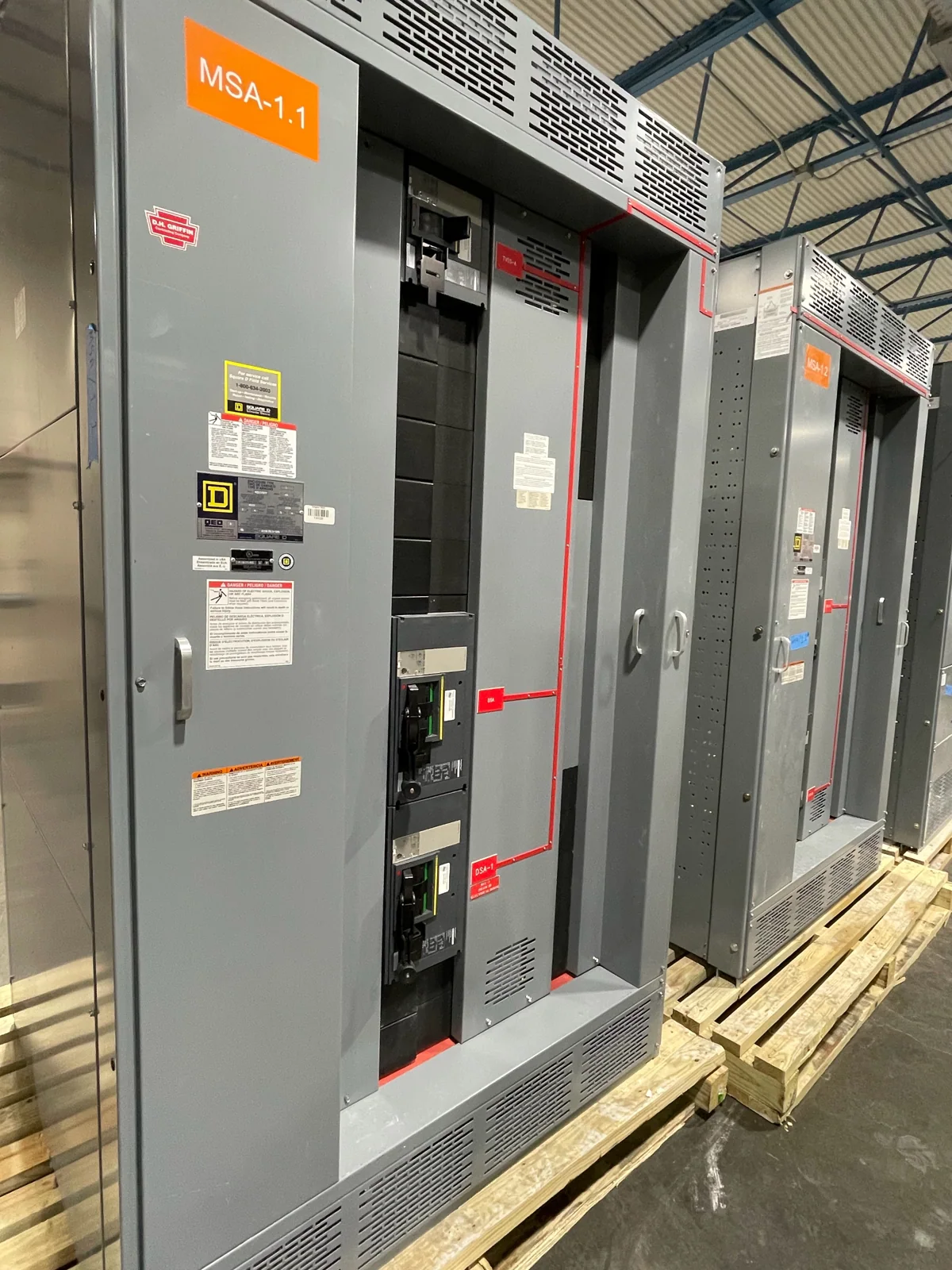
Sell Switchboards in Grove City, Ohio With the Lot Boundary Clear
A switchboard evaluation starts with ownership and identification, not enclosure size. In Grove City, Ohio, a seller may be coordinating a warehouse tenant move, a service change, or surplus from a larger electrical room. The useful question is which equipment is actually available. A lineup can belong to the landlord, while a tenant owns only added distribution sections or equipment downstream of a defined disconnect. If that boundary is unknown, say so rather than treating every cabinet as one lot.
The buyer considers all voltage classes. Existing records, nameplates, drawings, schedules, and safe exterior photographs can support an evaluation; the seller does not need to test equipment. A qualified, authorized team must establish safe conditions and handle disconnection. Do not open, operate, dismantle, or touch energized equipment.
Identify Service, Metering, and Feeder Sections
Record what the documents actually show
When records are available, separate the service section, metering section, and feeder sections. Note the documented main device, each feeder device, manufacturer, nameplate wording, and stated voltage or current. Enclosure height is not a rating. Main, feeder, and overall assembly ratings may differ, so do not infer one from another or replace an unreadable label with a guessed model.
List covers, barriers, trim, doors, compartments, and missing components. Removable breakers, fuses, metering units, control parts, and loose hardware should be described by visible identification and known association. If a separately stored device has no certain original position, mark that relationship unknown.
Hypothetical Warehouse Tenant Move: Two Different Sales
Situation one: tenant-owned distribution equipment
Hypothetical example: A warehouse tenant moves out and proposes to sell a switchboard section installed for its process loads. Its inventory might include one documented feeder section, three identified feeder devices, matching covers, and a separately stored device shown on an old schedule. The landlord retains the building service and metering boundary. Present the tenant-owned section as the proposed lot, identify retained equipment, and include loading hours, the authorized site contact, and the route to the loading point.
Situation two: building service equipment remains in place
Hypothetical example: The tenant move prompts a service change, but the landlord keeps the main and metering sections for a future occupant. Only a feeder lineup may be offered. Do not call it a complete switchboard if main, metering, or retained feeders are excluded. A drawing showing the boundary, included-section count, and missing covers can prevent confusion. Ownership, release date, and energized status must be confirmed by authorized parties.
Completeness, Condition, and Documentation
Useful documentation can include equipment schedules, single-line drawings, maintenance records, prior removal notes, safe photographs of closed exterior surfaces, and written exclusions. Identify whether records apply to the current lineup. For each section, note its label, documented dimensions, device positions, corrosion, impact, water staining, damaged paint, bent doors, missing hardware, or storage exposure. Make observations from a safe exterior position; the seller is not expected to prove operation or internal condition.
- Separate included service, metering, and feeder sections from retained sections.
- Count the main device and each feeder device, then identify loose or separately stored parts.
- List covers, barriers, doors, trim, hardware, and known missing components.
- State whether ownership, voltage, condition, or device-to-section association is unknown.
Condition affects value because completeness, traceability, and handling risk affect evaluation. A clean, documented lineup with matching covers may be more useful than a larger unidentified enclosure. Brand and voltage matter when documented, but do not promise compatibility or describe an unverified model.
Offer Factors and Safe Release
Valuation may reflect documented equipment, lot completeness, device identification, visible condition, release authority, and pickup coordination. After reviewing the lot, the buyer can make a cash offer; once the seller accepts and the transaction terms are agreed, payment is made upfront before the agreed pickup. The seller does not need to test the switchboard. The buyer handles qualified disconnects, crane or other lifting arrangements, rigging, loading, freight, and hauling; the seller should not dismantle or prepare energized equipment.
Access is a coordination item, especially during a warehouse tenant move. Provide the known loading hours, dock or door restrictions, ceiling or doorway limitations, security check-in rules, escort needs, parking constraints, and the contact authorized to approve entry. These details help plan the removal without shifting crane, rigging, loading, freight, or hauling responsibilities to the seller. The release date should distinguish a proposed date from a confirmed date, and any landlord, utility, tenant, or facility approval should be identified.
Questions to Include With a Grove City Inventory
- Who owns each service, metering, feeder, and tenant-added section?
- Which sections and devices are included, and which must remain for building service?
- What voltage, current, manufacturer, and device markings are documented?
- Are covers, barriers, trim, hardware, and separately stored devices present?
- What damage, corrosion, moisture exposure, or missing components are known?
- What loading hours and access approvals apply to the warehouse move?
- Who is authorized to confirm safe conditions, disconnect, and release the lot?
Answering those questions with existing records and safe exterior photos gives the buyer a clearer basis for review. Unknown details can remain unknown until an authorized professional confirms them. That disciplined separation between tenant property, building equipment, and retained service gear makes a Grove City switchboards sale easier to define without putting anyone in an unsafe position.