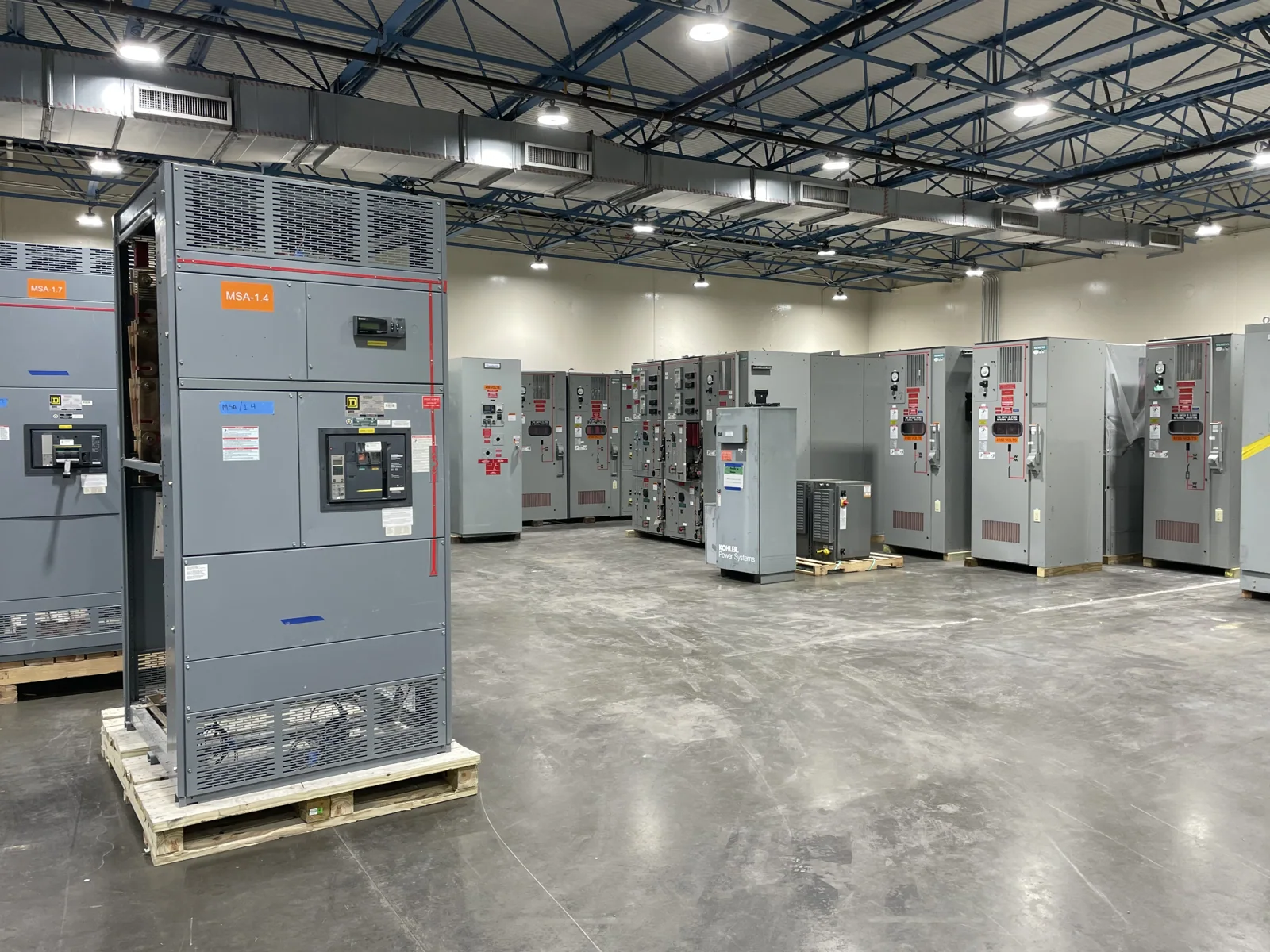
How should a switchboard and spare-breaker lot be described?
When you want to sell a switchboard together with spare breakers in Ohio, treat them as two related inventories, not one assumed package. The switchboard is an assembly: its sections, bus arrangement, main device, feeder devices, metering provisions and enclosure matter. Loose breakers may have been bought for maintenance, expansion or replacement. A breaker stored beside a board is not automatically a breaker that fits it.
We consider equipment across voltage classes, but evaluation depends on existing records and exterior labels. Share documented voltage, current, manufacturer, series or type designation, section count and visible device markings. If a value is unknown, say so rather than estimating from enclosure size or appearance. An assembly rating is not the same as a breaker rating, and neither should be inferred from a photograph.
What is a practical inventory to prepare?
Pair each board section with its identification while listing every loose breaker separately. A hypothetical record might describe one switchboard with a main section, three feeder sections, two metering sections and a box containing five breakers. State each breaker’s label, marked voltage and current, manufacturer, frame or type wording if legible, quantity, storage location and visible condition. Do not claim all five devices match the board.
- Switchboard: section identifiers, nameplate information, main and feeder positions, covers, barriers and known missing parts.
- Spare breakers: one entry per label or clearly matched group, including quantity, markings, packaging and any documented section association.
- Records: one-lines, equipment schedules, purchase documents, maintenance lists, photographs and ownership paperwork that exist.
- Release details: items available now, items that must remain in service and items available in a later stage.
An unreadable spare label should remain unidentified rather than receive an unsupported voltage or compatibility assignment.
What makes the lot complete enough to evaluate?
Completeness is more than counting cabinets. Tell us whether the proposed board includes its main device, feeder devices, barriers, trim, covers and documented neutral or grounding components. Note sections that are reserved, retained or excluded. For breakers, distinguish loose devices from installed devices and explain whether cartons or mounting hardware are present.
Confirm authority to release the board and spare inventory, especially where a landlord, tenant, equipment owner, lender or utility may have an interest. If several buildings or departments contributed items, identify the owner and release contact for each portion. Unknown ownership remains an open question until authorized personnel resolve it.
How does condition affect an offer?
Describe condition without opening, operating, dismantling or testing anything. Safe exterior photographs can show nameplates, labels, doors, visible corrosion, dents, water staining, broken glass, missing covers and storage packaging. Existing documents can indicate whether equipment was installed, kept as a spare, removed during a changeout or stored for an unknown period. For loose breakers, record cracked cases, damage, dirt, moisture exposure and missing identification when visible from outside.
No seller testing is required. Do not touch energized equipment or enter a restricted electrical area for a photograph. Qualified, authorized personnel must establish safe conditions and handle electrical work. Completeness, documentation quality, transport difficulty and uncertainty can influence valuation; a photograph does not establish a test result.
What other factors shape the evaluation?
The lot boundary, documented ratings, manufacturer and type information, quantity, condition and demand for identifiable components are relevant. So are practical release facts: whether the board is indoors, still supporting operations, difficult to reach, or separated from loose breakers. These details distinguish a complete, identifiable lot from a mixed collection with unverified matches. They do not create an automatic purchase, fixed price or compatibility determination.
Decommissioned data centers and shut-down power plants can produce staged releases, but no particular Ohio project should be assumed. In a hypothetical shutdown, the switchboard might be available first while spare breakers remain on hold. List each stage, its timing or unknown status, and the authority who can approve release. Evaluation can use documented facts without promising a future stage.
How are access and removal coordinated?
After agreement, the buyer handles the crane, qualified disconnects, rigging, loading, freight and hauling. The seller should not dismantle the board, disconnect conductors, move heavy sections or prepare energized equipment. Instead, provide exterior information and identify site rules, escorts, access approvals, loading restrictions and operating hours. Those approvals are coordinated with authorized site contacts; they do not shift removal work or costs to the seller.
For a staged release, explain which areas can be accessed and which equipment must remain protected. The qualified team confirms lifting and travel arrangements after site review. Unknown doorway dimensions, floor loading, crane access or outage requirements should be labeled unknown rather than promised.
What should sellers ask before sending information?
- Which switchboard sections and spare breakers are included, and which remain in service?
- Are ownership and release authorities documented for every item?
- Which nameplate fields, device labels, schedules and one-lines are available?
- Are breakers installed, boxed, loose or stored in a separate room?
- What exterior damage or environmental exposure is known?
- What access approvals and staged-release constraints require coordination?
Send the documents and safe exterior photographs available to you. Once the scope is understood, the buyer can review the lot and provide a cash offer; once the seller accepts and an agreement is reached, payment is made upfront before the agreed pickup, with removal and freight coordinated by the buyer. The evaluation remains tied to documented identity, ownership, condition, completeness and release—not an assumed match between every spare breaker and the switchboard.