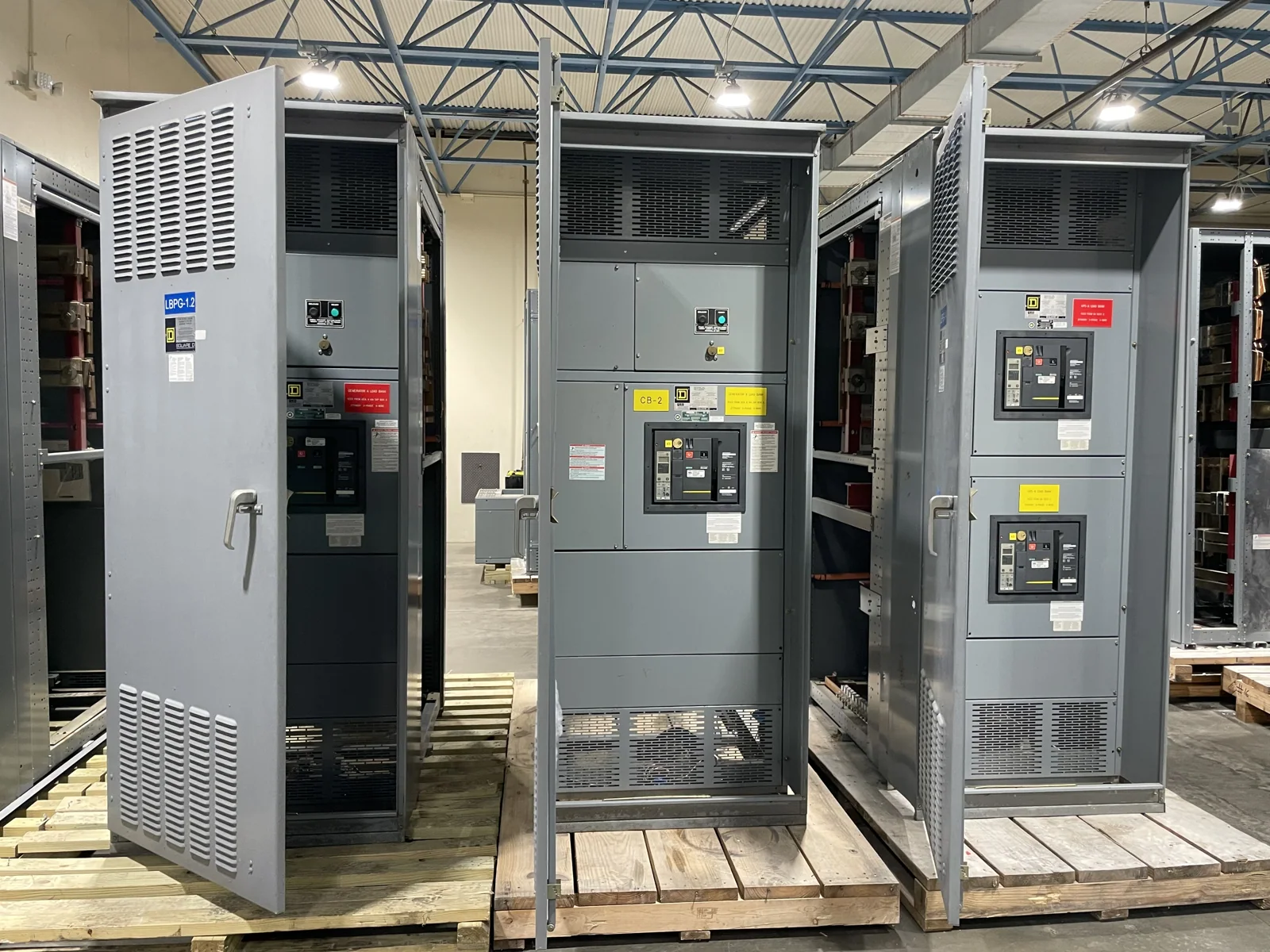
Start with the upgrade boundary
When a low-voltage switchboard is displaced by an upgrade in Ohio, the first decision is not whether the metal enclosure looks reusable. It is which equipment is actually released. A service change can leave one main section, a feeder section, or a group of devices operating while another section becomes surplus. Treat the proposed sale as a defined lot rather than as everything visible in an electrical room.
A useful first packet includes the upgrade scope, one-line diagrams, schedules, nameplate records, and ownership notes already held by the facility. Documents can show whether service equipment belongs to the building owner, a tenant, or a utility, and where the boundary sits. Unknown ownership or an unconfirmed release date should remain identified as unknown until authorized parties resolve it.
Identify the assembly without inferring ratings
Record the exact wording visible on switchboard and device labels, including voltage, current, frequency, bus information, manufacturer, section identifiers, and other markings. Do not turn an enclosure dimension, familiar brand family, or breaker appearance into a rating. Assembly, main-device, feeder-device, and interrupting ratings are separate facts. A low-voltage designation does not make every installed device interchangeable.
Although this route concerns low-voltage switchboards, the buyer can consider equipment across voltage classes when documentation and release conditions support an evaluation. Document the actual class and label language for this lot. Ask for safe exterior photographs only: overall views, nameplates, section labels, stored-device labels, and visible damage. Do not open compartments, operate handles, remove covers, or test anything.
Build a practical upgrade inventory
Count sections individually and connect each to its documented role. Separate service, main, metering, distribution, and feeder portions where records identify them. List removable breakers, fuses, instrument devices, covers, barriers, hardware, and stored spares as separate lines. A loose device should not be assigned to a section merely because its size appears similar.
Hypothetical inventory example: an operating building is replacing part of a switchboard in phases. The proposed lot might include two documented feeder sections, three removable feeder devices labeled for those positions, one stored spare with an uncertain association, and a group of exterior covers. The main section and a metering section remain active and are excluded. The spare is marked “association unknown,” rather than being presented as a complete matching set. This kind of boundary helps an evaluator understand what can be released now and what must remain in service.
Check completeness and condition from records
Completeness affects the usefulness of an upgrade lot. Compare section counts against drawings and labels against schedules. Note missing doors, covers, barriers, trim, nameplates, escutcheons, control components, or shipping supports when known. If parts were removed during the upgrade, list them as missing instead of implying that the assembly is intact.
Describe condition factually: indoor or outdoor storage, moisture exposure, corrosion, impact, contamination, paint deterioration, bent steel, missing hardware, or packaging. A photograph can document an exterior observation, but not internal condition or operating performance. No seller testing is required; unknown internal or functional condition remains unresolved.
What shapes an offer
Valuation can reflect documented voltage and current, section count, device identity, completeness, condition, age information, storage, and whether the lot has a coherent release boundary. It can also reflect staged-release coordination, loose material, and the loading route. A clearly identified group is easier to evaluate than mixed sections with undocumented spares, but neither guarantees a purchase, price, compatibility, or test result.
Ownership is a separate offer consideration. Before agreement, identify the authorized seller and obtain applicable landlord, tenant, utility, lender, or shutdown approval. An upgrade can create overlap between contractor custody and owner title, so disclose uncertainty rather than assume authority.
Coordinate access and staged release
Once a lot is defined, provide the site contact, access rules, security requirements, loading hours, restrictions, and target release window. If the upgrade occurs in stages, list sections available in each stage and those that must remain active. Access approvals are a coordination matter; they do not shift removal costs to the seller.
The buyer handles qualified disconnects, crane needs, rigging, loading, freight, and hauling. The seller should not dismantle, move, open, operate, or touch energized equipment. Authorized personnel at the site establish safe conditions and coordinate the work. This approach is relevant whether the surplus comes from a decommissioned data center, a shut-down power plant, or another facility with controlled access and a formal release process.
Questions to answer before release
- Which sections, devices, covers, and spares are included, and which equipment must remain active?
- What exact voltage, current, manufacturer, section, and device wording appears in existing records or on safe exterior labels?
- Who owns the lot, who can authorize release, and are utility or landlord boundaries documented?
- What is known about storage, moisture, corrosion, impact, missing components, and packaging?
- Will the release be one pickup or staged, and what access approvals and loading constraints must be coordinated?
After scope, authority, documentation, condition notes, and the release plan are understood, the buyer can make an evaluation. The buyer can then make a cash offer; if the seller accepts and both parties agree to the sale, payment is made upfront before the agreed pickup. That payment point follows agreement; it is not an automatic purchase or promise based only on a photograph. Clear records and a disciplined boundary give surplus low-voltage switchboards from Ohio upgrades a fair path to review.