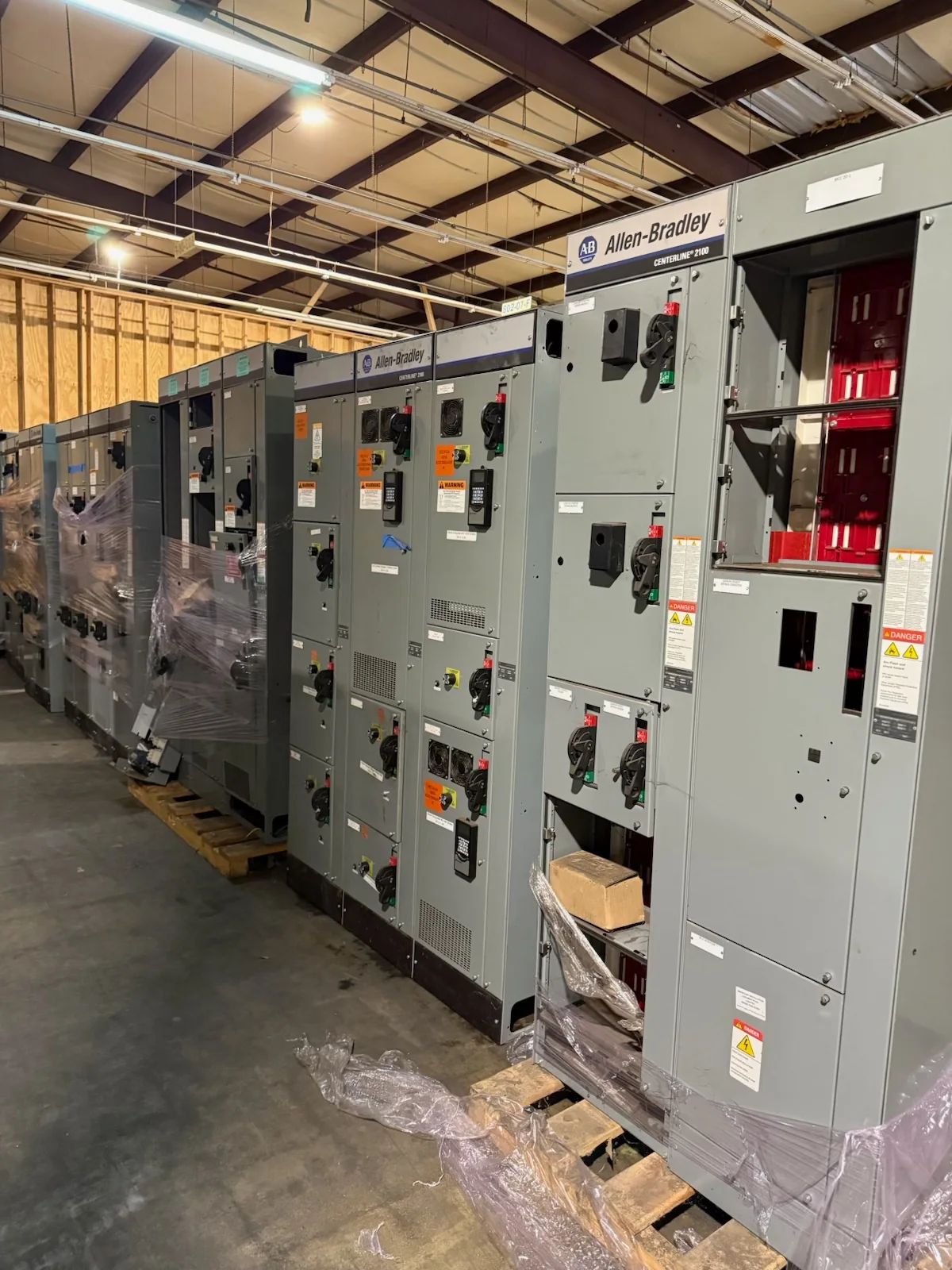
Sell Switchboards Released by an Ohio Service Upgrade
A service upgrade can leave a substantial switchboard lot behind while part of the electrical distribution system must remain in operation. The useful starting point is not the age or apparent size of the enclosure. It is a clear boundary between equipment available for sale and equipment retained for the occupied building. Share the switchboard identification, recorded ratings, ownership and release conditions so the actual lot can be evaluated. This buyer considers all voltage classes; documented voltage, current and interrupting information matters more than appearance.
Hypothetical example: An occupied Ohio building is replacing its service section in stages. The incoming service section and some feeder sections may be released after the new arrangement is accepted, while a downstream section continues serving tenants until a later outage. The sale should name the sections, devices and loose parts in the first release and identify what remains. This is hypothetical, not a claim about a particular Ohio project.
Define the Sale Boundary Before Counting Equipment
Identify service, distribution and retained sections
Existing one-line diagrams, schedules, nameplate records, purchase documents and changeout drawings can help establish what the switchboard is. Record the manufacturer and any visible series or assembly designation, along with the number of sections. Note the documented system voltage, bus rating, main-device rating, feeder-device ratings and interrupting ratings exactly as shown. An assembly or bus rating is not automatically the rating of every breaker. Do not infer a rating from enclosure dimensions, a familiar brand name or the presence of a large handle.
List the main device, feeder devices, metering compartments, barriers, covers, control equipment and separately stored components. Mark each item as installed, loose, retained, missing or unknown. Preserve documented associations between breakers, covers, control components and sections. Do not pool retained equipment with the sale lot just because it shares an enclosure.
Confirm authority and release stages
The seller should identify who owns the switchboard and who can authorize its release. Ask which approvals are required, whether a utility or other party controls a boundary, and whether the first release depends on an outage, inspection, demolition milestone or acceptance of replacement equipment.
Build a Practical Inventory
A useful inventory gives a buyer enough structure to compare a complete section with an incomplete one. For example, a hypothetical first-stage lot could be recorded as follows:
- Two documented switchboard sections, with the assembly nameplate wording, dimensions and approximate weights taken from records if available.
- One main device and four feeder devices, each listed with its own visible manufacturer, catalog or type marking and recorded rating.
- Metering and control compartments identified as included, retained or unknown rather than assumed to transfer with the bus enclosure.
- Three loose covers, one stored barrier and two separately boxed devices, with the section association noted where documented.
- One later-release feeder section that remains in service during the first stage and is excluded until an authorized release date.
This format separates quantity from completeness. It also makes uncertainty visible.
Completeness, Condition and Recorded Facts
Describe visible condition without opening compartments or manipulating equipment. Safe exterior photographs may show nameplates, section labels, doors, covers, bus-access panels, corrosion, impact marks, water staining, paint loss and storage packaging.
Completeness affects evaluation. A lineup with its documented main and feeder devices, matched covers, barriers and control components is different from an enclosure with empty cells and unidentified loose parts. Note whether the switchboard is installed, staged indoors, stored outdoors or already separated into sections. State whether damage is known, suspected or unknown. The seller does not need to test the equipment. Qualified, authorized personnel must establish safe conditions and perform electrical disconnection or physical work; never open, operate, dismantle or touch energized equipment to prepare an inquiry.
Offer Factors and Release Planning
Evaluation can consider recorded voltage and current, documented device identity, section count, completeness, condition, dimensions, weight, packaging, ownership clarity and the certainty of the release stage.
After agreement, the buyer handles the agreed crane, qualified disconnects, rigging, loading, freight and hauling. The seller is not expected to arrange that removal work. Site access still requires coordination: identify loading restrictions, security rules, work hours, floor or doorway limits, staging space and outage or permit coordination. These details plan handling; they do not shift removal cost or physical work to the seller.
Common Seller Questions
What should I send first?
Send existing documents and safe exterior photographs: nameplate images, section labels, a one-line diagram, equipment schedule, release notes, ownership records and known dimensions. If a document is unavailable, identify it as unavailable. Do not create a new test report for this inquiry.
Can equipment be released in stages?
Yes, a staged discussion can be evaluated when the first lot, later lot, retained gear, approval authority and target release conditions are separately described. Unknown dates should remain unknown rather than being presented as commitments.
When is payment made?
After the equipment and terms are reviewed, the buyer can provide a cash offer; once the seller accepts and an agreement is reached, payment is made upfront before the agreed pickup. An inquiry alone is not an automatic purchase. Clear ownership, safe release authorization and a defined lot help move the discussion toward an informed agreement.