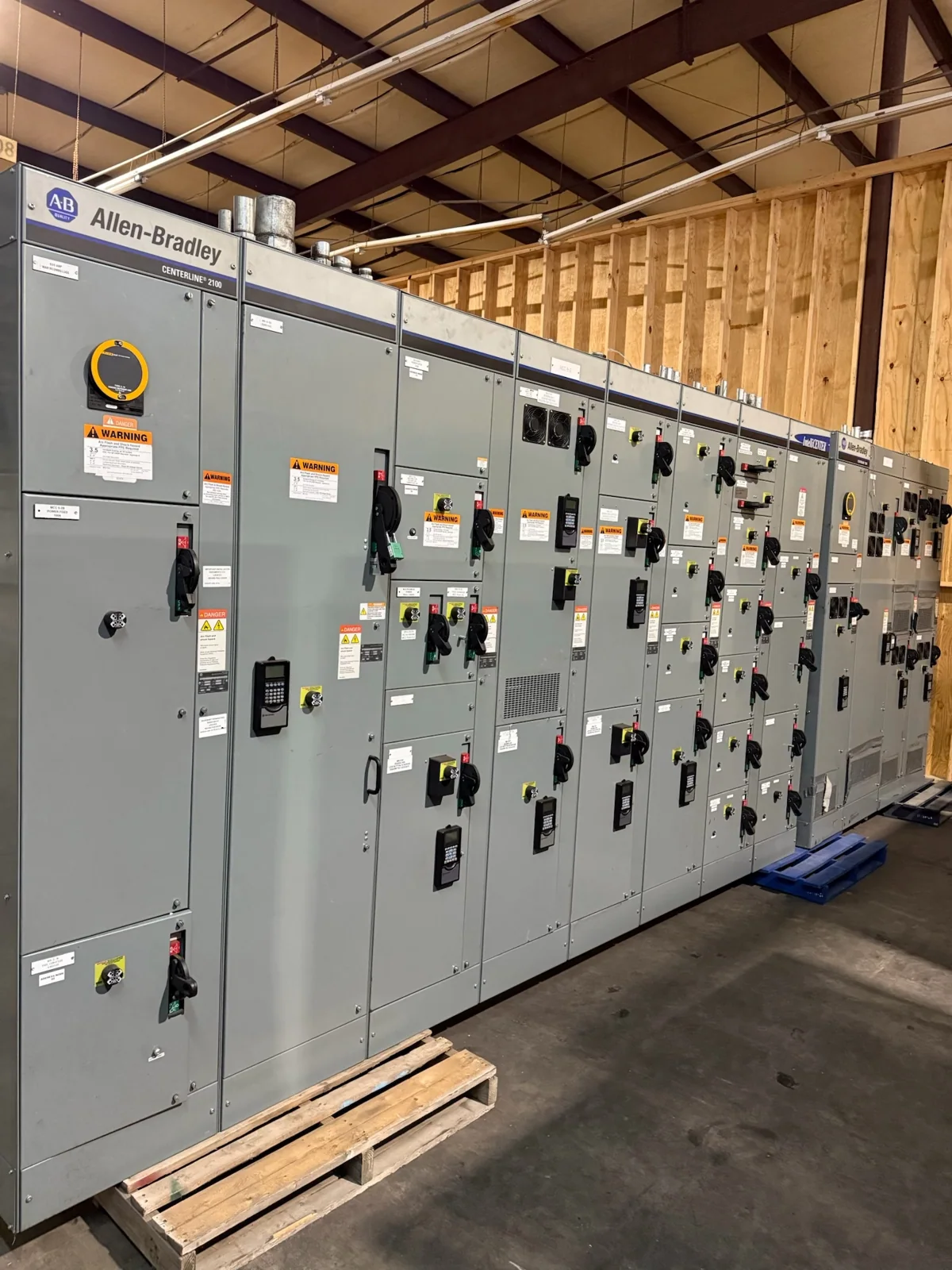
Define the feeder-section boundary
Switchboard feeder section inventory is useful only when it explains what may leave the lineup. An existing schedule may separate main, service, and feeder sections, each with a bus portion, barriers, covers, and one or more devices. Share the schedule or lineup drawing when available, and use the section labels shown there. A service section that remains connected to a building is not automatically part of a neighboring feeder lot.
Record the documented voltage class, current rating, manufacturer, section designation, and device markings. All voltage classes can be considered; cabinet appearance does not establish a rating. Assembly, bus, individual breaker, and interrupting ratings are distinct facts. If a label is worn, obscured, or absent, call the value unknown rather than guessing.
Build a practical inventory
Count every included device against a section. Separate the main or service device from feeder breakers, switches, metering components, and auxiliary devices when records identify them. Note whether removable breakers are installed, stored beside the lineup, or absent. A loose breaker should not be assigned to a section because its size looks similar.
- Section label, manufacturer, and documented model or assembly designation
- Documented voltage and current information for the assembly and identified devices
- Quantity and type of feeder devices, with position or circuit label when known
- Bus, barrier, door, trim, cover, hardware, and nameplate condition
- Missing covers, removed devices, spare parts, drawings, and storage location
- Whether the section is installed, isolated, or still part of a retained lineup
A hypothetical entry might read: “Section F-03: one documented feeder breaker, two covers, one barrier set, legible label; lower cover missing; relationship to adjacent service section unknown.” That defined scope is more useful than “one large switchboard,” without claiming an unverified device is included.
Two hypothetical sale situations
Hypothetical situation one: partial changeout
Imagine an Ohio facility replacing outgoing feeders while retaining its main and service sections. The proposed lot contains three feeder sections, but one shares a bus or structural boundary with equipment that must stay. Provide the schedule, proposed lot boundary, and any ownership or engineering record identifying the retained portion. The buyer can evaluate a partial release, but should not assume the whole lineup is available. Release date, outage coordination, and the authorized decision-maker are material details.
Hypothetical situation two: shutdown with staged release
Now consider a hypothetical shut-down power plant where feeder sections become available as areas are cleared. List each stage separately, including sections, stored breakers, records, and its access contact. A decommissioned data center can present the same issue when retired equipment is present but retained circuits or removal approval are unresolved. Staged availability is a plan, not a guaranteed pickup date.
Completeness and condition
Condition reporting should remain observational and safe. Exterior photographs may show dents, corrosion, paint loss, broken handles, missing trim, open cable-entry areas, water staining, or storage damage. Existing maintenance records can add age or repair context, but the seller does not need to test, energize, operate, open, dismantle, or touch the equipment. A clean exterior is not a test result.
Completeness includes more than cabinet count. A feeder section lacking a front cover, barriers, device, mounting hardware, or matching documentation may be valued differently from a complete section. Separately stored breakers or covers may help when their documented association is clear. State unknown ownership, device history, and compatibility plainly.
Ownership, access, and safe release
Identify who owns the switchboard, who can release it, and whether a landlord, tenant, utility, lender, or other party has an interest. Confirm the boundary between sold equipment and power equipment that remains in service. Access approvals are coordinated with the site: share rules, escorts, loading restrictions, permitted hours, and staged-release contacts when known.
Qualified, authorized personnel must establish safe conditions and handle electrical and physical work. The buyer handles qualified disconnects, crane arrangements, rigging, loading, freight, and hauling; the seller is not asked to perform those tasks. The seller can coordinate access and identify records, but should not enter restricted areas or disturb equipment.
What supports a reasoned offer
Offer considerations can include documented ratings, manufacturer and section identity, complete feeder-section quantity, condition, device completeness, records, ownership clarity, release sequence, and the route from lineup to loading point. Section dimensions, documented weight, doors, stairs, clearances, and overhead or floor obstacles help planning without requiring measurements of energized equipment.
After reviewing the scope, the buyer can make a cash offer; the amount depends on the specific lot. Once the seller accepts and the sale terms are agreed, payment is made upfront before the agreed pickup. No testing is required from the seller. Evaluation remains subject to confirming the described equipment, authority to release it, safe conditions, and agreed scope. It is not an automatic purchase, fixed price, test result, or compatibility determination.
Questions to answer
- Which sections are main, service, or feeder sections, and which must remain?
- How many devices are installed in each section, and which breakers are stored separately?
- What covers, barriers, labels, drawings, or hardware are missing?
- Is ownership clear, and who can authorize release?
- Is release one event or several stages, and what approvals control each?
- What safe exterior photographs and existing documents can be shared?
Clear answers let the buyer evaluate a defined Ohio inventory without asking the seller to perform hazardous work or make unsupported assumptions.