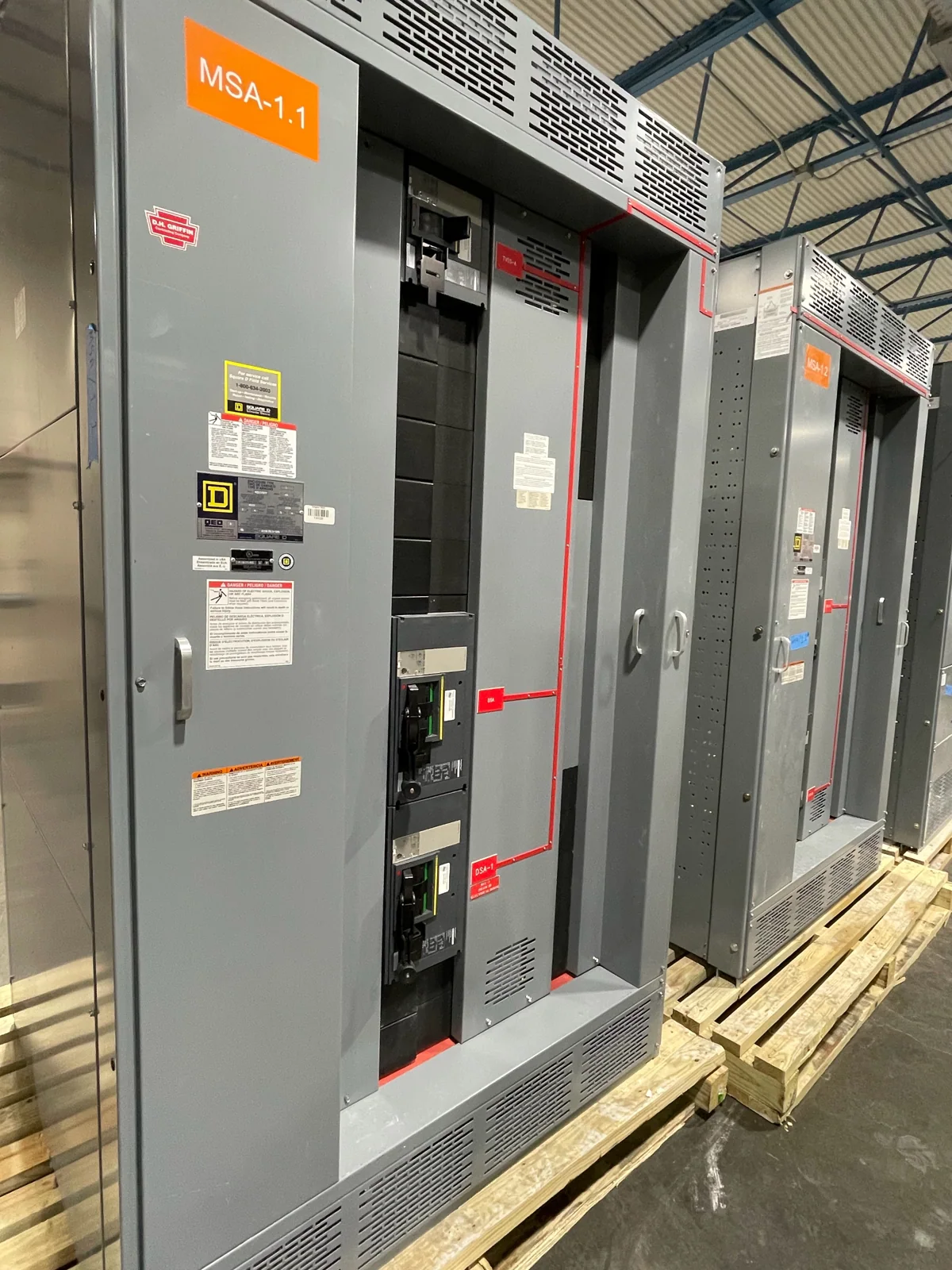
Medium-voltage breaker spares can be valuable equipment even when they are no longer installed in a lineup. A useful evaluation begins with what is stored, what the records say, and what the owner is authorized to release. This guide is for already-detached breakers and related inventory, not for removing devices from energized or connected equipment. The buyer considers all voltage classes, but documented nameplates and records—not appearance alone—define the opportunity.
Start with identification, not assumptions
Safe exterior photographs of the nameplate, front identification plate, shipping label, and overall storage condition can establish a starting record. Existing drawings, equipment schedules, purchase records, maintenance logs, and prior inventory sheets may add the manufacturer, catalog or model designation, voltage, continuous current, interrupting information, control voltage, phase details, and serial number. If a marking is obscured, say so rather than estimating. A breaker that looks similar to another unit may have a different mechanism, control scheme, insulation arrangement, or intended lineup position.
Record whether each item is a complete drawout breaker, a fixed device, a replacement mechanism, or a loose accessory. Accessories may include racking hardware, secondary-disconnect parts, control plugs, trip units, auxiliary switches, interlocks, fuses, or mounting hardware, but list them only when their identity is documented or visibly clear. Do not infer that a loose accessory belongs to a particular breaker merely because it was stored nearby.
A practical inventory example
Hypothetical example: A decommissioned industrial facility has six stored medium-voltage breakers in a locked electrical room. The seller’s inventory lists two units from one manufacturer and four from another, with several different nameplate ratings. A useful submission would identify each breaker by a temporary inventory number, manufacturer, documented voltage and current, serial or catalog information, control-voltage marking if available, quantity, and packaging status. It would separately list three spare trip units, two secondary plugs, and an unverified box of hardware. The box should be marked “identity unknown,” not blended into the breaker count.
This separation distinguishes a complete device from a partial or uncertain lot. It also prevents a section rating, former feeder label, or handwritten note from being mistaken for the breaker’s own rating. If records connect a breaker to a lineup or cell, include that association; if it is only suspected, label it unconfirmed.
Contrast two possible sale situations
Hypothetical situation one: consolidated plant shutdown. All breakers were detached during a documented shutdown and placed together on pallets. The seller has a section schedule, nameplate photographs, and a release approval from the asset owner. This lot may be easier to evaluate because quantity, identity, custody, and access are organized in one package. The buyer would still need to distinguish complete breakers from accessories and note corrosion, impact, missing covers, damaged packaging, or unknown history.
Hypothetical situation two: staged building transition. Two stored breakers are available now, while four additional units remain under a separate owner’s control until a later release date. The first lot should stand on its own, with its own documents and access contact; future units should not be counted as available today. If a breaker’s former lineup is still operating, the seller must not move or open anything to improve the inventory. Instead, provide existing records and coordinate a qualified, authorized review of what is already detached and legally releasable. The contrast matters: a smaller, clearly controlled lot may be more actionable than a larger list that combines uncertain custody and future availability.
Completeness, condition, and safe release
Describe how each spare is stored: indoors or outdoors, palletized or loose, covered or exposed, and protected from moisture or impact. Note visible rust, dents, cracked insulating material, oil or fluid staining, missing nameplates, broken packaging, and signs of handling without opening, operating, or testing the device. No seller testing is required. A qualified, authorized team must establish safe conditions and handle electrical or physical work. Sellers should not touch energized equipment or dismantle a breaker.
Ownership is equally important. Identify the asset owner, any landlord or contractor with custody, and whether another party must approve release. For staged releases, provide current availability, any later target date, and the person who can coordinate access.
What influences an offer
Evaluation can consider documented voltage and current, manufacturer and configuration, quantity, completeness, accessory separation, condition, storage environment, packaging, records quality, and whether the lot can be released together. Compatibility with a future application should never be promised from a photograph, and no fixed price follows automatically from a rating. Unknowns are valuation factors, so mark them rather than filling gaps with guesses.
Access, loading, and seller questions
Share the storage-room description, doorway and corridor constraints if documented, pallet or crate dimensions if recorded, floor or loading restrictions known to the site, access hours, and required security or escort approvals. The buyer coordinates qualified disconnects when applicable, crane or other lifting resources, rigging, loading, freight, and hauling; the seller is not expected to dismantle, rig, or transport the equipment. Arrange access and release approvals with the owner and facility contact.
Common questions include: Which units are detached and stored now? What do the nameplates and records state? Are accessories included or separate? Who owns each item? Are any breakers reserved for maintenance or a future phase? What damage or environmental exposure is known? Can the authorized contact confirm the release boundary and coordinate access? Send answers with safe exterior photos and existing documents, marking uncertain details as unknown.