Start with a release record, not a guess
Unit substations released during a power-plant closure can be valuable, but several assets may sit inside one fenced electrical area while ownership, operating responsibility, and the sale boundary remain unclear. This guide treats any facility or shutdown as hypothetical; no particular Ohio project is being claimed.
Begin with the equipment schedule, one-line drawing, asset register, and available nameplate information. Identify the transformer, primary switching section, secondary switchboard or switchgear, enclosure, and any protection or control cabinets that are actually included. Record manufacturer and serial information only where it is already visible or documented. If drawings or photographs are shared, remove sensitive operating details, security information, control passwords, precise alarm points, and other material that the owner does not want circulated.
Separate the ratings that define the lot
A useful inventory states documented primary and secondary voltage, frequency, transformer kVA or other capacity marking, and ratings shown for associated switching equipment. Do not infer a voltage class from enclosure size or a familiar brand name. Transformer, switch, interrupting, and bus ratings describe different parts of the assembly. A buyer considers all voltage classes when information and ownership can be established.
For each unit, note whether the primary section is integral, adjacent, or separately listed. Do the same for the secondary section, neutral equipment, metering, surge protection, fuses, breakers, and loose accessories. A stored breaker or fuse may belong to another lineup; mark that relationship confirmed, probable, or unknown rather than combining it into the unit-substation count.
Hypothetical inventory example
Hypothetical example: A closure package might list one oil-filled transformer with its documented primary and secondary ratings, one connected primary switch section, one secondary section, two identified protective devices, and a crate of loose parts. The inventory should state which items are mounted, which are stored, and which records support the association. It should not claim that the loose parts fit, that a fluid is acceptable, or that every cabinet is part of the sale when those facts are unknown.
Completeness and condition need their own notes
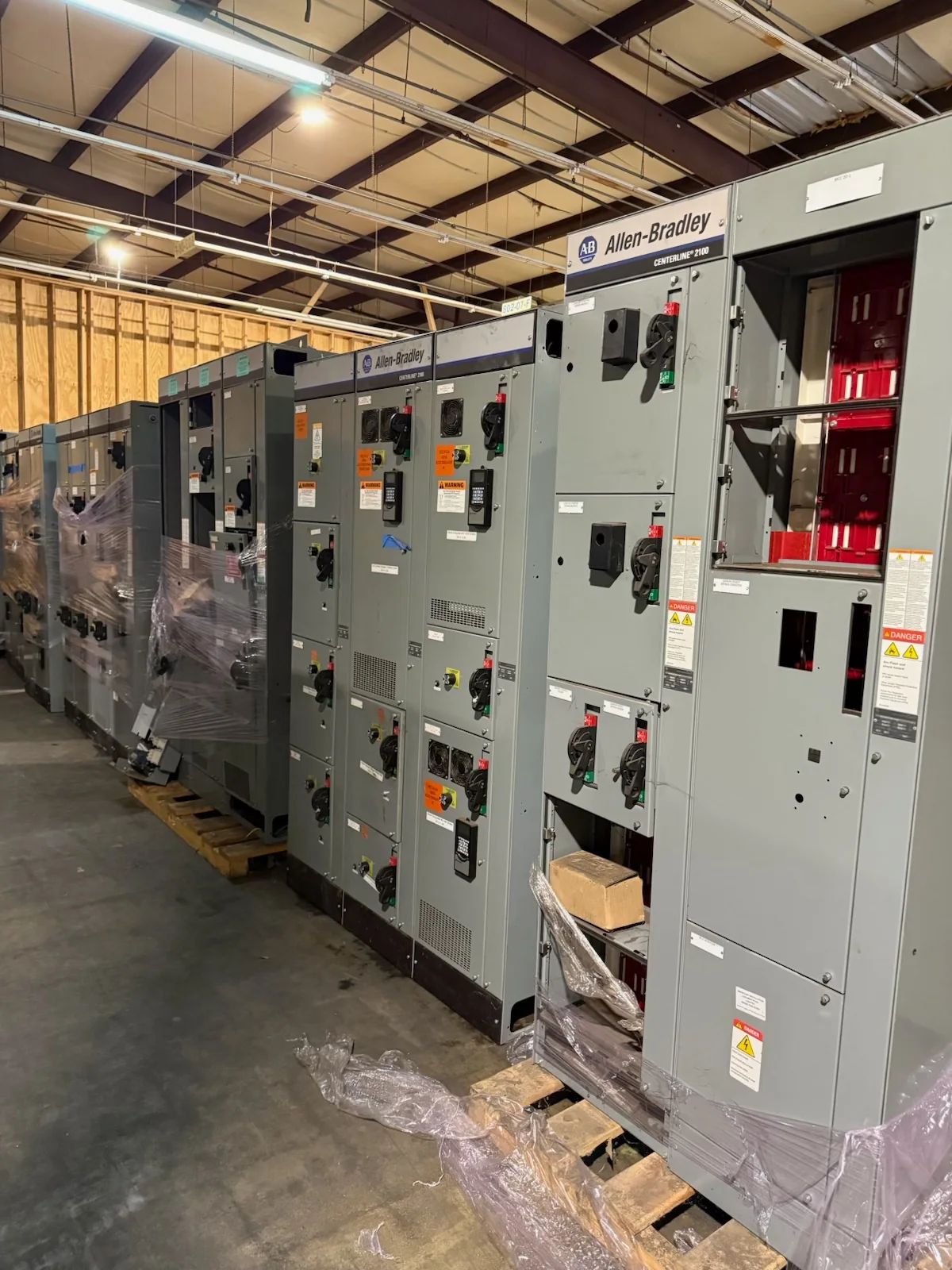
Photographing an exterior nameplate or a closed enclosure can help with an initial evaluation. Safe exterior photos and existing records are enough to begin; the seller is not asked to open compartments, operate devices, enter an energized area, dismantle anything, or perform testing. A qualified, authorized team must establish safe conditions and handle disconnection.
Describe visible condition precisely: paint loss, corrosion, impact, missing covers, cracked exterior-visible insulators, damaged bushings, water entry, or storage exposure. For transformers, disclose known fluid leaks, stains, unusual odors reported by authorized personnel, fire-protection history, or environmental restrictions. Do not sample fluid or investigate contamination. State what is documented, observed, or unknown.
Completeness also includes transport facts. Existing drawings may show dimensions, lifting points, center-of-gravity notes, shipping weight, and whether transformer and switch sections were designed to move together. Treat those values as references until qualified personnel confirm the release plan. Missing lifting hardware, blocked access, low clearances, or field modifications can materially affect handling.
Ownership and milestones control a safe release
Power-plant property can cross several boundaries. Confirm whether the owner, operator, tenant, lender, insurer, or another party controls the transformer and associated switchgear. A decommissioning contractor may have custody without authority to sell. Identify retained equipment, utility-owned portions, leased assets, and components reserved for another phase. If the sale boundary is not signed off, label it unresolved.
Share milestones that affect access: final operating date, isolation approval, demolition sequence, environmental review, restricted periods, and the lot release date. These help coordinate removal without asking the seller to absorb removal work. The buyer handles crane coordination, qualified disconnects, rigging, loading, freight, and hauling after agreement; the owner coordinates site approvals and access permissions.
Rigging, access, and freight questions
A practical access note should identify the building or yard area without publishing sensitive security information. Record doorway dimensions, floor or road restrictions, overhead obstructions, turning limitations, loading hours, and whether crane setup or escort approval is required. Include documented shipping weight and dimensions for each major piece, but do not estimate them from appearance. A separated transformer may require a different sequence than an integrated assembly.
The buyer can arrange qualified crews and equipment for disconnecting, rigging, loading, and hauling; the seller should not touch the equipment to make it ready. Access approvals are a coordination item, not a transfer of crane or removal costs. A clear note about outage windows and escort rules is more useful than a promised pickup date, especially when demolition, environmental controls, or retained generation assets constrain the route.
Questions that make an evaluation useful
- Which legal entity owns each transformer, switch section, and loose accessory, and who can authorize release?
- What documented primary and secondary ratings, capacity, manufacturer, serial numbers, and section counts are available?
- Are the transformer fluid type, leak history, environmental restrictions, or known contamination issues documented?
- Which components are included, retained, leased, utility-owned, or of uncertain association?
- What are the documented weights, dimensions, lifting restrictions, access limitations, and approved release milestones?
- Which exterior photos and redacted drawings can be shared without exposing operational or security information?
After lot, authority, condition, and access facts are aligned, the buyer can make a cash offer. Payment is upfront after agreement, and no seller testing is required. The strongest submission separates documented facts, visible exterior condition, unresolved boundaries, and approvals needed for a safe release.