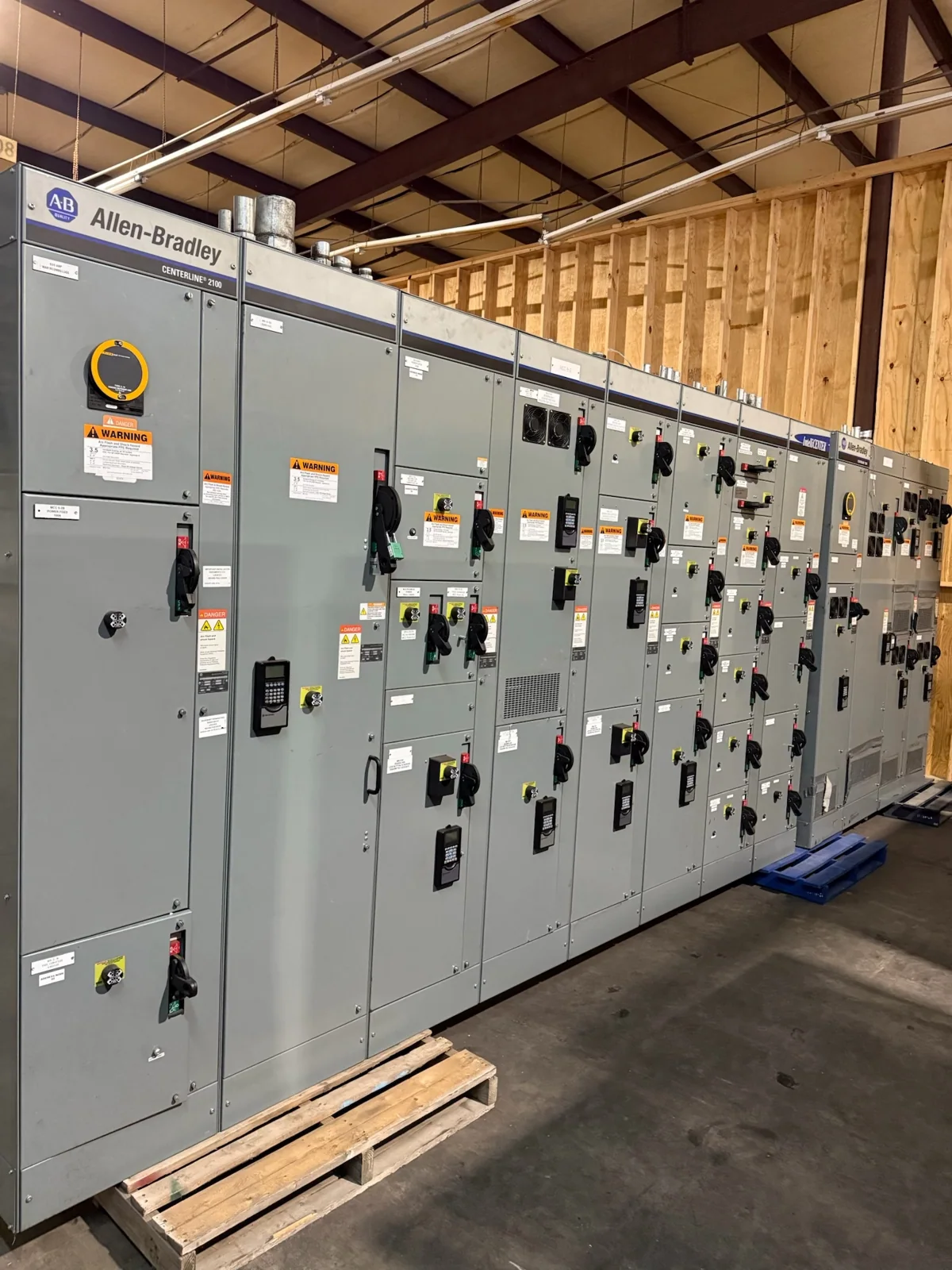
Sell Breaker Spares from Power Plant Closures in Ohio
When a generating station is retired, the useful first step is to define the physical breaker lot without guessing what belongs in it. A cabinet in a switchgear room, a pallet in a warehouse, and an emergency spare may have different owners, ratings, and release conditions. This guide describes an hypothetical Ohio decommissioning or shutdown scenario, not a particular facility or completed local project. The buyer considers breakers across voltage classes and can evaluate loose, stored, and installed equipment after authorized release.
Set a defensible lot boundary
Separate loose and stored breakers from breakers still installed in lineups. For each item, record exact visible nameplate wording, manufacturer, catalog or type designation, serial number when readable, voltage, continuous current, interrupting information, trip-unit details, and quantity. Do not infer a rating from case size, generation capacity, or a neighboring device. A breaker rating is not automatically the rating of the switchgear assembly that housed it.
For installed equipment, identify the lineup or section label, cubicle or cell position, feeder or generator-related designation if documented, and whether the breaker remains needed until a milestone. List a stored breaker separately even when a tag suggests it served that lineup. The association is useful evidence, but mark it as documented, probable, or unknown rather than promising compatibility.
Practical inventory example
Hypothetical inventory: one pallet contains two loose breakers with legible manufacturer and voltage markings; a storage room contains three tagged spares with incomplete paperwork; and a lineup has four installed breakers scheduled for release after an authorized outage. Record three groups, not “nine matching breakers.” For each group, add quantity, label text, approximate dimensions, packaging, visible damage, known accessories, and the person or company authorized to release it. Note whether cradles, racking hardware, control plugs, shutters, lifting points, trip devices, and cases are present, attached, or unknown.
Documents, privacy, and completeness
Asset registers, breaker schedules, decommissioning lists, purchase records, inspection reports, and non-sensitive drawing portions can establish identity. Before sharing drawings or photos, remove operational diagrams, access codes, security details, network information, and other sensitive content. Safe exterior photos of nameplates, shipping labels, pallets, and closed equipment are useful; the seller does not need to open compartments or create tests.
- Match each spare tag to a documented lineup, position, or purchase record where available.
- Mark missing covers, arc chutes, trip units, control plugs, hardware, manuals, and shipping cases.
- Keep different manufacturers, frame families, voltage classes, and uncertain matches on separate lines.
- Identify whether each group belongs to the operator, landlord, tenant, lessor, or another party.
Completeness means showing what is offered and what remains unknown; it does not require the seller to prove technical compatibility.
Condition and environmental disclosures
Describe condition from existing records and safe observations: new surplus, removed and stored, installed but idle, weather-exposed, impact-damaged, corroded, incomplete, or unknown. Note crushed packaging, moisture, dust, oil residue, missing identification, and rough handling when known. Do not sample, clean, open, operate, or test a breaker for this evaluation. Disclose reported contamination, fluids, regulated materials, or flooding history plainly; do not invent sampling results.
The buyer does not require seller-operated testing. Qualified, authorized personnel establish safe conditions and handle any required disconnection. Sellers should not touch energized equipment, enter restricted electrical areas, rack devices, dismantle assemblies, or inspect solely to improve an offer.
Offer factors and release responsibilities
Valuation reflects documented identity, voltage class, quantity, completeness, condition, demand for the specific device family, and the handling risk of an uncertain lot. Individually labeled breakers may be easier to evaluate than a mixed pallet. Original cases, lifting accessories, manuals, matching parts, and credible records can help; missing components, conflicting labels, corrosion, and unclear ownership reduce confidence. The buyer purchases equipment without promising that every breaker fits a future application.
After reviewing the lot and release terms, the buyer can make a cash offer; once the seller accepts and the sale is agreed, payment is made upfront before the agreed pickup. The seller is not expected to fund testing, arrange a crane, hire riggers, disconnect equipment, load trucks, or haul freight. The buyer handles qualified disconnects, crane and rigging coordination, loading, freight, and hauling. Access approvals, outage windows, escorts, badges, and plant rules still require coordination with the authorized owner; that coordination does not shift removal costs to the seller.
Plan the release and loading path
Decommissioning schedules have dependencies. Identify the milestone releasing each installed breaker, when an area becomes accessible, and whether a contractor, utility, tenant, or plant owner must approve removal. For stored equipment, describe the room, pallet position, door clearance, floor or dock restrictions, and loading hours without publishing a sensitive address. Large breakers and crates may require a measured route, overhead-clearance review, suitable dock access, and a coordinated lift plan. The buyer’s team can plan rigging and transport once dimensions, weights, photos, and access rules are known.
Questions for the first review
- Which breakers are loose, stored, or installed?
- What exact labels, documented ratings, quantities, and serial numbers are available?
- Which accessories and records are included, missing, or uncertain?
- Who owns each group, and who can authorize release?
- What milestones, access approvals, environmental disclosures, and loading constraints apply?
Those answers turn a power-plant closure lot into a verifiable collection rather than an assumed pile of parts, while keeping safety, ownership, privacy, and the actual release boundary in view.