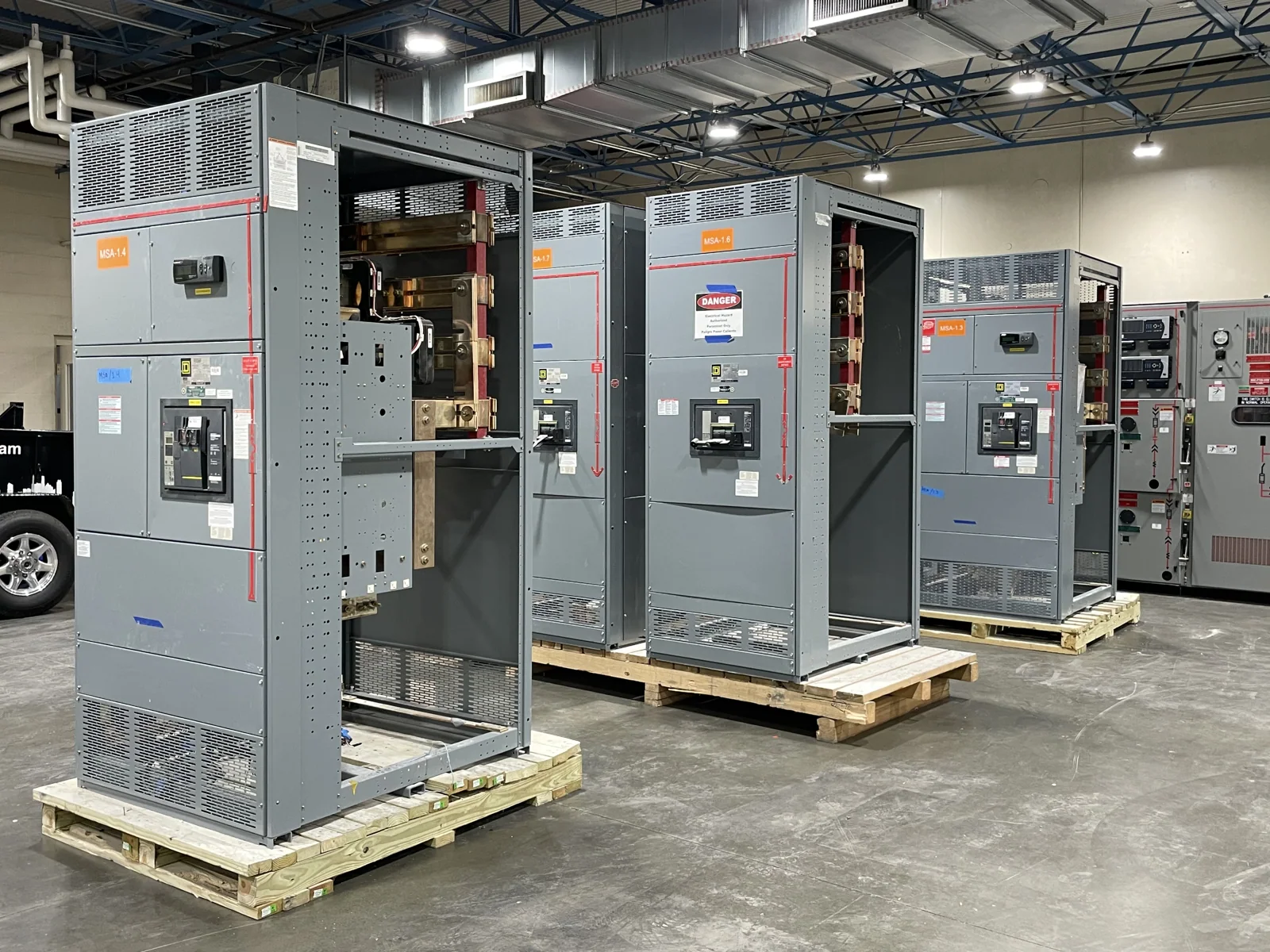
Start with a room-by-room release map
A power-plant room clearance is easier to evaluate when the proposed lot is mapped by room rather than described as one pile of electrical equipment. The following is a hypothetical example, not a claim about an Ohio facility: Room A contains a documented medium-voltage lineup, Room B contains low-voltage distribution sections and spare breakers, and Room C contains relay cabinets, battery equipment and cable-tray components. List each room, its visible equipment tags, planned release date and route to a staging point.
Keep proposed sale equipment separate from demolition scrap, retained assets and anything merely nearby. A feeder section remaining in service is not included because it shares an enclosure line with a released section. Copper, damaged conduit and miscellaneous steel may be demolition material rather than reusable inventory. Mark those categories clearly.
Record nameplates, ratings and completeness
For each lineup, cabinet or device, record manufacturer, catalog or serial information, voltage class, current rating, interrupting or withstand information when documented, section count and protective-device locations. Use the wording on the nameplate or existing record; do not infer a rating from cabinet size, paint or appearance. An assembly rating, bus rating and individual breaker rating are different facts. Apply the same discipline to transformers, motor-control sections, distribution panels, relays and battery chargers.
Completeness affects usefulness and valuation. Note whether removable breakers, drawout trucks, shutters, barriers, control-power components, relay modules, covers and hardware are installed, separately crated or absent. Identify loose spares by their own labels and documented association with a lineup; an unverified breaker remains an unknown match. Existing one-lines, schedules, inspection records and decommissioning lists can establish relationships without asking anyone to operate equipment.
Separate ownership, reservations and environmental facts
Power plants can contain equipment owned by different parties. Confirm whether the proposed lot belongs to the plant owner, tenant, contractor, utility or another entity, and identify who may approve release. A room, lease or utility boundary may cut across the apparent equipment group. List reserved assets separately with the reason for retention and any decision date.
Disclose known environmental issues plainly, such as a documented oil leak, residue, asbestos-related building material, lead-containing components, refrigerant equipment or spill designation. This does not ask the seller to sample, open, clean or investigate. State whether a condition is known, suspected or unknown and provide existing records for qualified review. Contaminated material and demolition scrap should not be represented as reusable electrical equipment.
Condition and offer factors
Condition notes should describe observable facts without implying a performance test. Safe exterior photographs may show labels, doors, enclosure damage, corrosion, missing covers, packaging, water staining or impact marks. Existing maintenance and inspection records can add context, while unknown service history should remain unknown. Do not open compartments or access energized areas; no seller-operated testing is required.
Value can reflect documented ratings, manufacturer identity, section completeness, matched accessories, age information, indoor or outdoor storage, corrosion, moisture, contamination, packaging and the cost of separating reusable inventory from scrap. A large lineup is not automatically more valuable if devices are missing or ownership is unclear. A smaller, well-documented group with associated spares may be easier to evaluate. The buyer considers equipment across voltage classes and can make a cash offer after reviewing the lot and release conditions; once the seller accepts and the sale is agreed, payment is made upfront before the agreed pickup.
Plan milestones, access and release boundaries
Share the sequence: shutdown or decommissioning milestone, owner approval, clearance of adjacent operations, target release window, staging availability and final access deadline. These are coordination points, not a transfer of removal expense to the seller. The buyer handles crane arrangements, qualified disconnects, rigging, loading, freight and hauling. The seller should identify access rules, escorts, badging, work-hour limits, floor-load restrictions, overhead obstructions, doors, elevators, turning areas and outage coordination needs.
Qualified, authorized personnel must establish safe conditions and handle disconnection. The seller should not touch energized equipment, dismantle assemblies, move heavy sections or prepare connections for removal. Before sharing drawings or photographs, remove sensitive operational, security, control-system and access information. Provide only what is needed to identify the lot and coordinate approved entry.
Practical hypothetical inventory
- Room A: six documented lineup sections, four identified removable breakers, two stored breakers with one confirmed association, and one section reserved for another owner.
- Room B: three low-voltage distribution sections, two labeled spare devices, missing deadfront hardware on one section, and a pallet of unverified parts.
- Room C: relay cabinets and battery equipment offered for review, with exterior water staining and a known environmental notice supplied by the owner.
- Excluded material: demolition scrap, abandoned cable, retained control cabinets and equipment without release authority.
This example is hypothetical. A useful inventory attaches room, tag, quantity, documented rating, condition, ownership status, inclusion decision and release milestone to every line item.
Questions to answer before evaluation
- Which rooms and sections are included, and which must remain in service?
- Who owns each group and who can authorize release?
- Which ratings, drawings, schedules, service records and spare-device associations are documented?
- What is known about corrosion, moisture, contamination, missing parts and storage?
- When can authorized personnel establish safe conditions, disconnect equipment and provide supervised access?
- What are the approved staging area, travel path, crane position and freight restrictions?
Those answers let the buyer distinguish reusable equipment from scrap, confirm the release boundary and plan collection without asking the seller to test or handle electrical gear.