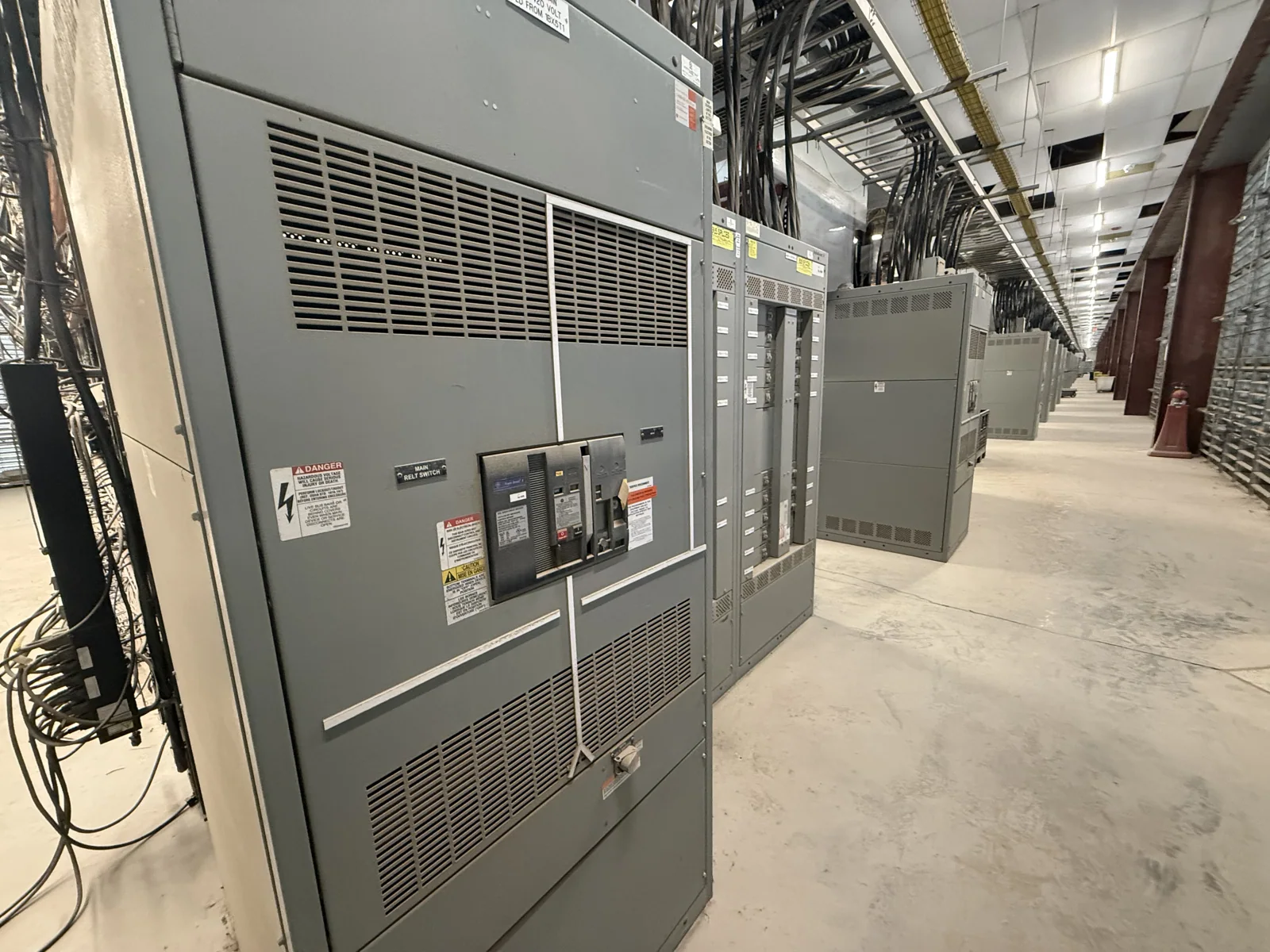
A decommissioning inventory starts with a boundary, not a guess. Imagine a hypothetical Ohio generating station preparing to retire one electrical lineup while auxiliary services still support buildings, pumps, controls, or environmental systems. The owner may have a long lineup, loose breakers in a storeroom, relay cabinets, and drawings from several project phases. Only part of that material may be cleared for release. A useful evaluation therefore begins by separating the proposed sale lot from equipment that remains active, reserved, or owned by another party.
Define the lineup and the release boundary
Describe the proposed lineup by manufacturer as shown on records or nameplates, documented voltage class, current rating, section count, and the function of each section where known. Identify the main or incoming section, bus-tie or transfer section if documented, feeder sections, and protective-device positions. a removable breaker, fuse compartment, relay package, or grounding switch is not interchangeable simply because it occupies a similar-looking space.
Auxiliary services need special attention in a shutdown. A plant may be retired while station service, fire protection, lighting, water treatment, control power, or communications remain in use. Mark those sections as retained or unknown rather than including them by proximity. If a tenant, operating affiliate, utility, lender, or demolition contractor has an interest, identify the responsible owner and the exact boundary in writing. The buyer evaluates equipment the seller is authorized to release; it does not assume that the property owner controls every cabinet in the room.
Build a practical inventory record
A compact inventory can make a large lot understandable. For each lineup, record a location identifier, section number, visible label, documented voltage and current, protective device type, quantity, and whether the item is installed, detached, or separately stored. Add the source of each fact, such as a nameplate, equipment schedule, or drawing revision. Keep unknown details visibly unknown instead of filling gaps with an estimate.
- Hypothetical example: Lineup A has twelve documented sections, one incoming section, eight feeder sections, one tie section, and two sections marked auxiliary. The proposed lot is the eight feeders and six identified removable breakers; the incoming and auxiliary sections remain retained.
- Hypothetical example: a crate contains three loose breakers labeled for positions F-2, F-5, and F-7, while two additional devices have no readable association. List the first three as documented matches and the others as unverified, not as a complete spare set.
- Record covers, barriers, shutters, relays, control wiring, hardware, and manuals when their presence is known. Note missing doors, removed devices, corrosion, impact, water exposure, or packaging damage without trying to restore or manipulate anything.
Safe exterior photographs can show labels, section fronts, storage condition, and access dimensions. Before sharing drawings or photos, remove sensitive operational details, security information, access codes, network data, and other material that is not needed for an evaluation. Existing records are helpful, but the seller is not asked to open compartments, operate equipment, or perform a test.
Condition, environmental information, and value
Condition affects the offer alongside completeness and release certainty. Explain whether the equipment was installed in a dry indoor electrical room, stored under cover, exposed to weather, or moved between locations. Identify visible rust, cracked insulators, missing barriers, oil or fluid staining, fire or water damage, and evidence of long-term storage. Disclose known environmental issues, residues, or suspected contamination from site records; do not sample, disturb, or characterize a substance based only on appearance.
Value may reflect documented ratings, recognizable manufacturer information, section count, matching removable devices, preserved accessories, and the cost and complexity of handling an unusually large lineup. It can also be reduced by an incomplete bus arrangement, unknown ownership, missing nameplates, damaged enclosures, restricted access, or a release schedule that is not firm. All voltage classes can be considered, but appearance alone does not establish voltage, interrupting capacity, compatibility, or reuse suitability.
Plan milestones, access, and transport
Share the project milestones that affect a sale: shutdown decision, owner approval, utility or tenant clearance, demolition sequence, outage window, room release, and the date when equipment can be loaded. These are coordination points, not instructions for the seller to remove gear. Qualified, authorized personnel establish safe conditions and handle disconnection. The buyer coordinates the crane, qualified disconnects, rigging, loading, freight, and hauling after the lot and access plan are agreed.
Access information includes the route from lineup to exit, door and gate dimensions, floor or dock limitations, overhead obstructions, staging space, escort requirements, restricted work hours, and whether a crane or specialized rigging plan will be needed. Confirm approvals with the responsible owner or manager. Do not assume a shutdown removes security or permitting requirements.
Questions that clarify a decommissioning lot
When requesting an evaluation, answer these questions: Who owns each proposed lineup and each stored device? Which sections and protective devices are cleared for release, and which auxiliary services remain active? What are the documented voltage, current, manufacturer, section count, and device associations? Which components are missing or separately stored? What condition, storage, fluid, fire, or water issues are known? What approvals, milestones, room-release date, travel path, and loading constraints govern access?
After agreement on the lot and release terms, payment is made upfront as agreed, without requiring the seller to test the equipment. Identify what records establish, label hypothetical associations, protect sensitive information, and leave energized access, disconnection, rigging, and hauling to qualified authorized parties.