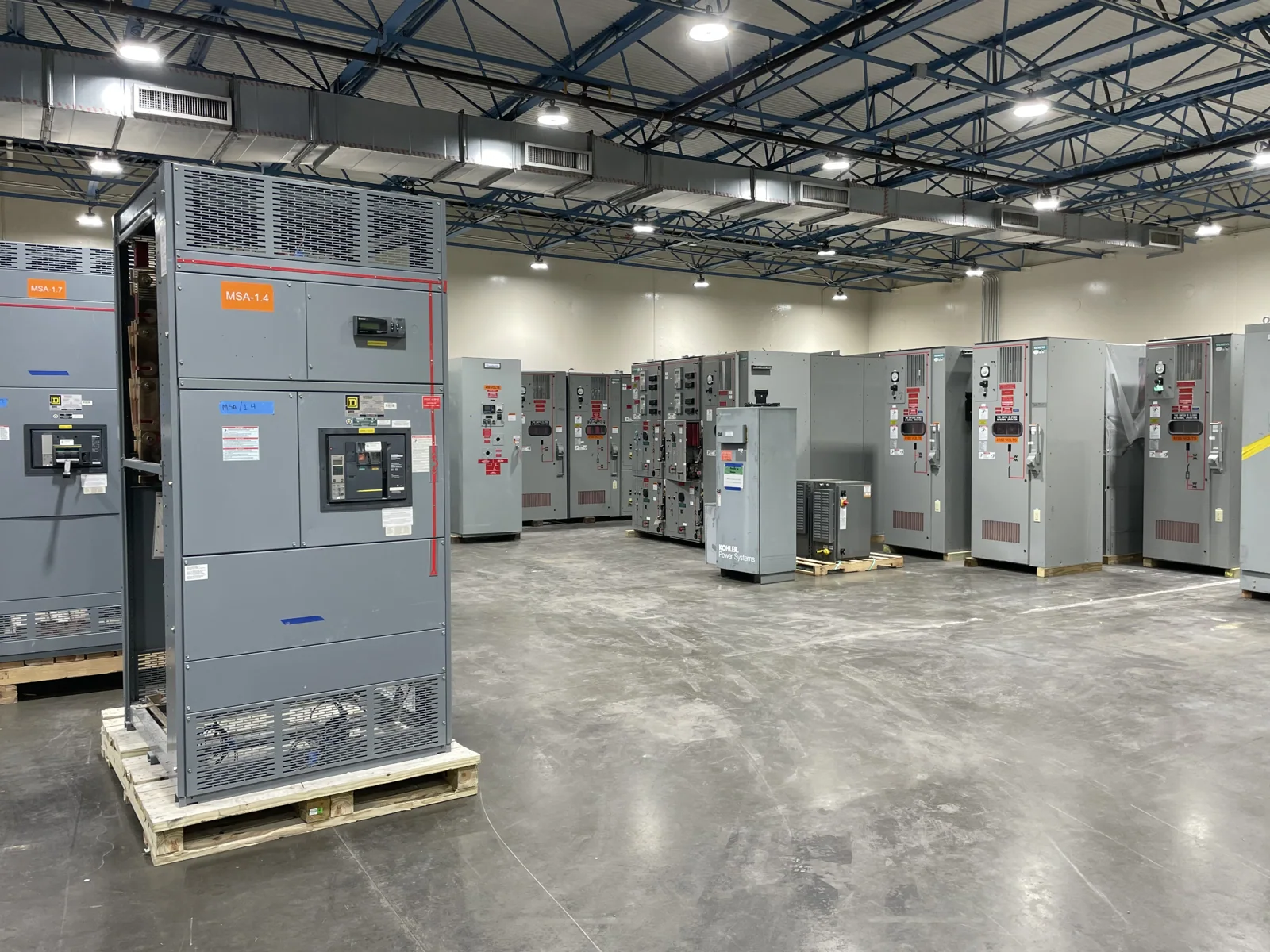
Sell Switchboards from Power Plant Closures in Ohio
A power plant shutdown can release electrical equipment, but a useful sale lot begins with a precise boundary. The switchboard that appears available may include auxiliary distribution sections, service equipment, feeder sections, metering, protective devices, and loose spares. Other gear may remain necessary for safe shutdown, environmental controls, fire protection, security, or a retained building load. Identify what the owner can release rather than assuming every cabinet in an electrical room belongs in the sale.
Two hypothetical sale situations
Hypothetical situation one: a controlled auxiliary release
Imagine a generating facility completing a planned closure. An auxiliary distribution switchboard serving a former pump area is documented as surplus after the owner establishes that the section is no longer needed. The proposed lot includes three sections, a labeled main device, feeder devices, barriers, covers, and separately stored breakers whose association appears on an equipment schedule. A second switchboard serving essential shutdown loads remains outside the lot. The strongest submission identifies the released lineup, the retained lineup, and the transition point between them.
Useful records might include a redacted one-line diagram, section schedule, nameplate transcription, photographs of closed exterior doors, and a loose-component list. Remove sensitive operational or security information before sharing drawings or images. If a document reveals plant controls, restricted rooms, protection settings, or access procedures, provide a suitably redacted version.
Hypothetical situation two: a partial and uncertain release
Now consider a different hypothetical closure in which a service switchboard is evaluated while parts of the plant are still being isolated. One feeder section may stay with the owner, covers may be stored elsewhere, and a tenant or successor operator may have rights to equipment serving a shared building. Do not pool the entire room into one lot. List service and feeder sections, devices, loose parts, and the retained boundary separately, marking any ownership or association that is unknown.
This situation may be less complete, but it can still be evaluated when uncertainty is visible. Distinguish a documented shortage from a missing record, and do not represent energized, retained, utility-owned, tenant-owned, or unverified equipment as available surplus.
Build a practical inventory
For each proposed lot, record the manufacturer name as shown, any legible series or identification marking, documented voltage and current information, number of sections, main device, feeder devices, metering compartments, barriers, doors, covers, control components, and loose breakers. Include the location within the facility, such as an auxiliary electrical room or service lineup area, without publishing a sensitive room identifier. Do not infer voltage class, interrupting rating, or compatibility from appearance.
- Installed sections: identify each service, auxiliary distribution, or feeder section and its visible label.
- Stored items: count breakers, trip units, covers, hardware, relays, and manuals separately; note the documented section or position when known.
- Completeness: state whether doors, barriers, bus covers, device compartments, nameplates, and accessories are present, absent, or unknown.
- Boundary: identify equipment that stays, including shared services, retained shutdown systems, utility-owned assets, or tenant property.
Condition, records, and valuation
Condition is more than a clean enclosure. Describe visible corrosion, water entry, soot, heat discoloration, impact, missing covers, cut conductors, damaged hinges, contamination, and storage exposure. Disclose known environmental issues rather than sampling, opening compartments, or characterizing material yourself. Maintenance records, outage notes, drawings, photographs, and decommissioning schedules can explain history; they do not replace a safe release decision.
Offer factors can include documented ratings, manufacturer and configuration, section count, completeness, condition, matching removable devices, ownership clarity, and whether the lot can be released as a coherent group. The buyer considers all voltage classes. After reviewing the lot and release terms, the buyer can make a cash offer; once the seller accepts and the sale is agreed, payment is made upfront before the agreed pickup, and the seller does not need to perform testing. Keep unknown information labeled unknown.
Release milestones and site coordination
Share the anticipated milestones: decision to retire, ownership approval, final operating date, authorized release date, outage or isolation milestone, environmental clearance, access approval, and any deadline for clearing the room. These dates separate equipment saleable now from equipment held for a later phase. A qualified, authorized team must establish safe conditions and handle disconnection. The seller should not open, operate, dismantle, touch energized equipment, or test it.
Access approvals are coordinated with the owner, plant representative, tenant, security contact, and any required outage authority. They are not a transfer of removal work to the seller. The buyer handles qualified disconnects, crane arrangements, rigging, loading, freight, and hauling. Provide doorway dimensions, floor or mezzanine access, turning limitations, overhead obstructions, loading hours, escort rules, and whether special transport coordination is anticipated. Do not remove equipment to make it easier to ship.
Questions to answer with the submission
- Which switchboards are auxiliary distribution, service, or feeder equipment, and which systems must remain?
- Who owns each proposed section and loose device, and are tenant, utility, or shared-building boundaries documented?
- What nameplate information, drawings, schedules, photographs, and maintenance records exist?
- Which doors, barriers, breakers, covers, metering parts, and manuals are included, missing, or unknown?
- What environmental conditions are known, and what release approvals or milestones govern access?
- What are the safe access route, dimensions, floor limitations, loading rules, and authorized site contacts?
A redacted inventory lets an Ohio power-plant closure be evaluated on facts rather than guesses. Send the proposed lot boundary, documented equipment details, condition notes, ownership information, and release schedule for review. Safe conditions, disconnection, rigging, loading, freight, and hauling remain the buyer’s responsibility after agreement.