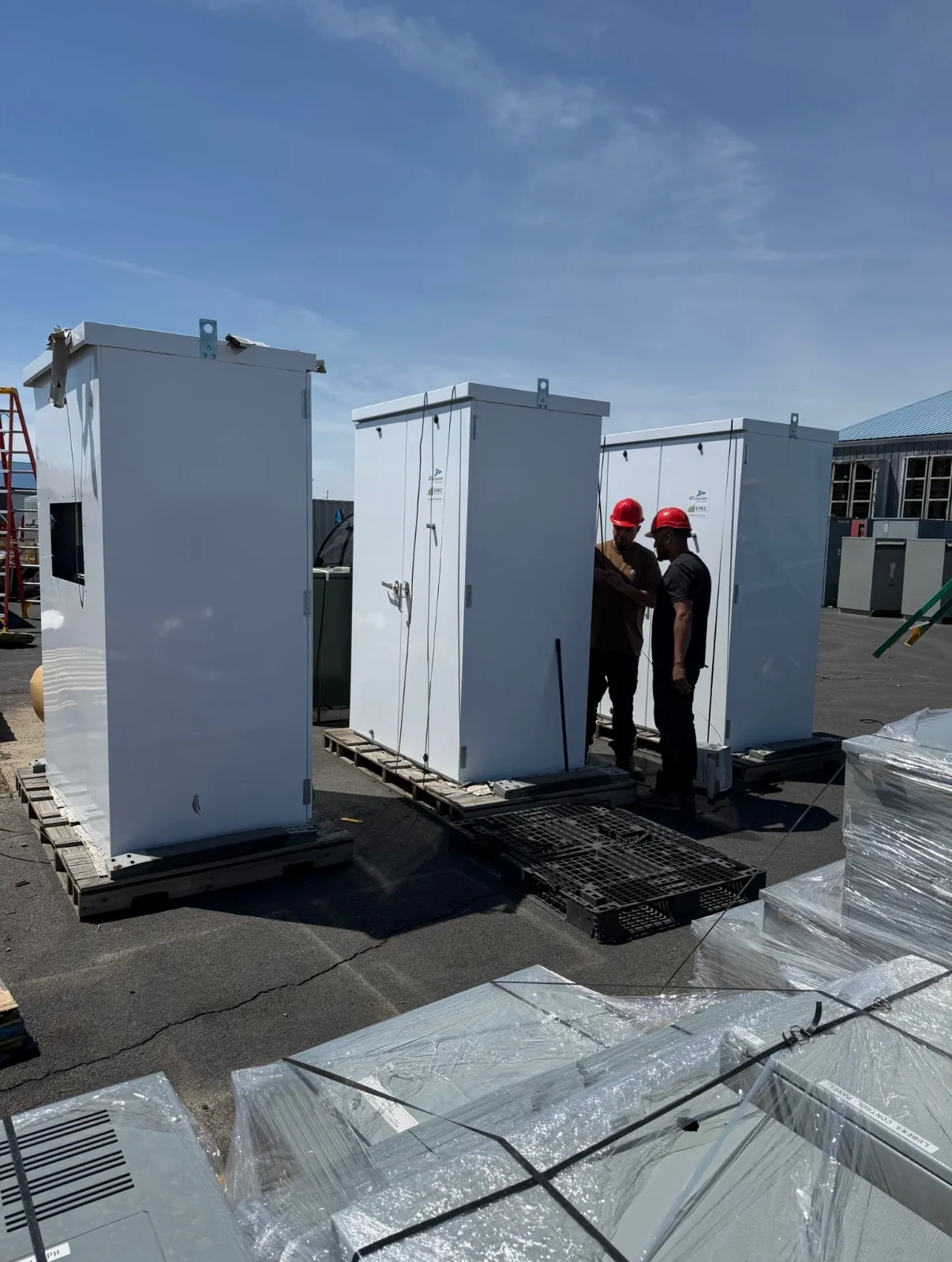
When an Ohio facility releases a pad-mounted switchgear assembly, the useful inventory is more than a cabinet count. A complete evaluation depends on matching the enclosure, its compartments, switching components, recorded ratings, ownership and release conditions. The buyer considers all voltage classes, but appearance alone cannot establish a voltage class or confirm compatibility.
Start with a safe exterior inventory
Do not open an enclosure, operate a handle, remove a cover or approach equipment that may be energized. A seller can provide existing records and safe exterior photos taken from an authorized location. Useful views show the overall cabinet, accessible doors, compartment labels, visible nameplates, cable-entry area and external damage. If a nameplate is unreadable, record it as unknown rather than reconstructing a value from memory.
Inventory the assembly as a system. Note the manufacturer if visible, catalog or serial information, number of cabinet sections and labels assigned to switching compartments. Record voltage, continuous current, interrupting or fault information, frequency and other ratings exactly as documented. A broad enclosure silhouette is not a nameplate. A switch rating, fuse rating and assembly rating may describe different parts of the same equipment.
Match compartments and included components
Pad-mounted gear can contain multiple functional areas, and loose items can become separated during a changeout. List each cabinet section and describe what records call it: incoming, outgoing, tie, sectionalizing or another designation. Then identify documented switching devices, fuse assemblies, operating mechanisms, barriers and visible accessories. Do not assume a separately stored switch, fuse set or operating tool belongs to the assembly merely because it is nearby.
Completeness is a matching problem. Hypothetical example: a three-section assembly labeled “A,” “B” and “C” is accompanied by two crated components marked only with partial identification. The useful inventory shows the section labels, crate markings, source records and unresolved association. It does not claim that the loose components fit. Separating confirmed, probable and unknown items prevents an incomplete lot from being valued as complete.
Ownership, condition and documentation
Establish who owns the assembly and who can approve removal. Outdoor equipment may sit near a service entrance while belonging to a utility, landlord, tenant or facility owner. Ownership and the proposed lot boundary must be confirmed; the buyer does not assume utility affiliation from location alone. For a hypothetical redevelopment, identify the authorized contact, equipment that remains in service and date when the owned assembly may be released.
Condition notes should be factual and exterior-only. Report corrosion, bent doors, damaged hinges, missing labels, visible cracked insulators, standing-water evidence, oil or other fluid concerns, impact marks, fire exposure and storage history when known. Disclose suspected contamination. Existing one-lines, asset schedules, inspection records, photographs and decommissioning documents can explain what the exterior cannot. Testing is not required from the seller for a quote; no one should energize, operate or dismantle equipment to create information.
How matching affects valuation
An offer review may consider documented voltage and current, manufacturer and series information, section count, included switching components, readable identification and lot completeness. It may also reflect corrosion, environmental concerns, missing parts, uncertain ownership, difficult access and the work of separating confirmed equipment from unverified items. A documented assembly with a clear release boundary is easier to evaluate than a cabinet with mixed loose components and no records.
Location matters through logistics rather than a claimed local market price. Identify the Ohio site, outdoor surface conditions, gates, overhead clearance, turning space, distance to the loading position and restrictions on truck or crane access. Describe these facts as known, estimated or unknown, not as guaranteed removal dates or prices.
Coordinate a safe release and pickup
After agreement, the buyer handles coordination of qualified disconnects, crane service, rigging, loading, freight and hauling. The seller is not asked to perform those activities. Access approvals still matter: the authorized owner or site contact coordinates outage requirements, escorts, gate schedules, environmental rules and permission to enter the work area. Coordination is not a transfer of removal costs or a request to prepare energized equipment.
Share constraints early, including a narrow approach, soft ground, restricted delivery hours, overhead obstructions, security check-in and active equipment nearby. The qualified team can plan the lift and transport around the actual site. Do not move the enclosure, disconnect cables or alter the cabinet while waiting for pickup.
Example inventory and seller questions
Hypothetical inventory: one outdoor pad-mounted switchgear assembly; four labeled cabinet sections; documented voltage and current copied from records; two visible switching compartments; one separately stored component with uncertain association; exterior corrosion on one door; known fluid concern marked for review; ownership assigned to the facility owner; release date pending written authorization; loading access limited by a gate and overhead clearance. This is an example format, not a statement about a particular Ohio site.
- What manufacturer, series, serial number and ratings appear on records or safely visible labels?
- How many sections and switching compartments are included, and which loose components are documented as part of the same assembly?
- Who owns the equipment, who can authorize release, and what adjacent gear must remain?
- Are corrosion, fluid, fire, flood, impact or contamination concerns known?
- What are the access rules, surface conditions, clearance limits and available release window?
Send records and safe exterior photos without opening or operating the equipment. Clear answers let the buyer distinguish a complete assembly from an uncertain collection of nearby parts and prepare a cash offer. Once the seller accepts and the sale is agreed, payment is made upfront before the agreed pickup.