What should an Ohio seller identify first?
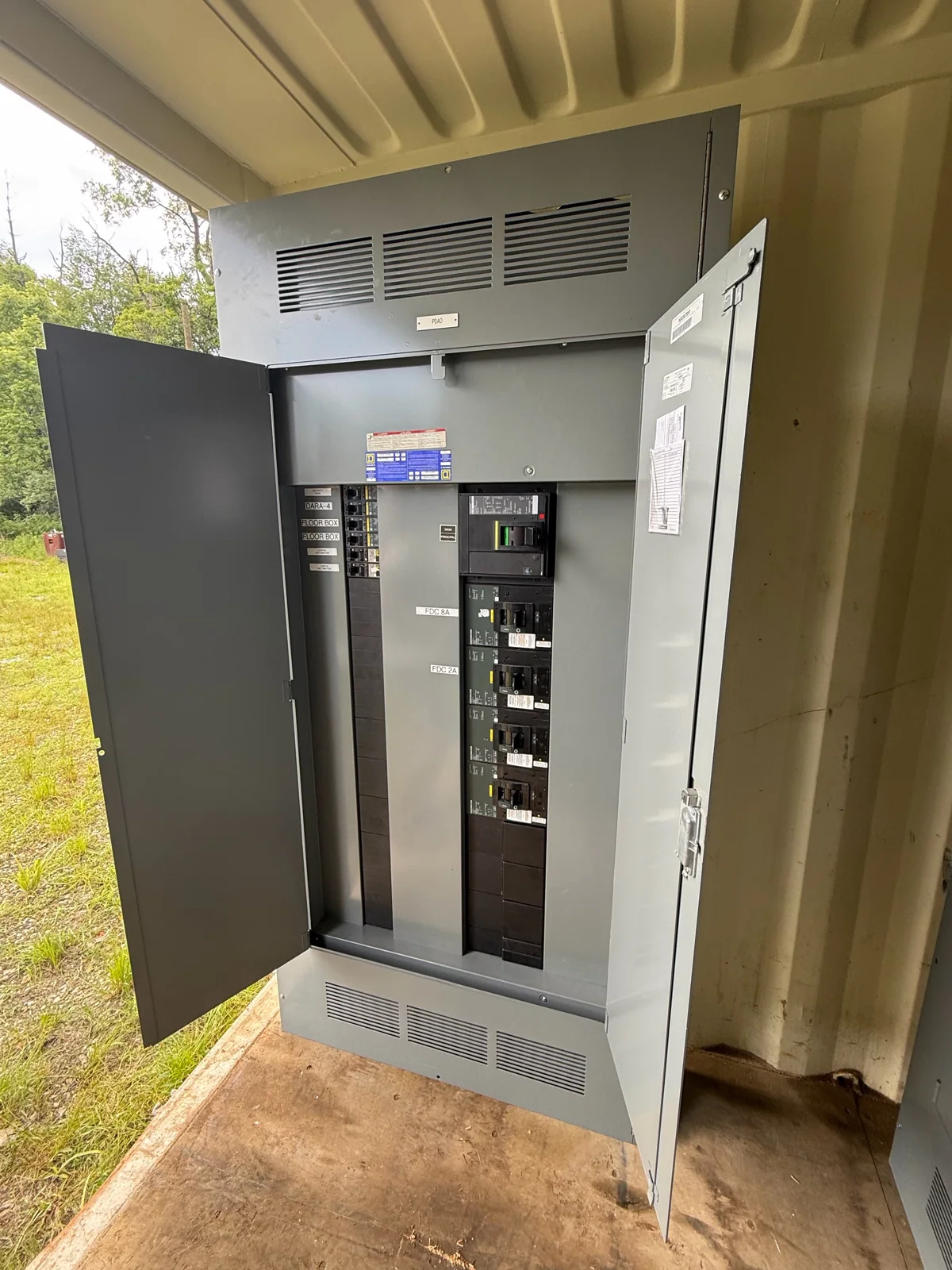
Pad-mounted switchgear is an outdoor enclosure, but its appearance alone does not establish its voltage class, ownership, operating condition, or suitability for another installation. Begin with the information already available: the enclosure style, visible manufacturer or maker marking, nameplate wording, section or compartment count, switching devices, fuse or interrupter references, and any stated voltage and current ratings. A legible exterior label is useful even when interior information is unavailable. Consider all voltage classes when describing the equipment; do not use a familiar low-voltage term as a substitute for the documented rating.
What does a buyer need to distinguish? The assembly rating, an individual switch or fuse rating, and an interrupting or fault-duty value may be different entries. Record each exactly as shown rather than calculating or inferring one from another. Note whether the enclosure is one integrated unit or several adjacent cabinets, and identify quantities without assuming that two similar-looking units share a design.
What belongs in a practical inventory?
A useful inventory ties every item to a visible identifier and a release boundary. For each enclosure, list the maker if marked, catalog or serial information if present, documented voltage and current, number of sections, switching devices, fuse compartments or other included devices, approximate dimensions, and known accessories. Add the quantity, storage location, and exterior condition for separately stored switches, spare fuses, operating handles, barriers, covers, or documentation. Unknown information should be labeled unknown, not filled in from appearance.
Hypothetical example: an Ohio redevelopment file might describe two outdoor enclosures, one with a visible maker label and documented rating, plus three separately stored switching devices whose association with either enclosure is not confirmed. The inventory should call out the uncertain match, missing records, and proposed release date rather than pooling everything into “one lot.” That precision helps separate included equipment from adjacent gear that remains in service.
How do completeness and condition affect an evaluation?
Completeness is more than counting cabinets. Are the marked covers, doors, bases, operating mechanisms, barriers, nameplates, and documented switching devices present? Are loose parts tagged to a particular enclosure, or merely found nearby? Note missing hardware, dented panels, corrosion, cracked insulators visible through permitted exterior views, water intrusion indicators, fire damage, impact, and prolonged outdoor exposure. Also disclose known contamination or fluid issues, unusual odors, staining, or environmental restrictions without opening the enclosure or disturbing material.
Can a seller improve the evaluation by testing it? No seller testing is required. Do not open, operate, dismantle, touch, or approach energized equipment. Safe exterior photographs and existing drawings, maintenance records, asset lists, nameplate transcriptions, and ownership documents are the appropriate starting material. Qualified, authorized personnel must establish safe conditions and handle electrical and physical work.
Who owns the switchgear, and when may it be released?
Pad-mounted equipment is not automatically utility-owned simply because it sits outdoors. Confirm whether it belongs to a facility owner, tenant, contractor, utility, lender, estate, or another party, and identify any easement, lease, lien, surplus approval, or utility coordination that limits transfer. If ownership is uncertain, say so. A buyer can evaluate a proposed lot, but the seller must have authority to release it.
How should a staged release be described? Separate equipment available now from units retained for an active service, a later shutdown, or an approval still pending. Give each group its proposed release date and authorized contact, while acknowledging that the final timing is subject to site and ownership approvals. Coordination is not a promise of a fixed schedule or purchase. The same approach applies to equipment from a decommissioned data center or a shut-down power plant: identify the owner, the lot boundary, the records, and the approved release sequence.
What influences the offer?
Valuation may reflect documented ratings, manufacturer identification, device count, completeness, condition, age information, storage history, and whether the lot can be clearly separated from retained assets. It may also reflect the work and uncertainty associated with access, staging, dimensions, weight, environmental disclosures, and freight planning. A clean record of matching enclosures to included devices can be more useful than a larger but unexplained quantity. No price, purchase decision, compatibility, or test result should be assumed before the information is reviewed.
After reviewing the lot, the buyer can make a cash offer; once the seller accepts and the sale is agreed, payment is made upfront before the agreed pickup. The buyer handles the crane, qualified disconnects, rigging, loading, freight, and hauling; the seller is not asked to perform those tasks. The seller’s role is to provide accurate records, authorize access, identify restrictions, and coordinate approvals with the people who control the site.
What should a seller ask before release?
- Which visible ratings, maker markings, quantities, and device identifiers should be included in the written inventory?
- Which enclosures and loose devices are included, and which nearby assets must remain?
- Is ownership documented, and who can authorize release, site access, and any staged dates?
- Are there known corrosion, impact, water, contamination, fluid, fire, or storage concerns?
- What exterior-only photos and existing documents can be shared without opening or operating anything?
- What access approvals, escort rules, loading restrictions, and freight coordination details must be arranged?
These answers create a safer, clearer evaluation without asking anyone to handle the equipment. Unknowns can remain unknown until qualified personnel and authorized records resolve them. A concise, honest inventory is the best basis for discussing an Ohio pad-mounted switchgear lot and its possible release.