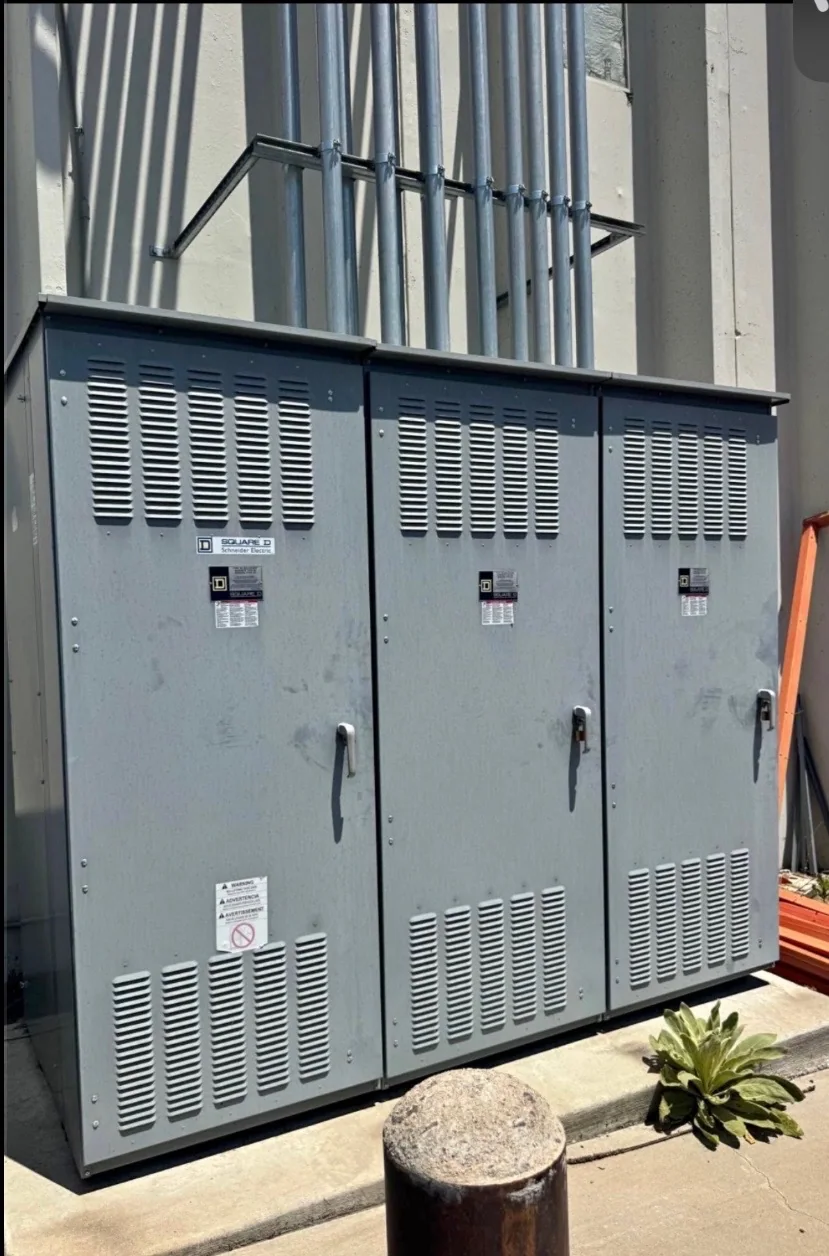
A redevelopment crew may have three pad-mounted units outside after a service changeout: one enclosure removed from the operating plan, a transformer awaiting disposition, and a neighboring cabinet that still serves the property. That mixed inventory should be described as a defined lot, not simply “old electrical equipment.” The buyer considers pad-mounted equipment across voltage classes, but evaluation depends on what is documented, owned, releasable, and physically present.
Start with the changeout boundary
Hypothetical example: An Ohio facility replaces an outdoor service arrangement in stages. The proposed lot contains one pad-mounted switchgear enclosure, two transformers, and loose operating handles stored nearby. The adjacent service cabinet remains in use and is excluded. This is only an example, not a claim about a particular Ohio project. A useful inventory marks the sale boundary so retained service, utility assets, and equipment awaiting a later phase are not pooled together.
For each item, record the outdoor location, enclosure type, manufacturer if visible, serial or asset number, number of compartments or devices, and every legible voltage, current, kVA, or other rating. Ratings may belong to the assembly, a transformer, or an individual switch; do not infer voltage class from size, paint, or appearance. A nameplate image and existing equipment schedule beat a guessed description.
Build a practical changeout inventory
A concise inventory can separate the equipment into categories:
- Pad-mounted switchgear: enclosure count, switch or fuse positions, visible labels, operating mechanism details, and documented accessories.
- Transformers: quantity, manufacturer, nameplate ratings, fluid information if documented, visible external fittings, and whether each unit is installed or stored.
- Adjacent retained service: cabinets, conduits, metering equipment, or transformers that remain connected or are expressly excluded.
- Loose and stored parts: covers, keys, handles, nameplate records, shipping pieces, or devices whose association with a unit is known, uncertain, or unknown.
In the hypothetical lot, “two transformers” is not enough. State whether both are included, which one is scheduled for first release, whether the loose handle belongs to a particular enclosure, and whether the retained cabinet is inside or outside the boundary. If a count, rating, or ownership detail is unknown, label it unknown instead of assuming.
Documents and condition that shape an evaluation
Existing documents may include one-line diagrams, changeout scopes, asset registers, purchase or lease records, service notes, environmental records, and a release schedule. They help distinguish customer-owned equipment from utility-owned equipment or assets requiring another party’s approval. They also clarify whether an item is decommissioned, isolated, stored, or still needed for an active service path. Share only records the seller is authorized to provide.
Condition reporting should stay factual and external. Note visible corrosion, impact damage, bent doors, missing covers, cracked bushings, staining, standing water, damaged labels, vegetation, blocked approach, or evidence of handling. Disclose known oil or other fluid concerns, suspected contamination, spill history, and environmental restrictions. Do not open an enclosure, operate a mechanism, remove a cover, touch a connection, or test equipment. Safe exterior photographs and existing documents are enough for initial review; qualified, authorized personnel establish safe conditions and perform electrical or physical work.
Offer considerations beyond the nameplate
Valuation is influenced by more than a rating. The buyer considers identifiable equipment, lot completeness, manufacturer and age when documented, condition, useful accessories, storage exposure, environmental disclosures, and whether the proposed equipment can be released as a coherent lot. Missing records or uncertain ownership can affect evaluation even when an enclosure looks substantial. A documented transformer and a unit with unknown history should not be represented as an identical pair.
There is no automatic purchase, fixed price, compatibility conclusion, or promised outcome from a photograph. After reviewing the equipment, the business can provide a cash offer; once the seller accepts and the sale terms are agreed, payment is made upfront before the agreed pickup. The seller does not need to test equipment. The written agreement should identify inclusions, exclusions, known restrictions, release authority, and staged dates so payment and handoff match the agreed lot.
Ownership, access, and staged release
Before removal, confirm who can authorize release: property owner, tenant, asset owner, utility, lender, contractor, or another responsible party. An outdoor unit may require written approval before leaving a fenced site, and active service may require coordination with its operator. Those approvals are access planning, not a request for the seller to perform removal work. Share gate procedures, escort rules, working-hour limits, overhead obstructions, pavement restrictions, environmental controls, and known crane or truck limitations.
The buyer handles the crane, qualified disconnects, rigging, loading, freight, and hauling. The seller identifies the authorized contact, provides accurate records, discloses restrictions, and coordinates access. For a staged changeout, list each item’s release date or sequence and identify what must remain until a later phase. Unknown dates should remain unknown, not become promises.
Questions to include with a submission
- Which pad-mounted items are customer-owned, utility-owned, leased, retained, or awaiting approval?
- What are the documented manufacturers, serial numbers, voltage or kVA ratings, and quantities?
- Which switchgear, transformers, accessories, and loose parts are included?
- Are there known fluid, contamination, corrosion, impact, storage, or environmental concerns?
- Which items are still connected, and who establishes safe condition and authorized release?
- What are the access rules, approval steps, site restrictions, and planned release stages?
Send existing documents and safe exterior photographs from accessible viewpoints. A clear boundary, honest unknowns, and a coordinated release plan let the buyer evaluate pad-mounted equipment from an Ohio changeout without asking the seller to operate, dismantle, or test anything.