Start with ownership and the equipment boundary
For a pad-mounted switchgear evaluation in Montgomery County, the first question is not how large the green or gray enclosure looks. It is who owns it and what exactly is being released. Existing records identify Dayton as the county seat, but the actual pickup site may be elsewhere in Montgomery County. A customer-owned service enclosure can be considered separately from utility-owned equipment, easements, transformers, cables, or neighboring gear. Ownership may be shown in a one-line drawing, asset register, purchase record, service agreement, or changeout scope. If the records do not resolve the boundary, call that fact unknown rather than assuming the outdoor cabinet belongs to the building owner.
The buyer considers pad-mounted equipment across voltage classes. A useful initial description includes the enclosure identification, manufacturer name if visible, switch or other device types, quantity of sections, and every legible voltage, current, interrupting, or similar rating. Do not blend an enclosure rating, switch rating, and individual device marking into one inferred specification.
Documentation problems during an outdoor changeout
Use labels and records without disturbing the cabinet
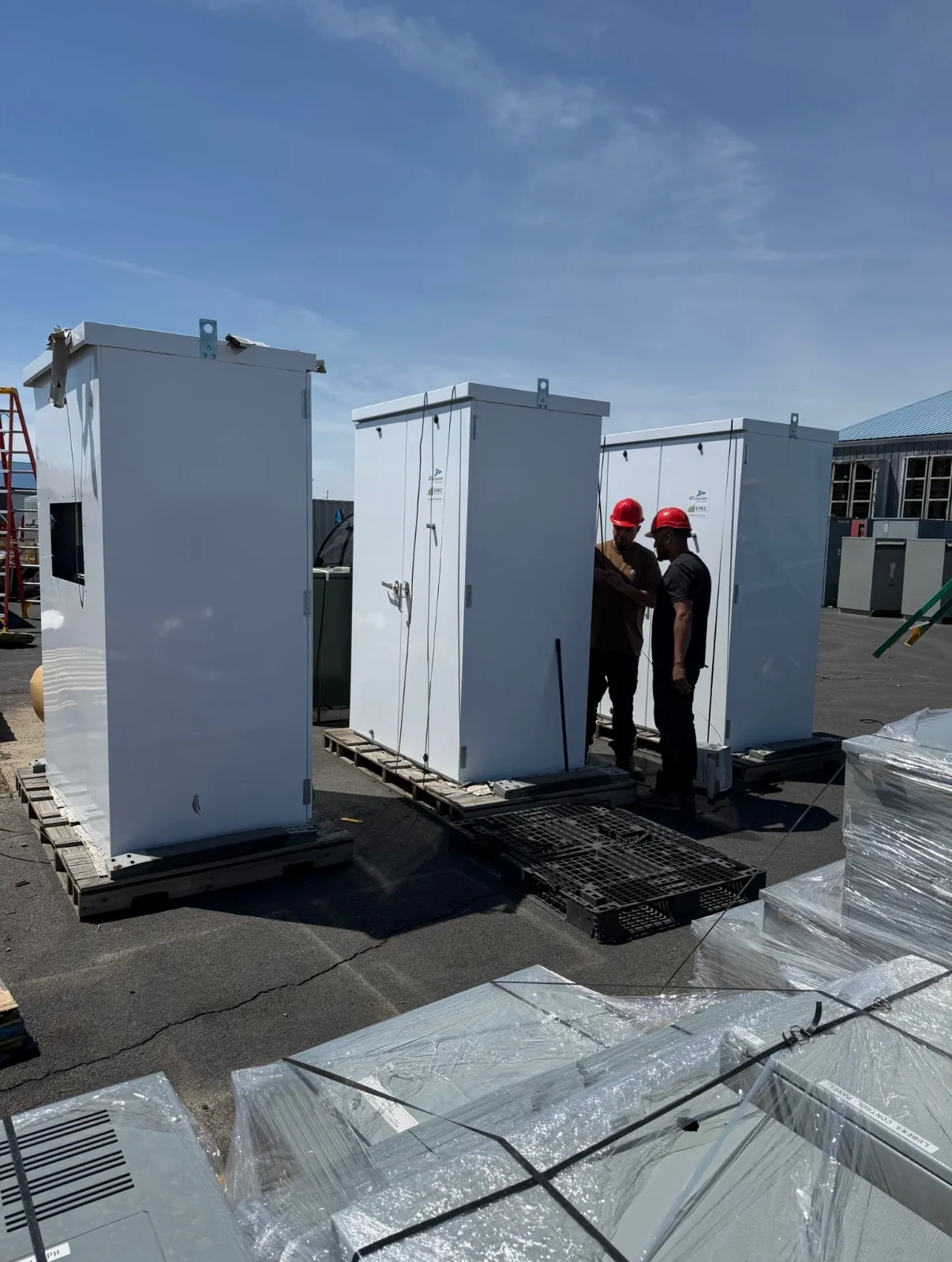
A possible outdoor changeout is a documentation exercise before it is a removal exercise. Please share existing schedules, drawings, purchase records, decommissioning notes, and photographs already available. Safe exterior photos can show nameplates, warning labels, doors, hinges, bushings, cable entry areas, visible corrosion, and the approach. They should not require opening, operating, probing, or touching the equipment. Testing is not required from the seller.
Record label wording exactly where possible, including whether it belongs to the complete enclosure, one switch, a fuse compartment, or a separate device. If a plate is unreadable, covered, or absent, identify it as unknown. A drawing may show a planned configuration while the installed cabinet differs, so distinguish documented information from what is visibly present. Disclose known contamination, oil or other fluid concerns, staining, chemical residue, or environmental restrictions; do not open the enclosure to investigate.
Completeness, condition, and the lot boundary
A sale lot can contain one outdoor enclosure, connected sections, removable switching devices, fuses, accessories, barriers, spare parts, or records. Count each item and say whether it is installed, separately stored, reserved for another asset, or missing. A loose device should not be assigned to the cabinet merely because its size appears similar. Include doors, covers, bases, pad, handles, nameplates, and accessories only when inclusion is known.
Condition notes are most valuable when specific and non-invasive: sun fading, impact marks, rust, bent hardware, cracked visible insulators, missing covers, water evidence, soil around the base, or storage damage. Unknown internal condition remains unknown. Also state whether access is controlled and whether adjacent equipment must remain in service, separating recoverable equipment from obligations outside the lot.
Valuation and safe release
Offer considerations include documented voltage and current, manufacturer and device types, complete section count, accessories, physical condition, contamination evidence, ownership clarity, and coordinated logistics. Rarity or a familiar brand name alone does not establish value. Missing labels, uncertain ownership, incomplete records, damage, environmental restrictions, or an unclear lot boundary can reduce confidence. A seller does not need to certify performance or produce a test report.
After reviewing the lot, the buyer can provide a cash offer; once the seller accepts and the sale is agreed, payment is made upfront before the agreed pickup according to the transaction terms. Release still requires authorization from the owner and any other responsible party. A utility-owned cabinet, shared service, leased asset, or equipment subject to a redevelopment hold cannot be treated as available merely because it is near a work area.
Access approvals and freight planning
Access is coordinated with the owner, site contact, property manager, utility representative, and qualified electrical personnel as applicable. The seller can identify gate procedures, escort rules, operating hours, outage or release windows, overhead obstructions, pavement limits, and the route to loading. For a hypothetical outdoor changeout, an enclosure may be approved for release on one date while service remains active until a later date; record the dates separately.
The buyer handles qualified disconnects, crane arrangements, rigging, loading, freight, and hauling. The seller does not need to dismantle, move, test, energize, or prepare the switchgear. Access approvals are coordination items, not a transfer of removal costs. Disclose locked gates, narrow approaches, soft ground, overhead lines, restricted staging, or traffic-control needs so the buyer can plan.
Hypothetical inventory example and seller questions
Hypothetical example: an outdoor changeout record describes one customer-owned pad-mounted enclosure, two labeled switch sections, several visible device markings, and a separate box of spare components. The cabinet sits near an active service, while ownership of an adjacent transformer is unknown. A useful inventory would list the enclosure and each section separately, identify the spare box without assuming compatibility, describe exterior corrosion or contamination if observed, and mark the transformer boundary and internal condition as unknown. It would also state the authorized release date and the person who can approve site access.
- Who owns the enclosure, switches, fuses, spares, and adjacent equipment?
- What do the existing drawings and nameplates say about voltage, current, manufacturer, sections, and devices?
- Which items are included, retained, missing, or stored elsewhere?
- Are contamination, fluid, impact, corrosion, access, or environmental issues known?
- Who can authorize release, qualified disconnection, gate access, and the pickup window?
Send the available records and safe exterior photos with those answers. Clear boundaries and honest unknowns allow an evaluation without asking anyone to open, operate, dismantle, touch energized equipment, or test it.