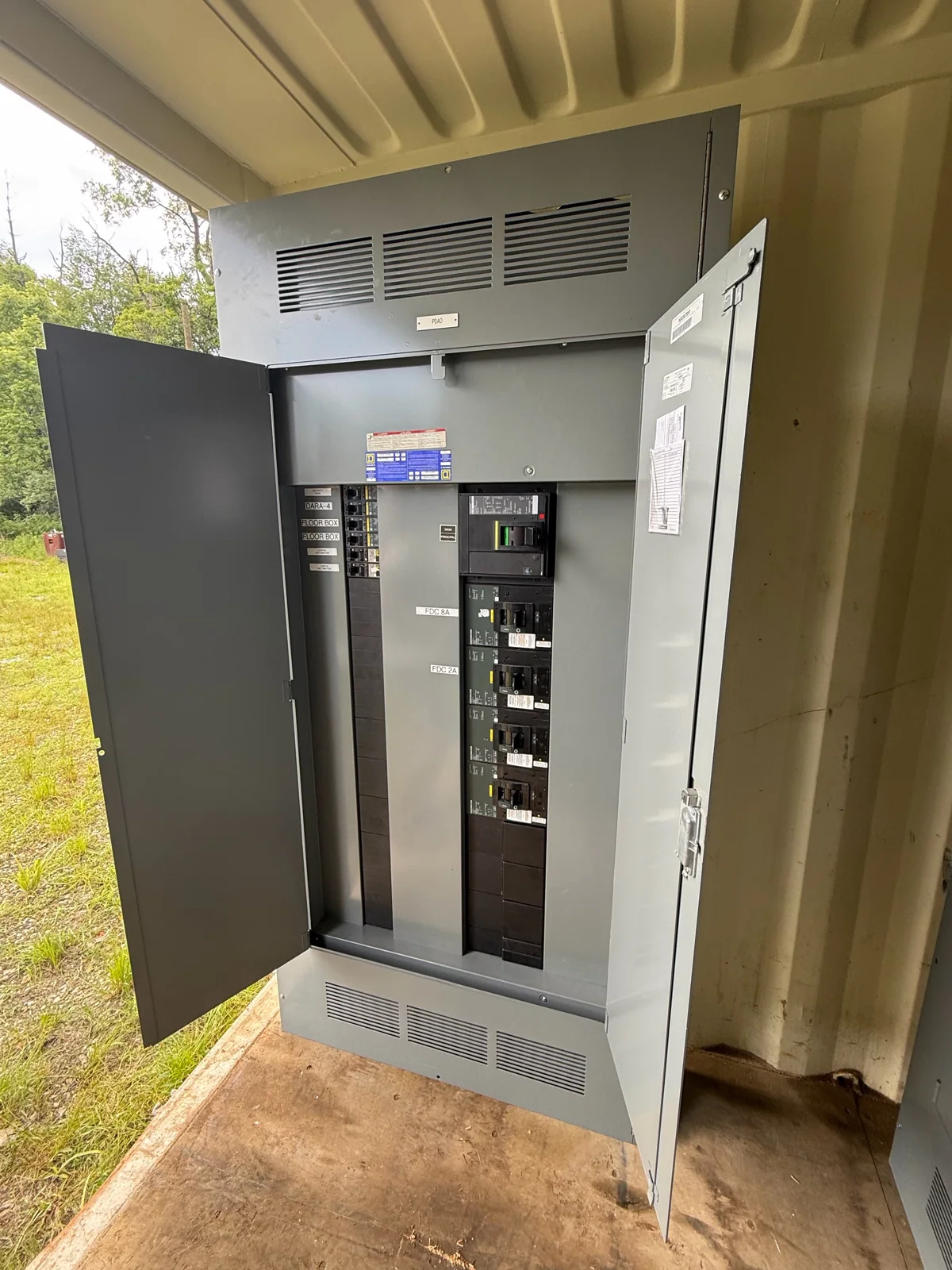
Selling surplus pad-mounted switchgear in Butler County starts with defining what is available, not assuming every outdoor cabinet belongs to one sale. Records identify Hamilton as the county seat, but the pickup site may be elsewhere. Tie each enclosure, device, document and access condition to a specific lot. The buyer considers all voltage classes, including equipment from decommissioned data centers and shut-down power plants, when ownership and condition are established.
Identify the enclosure and its contents
Begin with information visible from a safe exterior position. Record the enclosure quantity, manufacturer if shown, nameplate wording, section or serial identification, switch count, fuse or other device descriptions, and every visible voltage, current or interrupting rating. Do not infer a voltage class from cabinet size, paint, age or handle appearance. An assembly rating and an individual switch rating may describe different parts of one lot.
Describe pieces separately: a complete enclosure, a cabinet with missing covers, loose labeled devices, and any base, barrier, accessory or document package. If a record says “two units” but one cabinet is visible, mark the second unverified. Safe exterior photographs can show labels, doors, bushings, nameplates and general condition. The seller does not need to open, operate, dismantle, touch energized equipment or test it.
Set ownership and the physical lot boundary
Pad-mounted equipment may sit near an active service while belonging to a customer, utility, landlord, contractor or another owner. A hypothetical redevelopment might leave an outdoor enclosure beside service that must remain energized. The sale lot could be customer-owned switchgear only; a utility-owned cabinet, transformer, conductors, pad, fence or neighboring gear may remain excluded. Ownership records and authorized contacts, not visual proximity, establish that boundary.
Ask for the proposed boundary: enclosure identification, included switches, separately stored components, documents and associated base. Note exclusions too. Transfer may require owner approval, utility coordination, property access permission, environmental review or a release date. These are coordination items before transfer; they do not shift crane, qualified disconnect, rigging, loading, freight or hauling responsibilities to the seller.
Reconcile a complete lot
Compare visible inventory with drawings, schedules, purchase records, decommissioning lists or storage tags. A useful list might show Enclosure A, two labeled switches, one spare device in a separate cabinet, four covers and a document folder. It should say whether the spare is documented as belonging to Enclosure A or is merely nearby. Count by identification, not by saying “outdoor switchgear available.”
List each area separately even if pieces share one property, and include the authorized release contact and proposed date. Keep gaps labeled unknown: missing nameplate, uncertain ownership, unconfirmed spare association or unverified voltage. Honest gaps make the lot easier to value than an inflated count.
Describe condition without unsafe inspection
Report exterior facts only: dents, corrosion, fading, damaged hinges, missing locks, cracked viewing windows, bent bases, standing water near the pad, packaging quality and signs of prior storage. State whether doors appear closed and labels legible. Do not claim internal contact condition, insulation performance or operational readiness from appearance. The buyer does not require seller testing.
Disclose known contamination or fluid issues, such as a documented spill, stained soil or environmental restriction; do not speculate about a substance. Inspection, incident or disposal records are more useful than an improvised inspection. If equipment came from an industrial shutdown or data-center decommissioning, note that history and storage exposure.
What influences a cash evaluation
Valuation reflects verifiable identity, completeness, documented ratings, manufacturer information, device mix, condition, ownership clarity and the complexity of safe release. A clearly matched enclosure with readable records may be more useful than a larger unidentified group. All voltage classes can be considered, but the correct class, current details and device relationships must be documented rather than assumed.
Access matters. A lot behind a locked gate, below obstructions, beside active equipment or on a constrained surface may require more coordination than a staged cabinet. The buyer handles crane planning, qualified disconnection, rigging, loading, freight and hauling. The seller provides records, identifies the authorized decision-maker and coordinates lawful access. After reviewing the lot, the buyer can provide a cash offer; once the seller accepts and the sale is agreed, payment is made upfront before the agreed pickup, and the seller is not asked to test equipment.
Plan release and freight
Provide the site contact, permitted hours, gate or escort requirements, surface conditions, overhead-clearance information and owner or utility approvals. State whether equipment is installed, staged outdoors or stored in a room or yard. A qualified, authorized team must establish safe conditions and handle disconnection.
Limit photographs to safe exterior views: the cabinet, identification plates, visible devices, packaging and approach path. Do not enter a restricted area or move covers. Unknown dimensions can remain unknown until qualified personnel coordinate a field review; do not invent a crane set point or hauling timeline.
Example inventory and seller questions
- Which party owns each enclosure and device, and who can authorize transfer?
- What documented voltage, current and device ratings apply to each identified piece?
- Which switches, spares, covers, bases and records are included, and what is excluded?
- Is any equipment utility-owned, serving an active load, or subject to release approval?
- What exterior damage, storage history, contamination or fluid concern is documented?
- What access approvals, escort rules and release date must be coordinated?
An inventory with honest unknowns gives the buyer a defensible boundary. It prevents a nearby active asset, unmatched spare or unapproved utility cabinet from entering the lot. Send records and safe exterior photos; do not operate or test the switchgear.